

Tesla has launched Supercharger for Business, a full-service program that allows commercial property owners to host Tesla Supercharger stations. The program extends Tesla’s charging hardware, software, and service operations to third-party sites while integrating them into the broader Supercharger network.
Highlights
- Tesla’s Supercharger for Business program provides turnkey charging infrastructure to commercial hosts, including hardware, software, commissioning, and 24/7 network operations.
- The V4 Supercharger cabinet delivers up to 500 kW for passenger vehicles and 1.2 MW for the Semi Megacharger, with 3x higher power density than previous generations.
- Pre-assembled Supercharger Units (PSUs) cut deployment timelines to as few as four days from delivery to site opening, with 15% or greater cost reductions.
- Tesla reports over 10 sessions per stall per day at U.S. Supercharger sites, with 2.3x higher utilization than third-party chargers in Europe.
How the Program Works
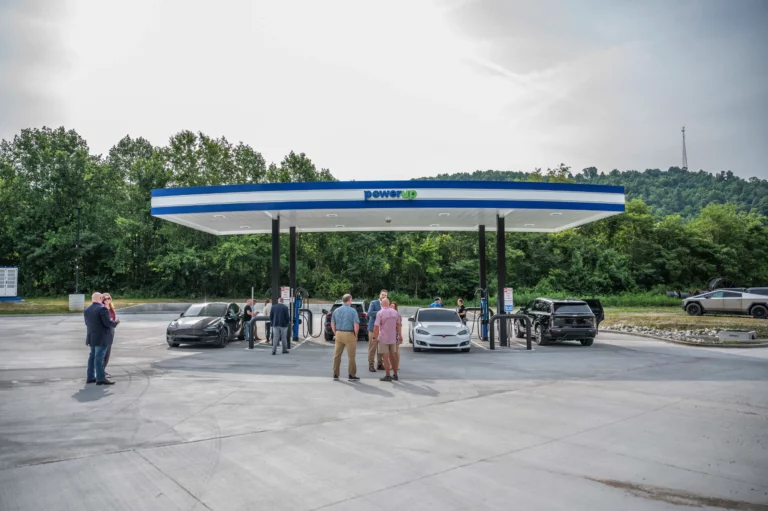
Under the Supercharger for Business model, Tesla supplies all charging hardware, manages software and commissioning, and provides ongoing service with an uptime guarantee and preventive maintenance. The host is responsible for installation (with Tesla project engineering support), site maintenance, and branding — which can be white-label or custom-skinned.
Once live, each site appears in the Tesla app and in-vehicle navigation with the same visibility, service response, and performance standards as Tesla-owned locations. Hosts set their own pricing, while Tesla handles payment processing and driver support.
Network Scale and Utilization
Tesla’s Supercharger network now spans more than 75,000 stalls globally. In 2025, the network delivered 6.7 TWh of energy, which Tesla says exceeded the combined output of all other fast chargers outside China.
The company reports that Superchargers account for 99% of fast charging by Tesla drivers in North America and 70% in the Europe, Middle East, and Africa region. For a typical eight-post site, Tesla estimates more than 80 customer visits per day.
V4 Hardware and Installation Efficiency
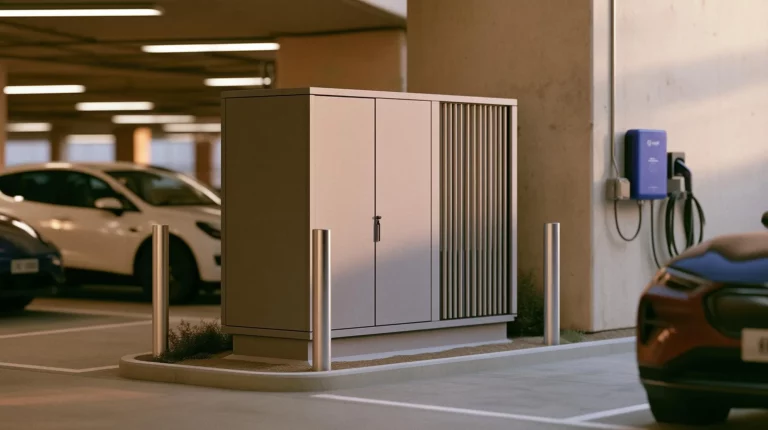
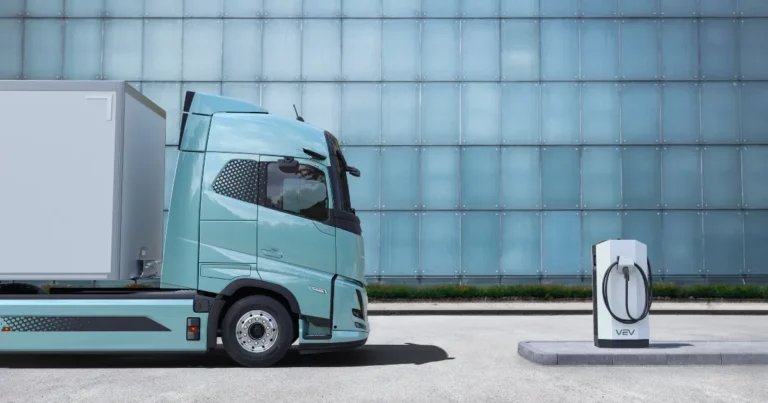
The V4 Supercharger cabinet supports 400V to 1,000V vehicle architectures. Tesla states the system requires less than 1 MW across eight posts to deliver maximum power to passenger vehicles 99% of the time. The same cabinet platform scales to 1.2 MW for Tesla Semi Megacharger applications.
Tesla has also standardized installation practices to reduce cost and deployment time. Techniques include precast foundations, above-ground wireways, micro-trenching, flexible certified conduit, direct-bury options, and centrally sourced aluminum wiring. Power-sharing algorithms use real-world data to right-size utility service without impacting charging speed.
Software and Driver Experience
Tesla’s software stack handles trip planning, battery preconditioning, real-time stall availability, and wait-time forecasting. The system uses anonymous geofenced data to predict stall availability at arrival, not just current status.
Current pilot features include 3D Site Maps, which show Supercharger layouts, nearby businesses, and live availability. Hosts can also enable congestion fees and time-of-use pricing to manage demand.
Battery preconditioning and AC ripple current heating optimize charge speeds automatically. Tesla says the ripple current approach prevents stranded drivers and maximizes throughput in cold conditions.
Interoperability and Mapping Integration
Across North America, every major automaker now integrates with Tesla’s charging connector standard. In Europe and the U.K., Tesla is onboarding charge cards to expand driver access, with 34 cards live and more than 40 additional cards expected.
Tesla and Google are working together to incorporate forecasted stall availability and real-time wait times into Google Maps navigation. Each Supercharger for Business host site will appear in both Tesla apps and Google Maps.
Sign up for our popular weekly email to catch all the latest EV news!