
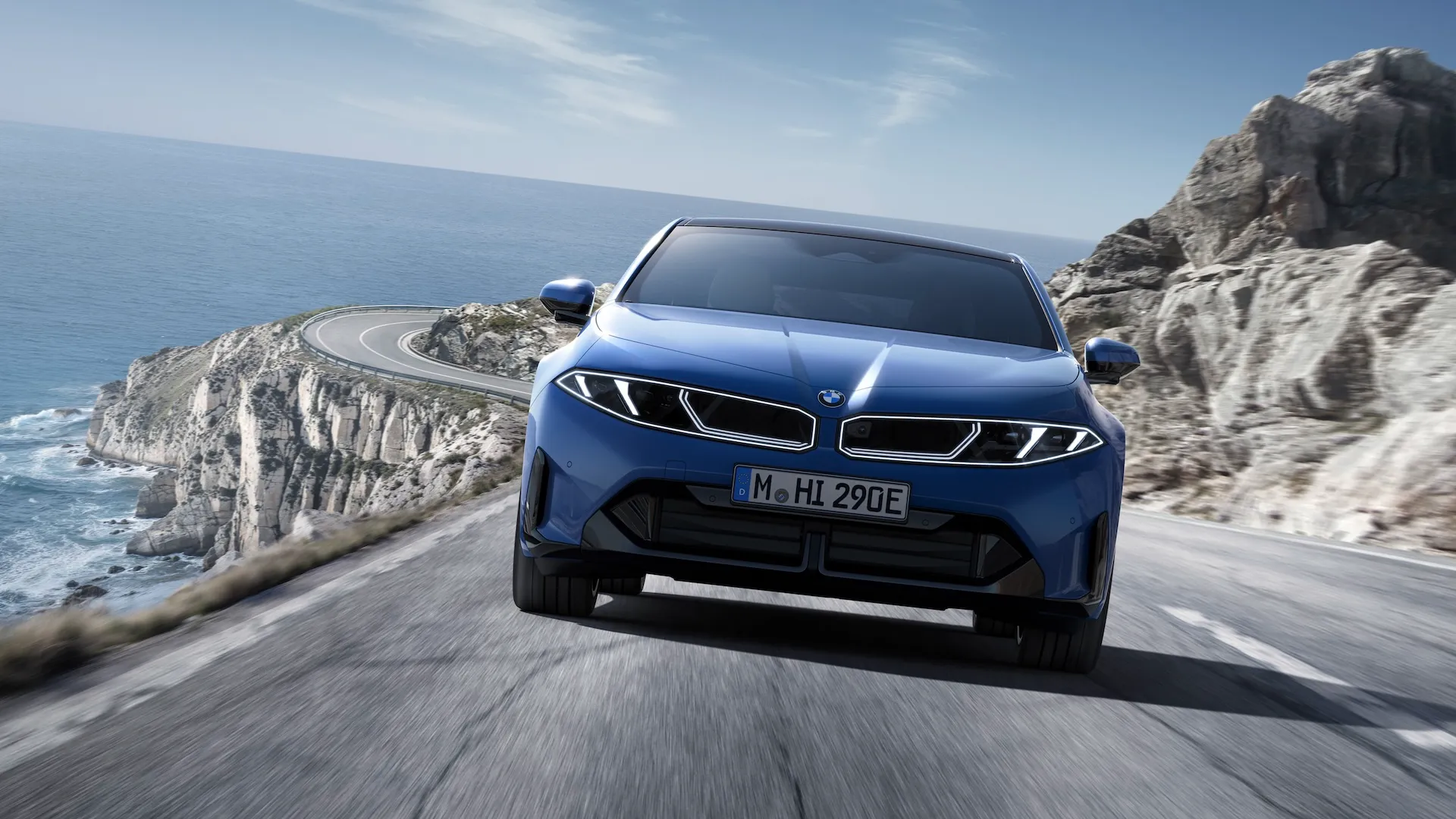
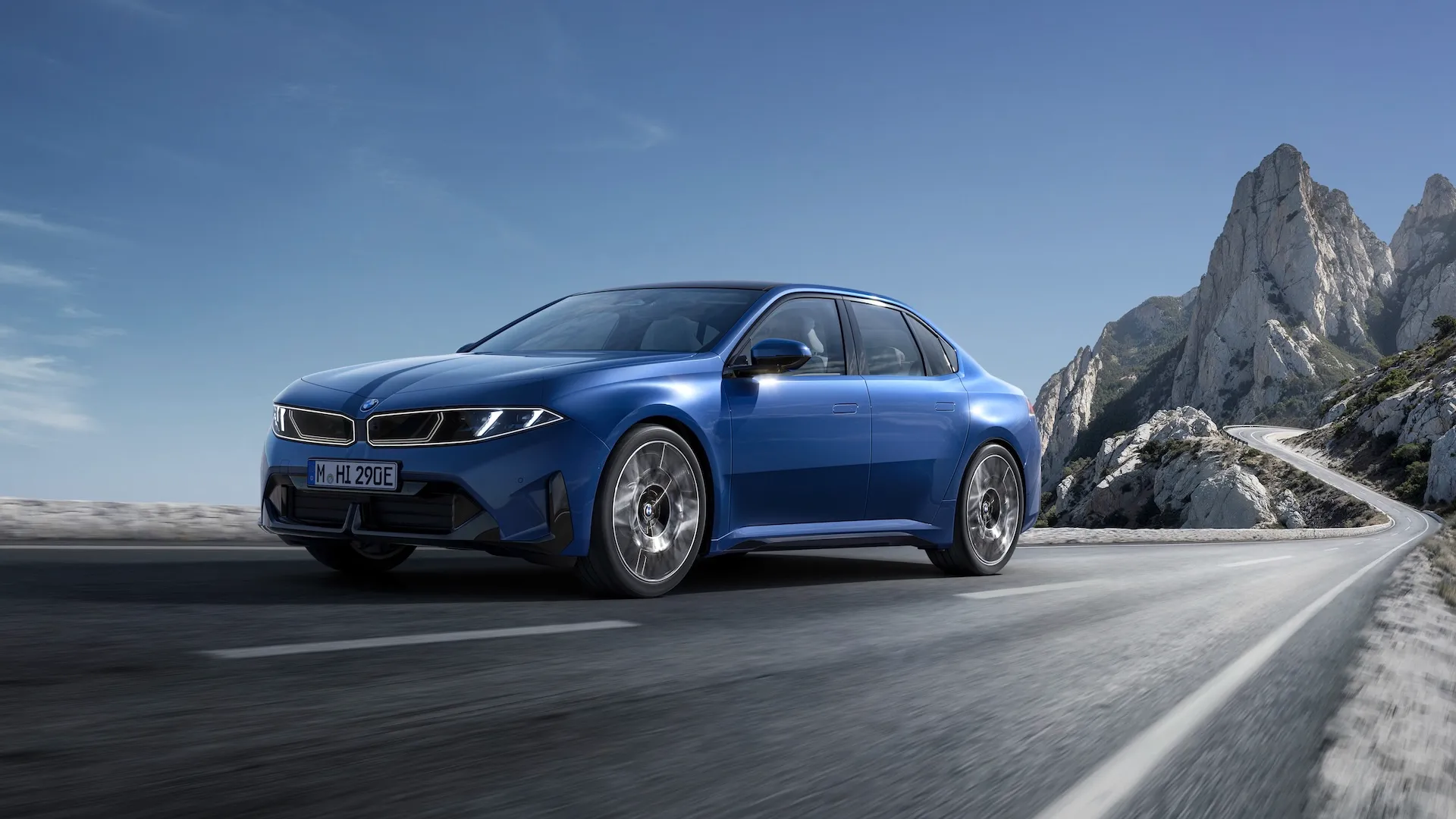
BMW has revealed the new i3, the second model built on its Neue Klasse platform. The all-electric sedan launches as the i3 50 xDrive with dual motors, 800-volt architecture, and a provisional WLTP range of up to 900 kilometers. Production begins at BMW’s Munich plant in August 2026, with first deliveries expected in autumn.
Highlights
- Provisional 900 km WLTP range with sixth-generation eDrive technology, 800-volt architecture, and DC fast charging at up to 400 kW
- 345 kW (469 hp) dual-motor AWD system pairs a rear EESM with a front ASM, reducing energy losses by 40% versus Gen5
- Bidirectional charging supports Vehicle-to-Load, Vehicle-to-Home, and Vehicle-to-Grid functions
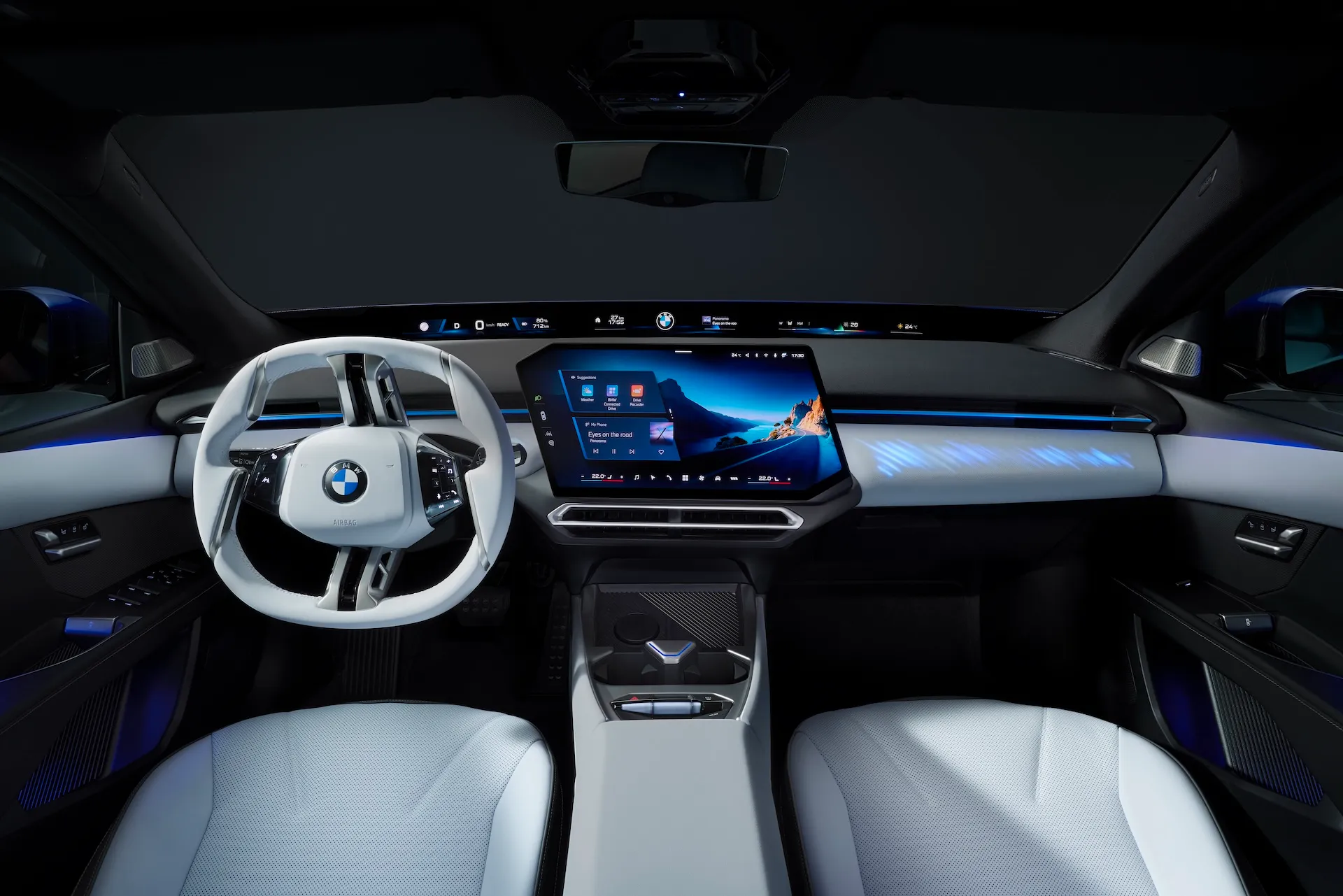
- New software architecture features four high-performance computers and BMW Panoramic iDrive with windshield-spanning display
Powertrain and Battery
The i3 50 xDrive uses BMW’s Gen6 eDrive system. It combines an electrically excited synchronous motor (EESM) on the rear axle with an asynchronous motor (ASM) at the front. Combined output reaches 345 kW/469 hp with 645 Nm of torque. All figures remain provisional.
The high-voltage battery uses new lithium-ion round cells measuring 46 mm in diameter and 95 mm in height. These cells offer a 20% increase in volumetric energy density over the prismatic cells used in Gen5. A cell-to-pack design eliminates modular construction, saving weight and cost.
BMW says the pack-to-open-body approach integrates the battery housing as a structural component. The chassis uses an open floor sealed by the battery, which also serves as the vehicle underbody. This improves torsional rigidity while enabling a flatter profile.
Compared to Gen5, BMW claims a 30% range improvement, 30% faster charging, and a combined 40% reduction in drivetrain energy losses. Drive system weight drops by 10%, and manufacturing costs fall by 20%.
Charging Capabilities
The i3 50 xDrive supports DC fast charging at up to 400 kW. BMW says this allows recharging up to 400 km of range in 10 minutes, measured per ISO 12906 in the WLTP cycle. AC charging is available at up to 22 kW with the optional AC Charging Professional package.
Bidirectional charging enables three modes:
- Vehicle-to-Load (V2L): Powers external devices at up to 3.7 kW directly from the battery
- Vehicle-to-Home (V2H): Works with the BMW Wallbox Professional and a photovoltaic system to store solar energy, reportedly boosting household self-sufficiency by up to 30 percentage points
- Vehicle-to-Grid (V2G): Feeds energy back to the public grid through a partnership with E.ON, with customer control via the My BMW App
Additional charging features include AI-assisted route planning with charging stop optimization, automatic battery preconditioning for DC sessions, and an intelligent charging flap that opens when it detects the driver approaching a known charging point.
Driving Dynamics and Assistance
BMW’s Heart of Joy computer controls drive, brakes, steering functions, charging, and recuperation. The automaker says it responds 10 times faster than previous systems. A Soft-Stop function uses precise electric motor control to bring the vehicle to a halt without jerks or brake noise. In everyday driving, recuperation handles nearly all braking.
The standard suspension pairs a two-joint spring strut front axle with a new five-link rear axle. An optional adaptive M suspension is available for the xDrive model.
BMW Symbiotic Drive provides Level 2 driver assistance. The system allows the driver to steer, brake, or accelerate without immediately deactivating assistance functions. Driving Assistant Plus manages speed, following distance, and lane keeping, with automatic speed adjustments for curves, roundabouts, and recognized speed limits.
Design and Dimensions
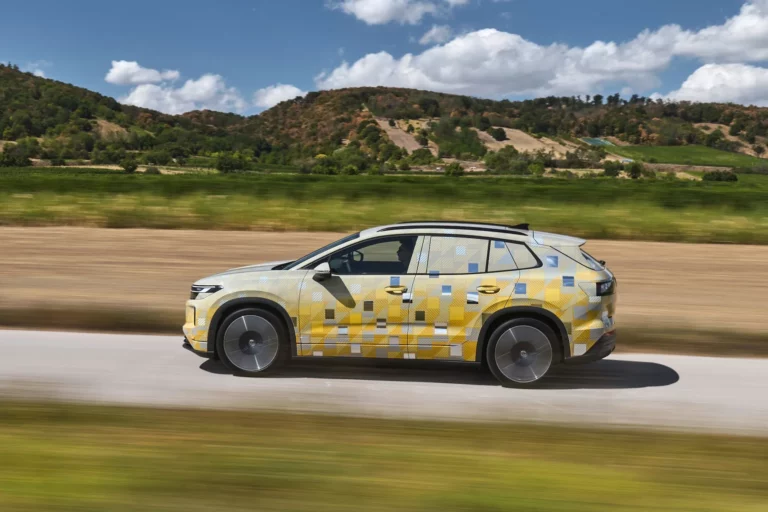
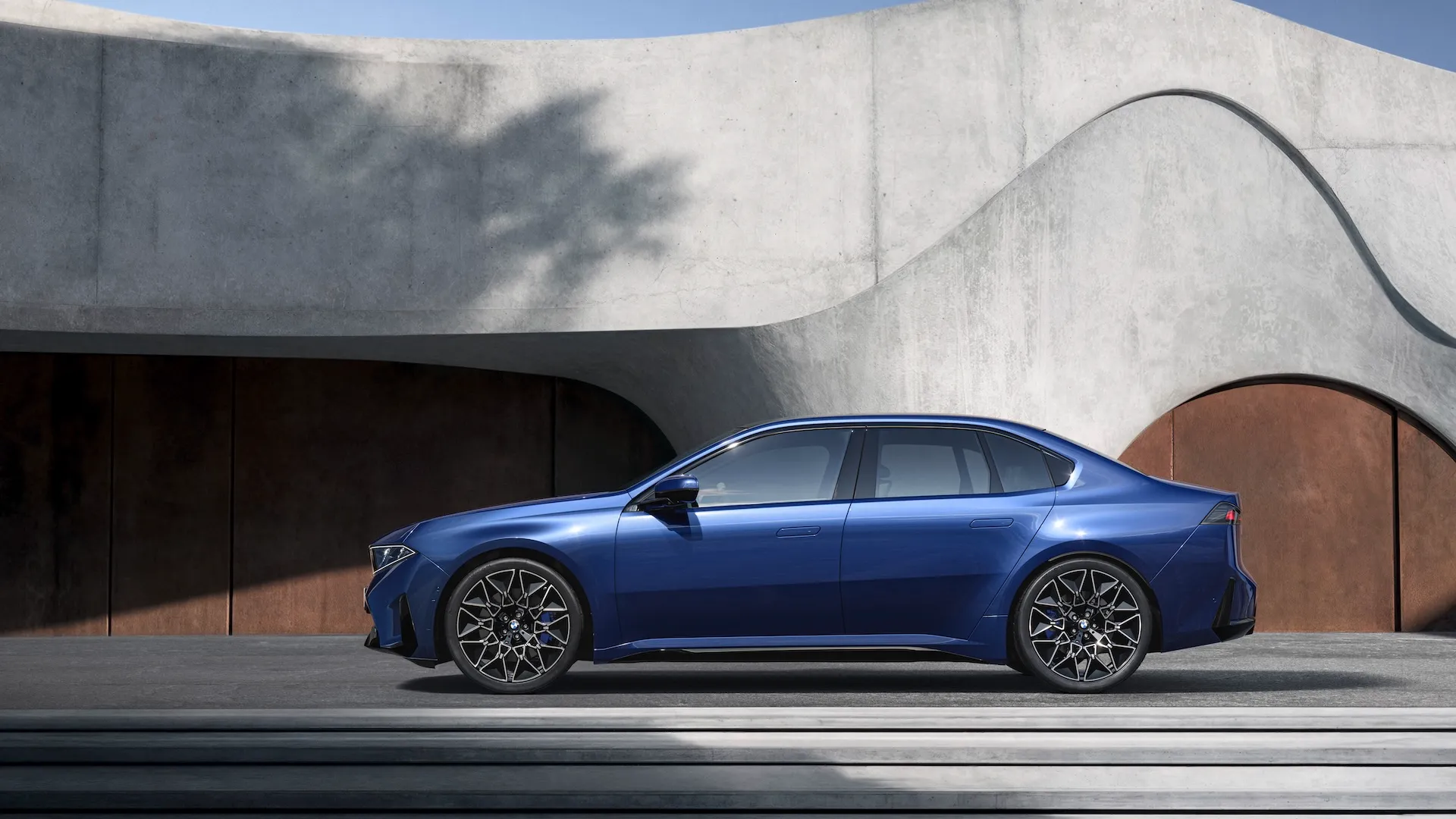
The i3 adopts BMW’s Neue Klasse design language in a 2.5-box sedan form. Key dimensions include a length of 4,760 mm, width of 1,865 mm, height of 1,480 mm, and wheelbase of 2,897 mm. Short overhangs, flared wheel arches, and a rearward-sloping greenhouse define the profile.
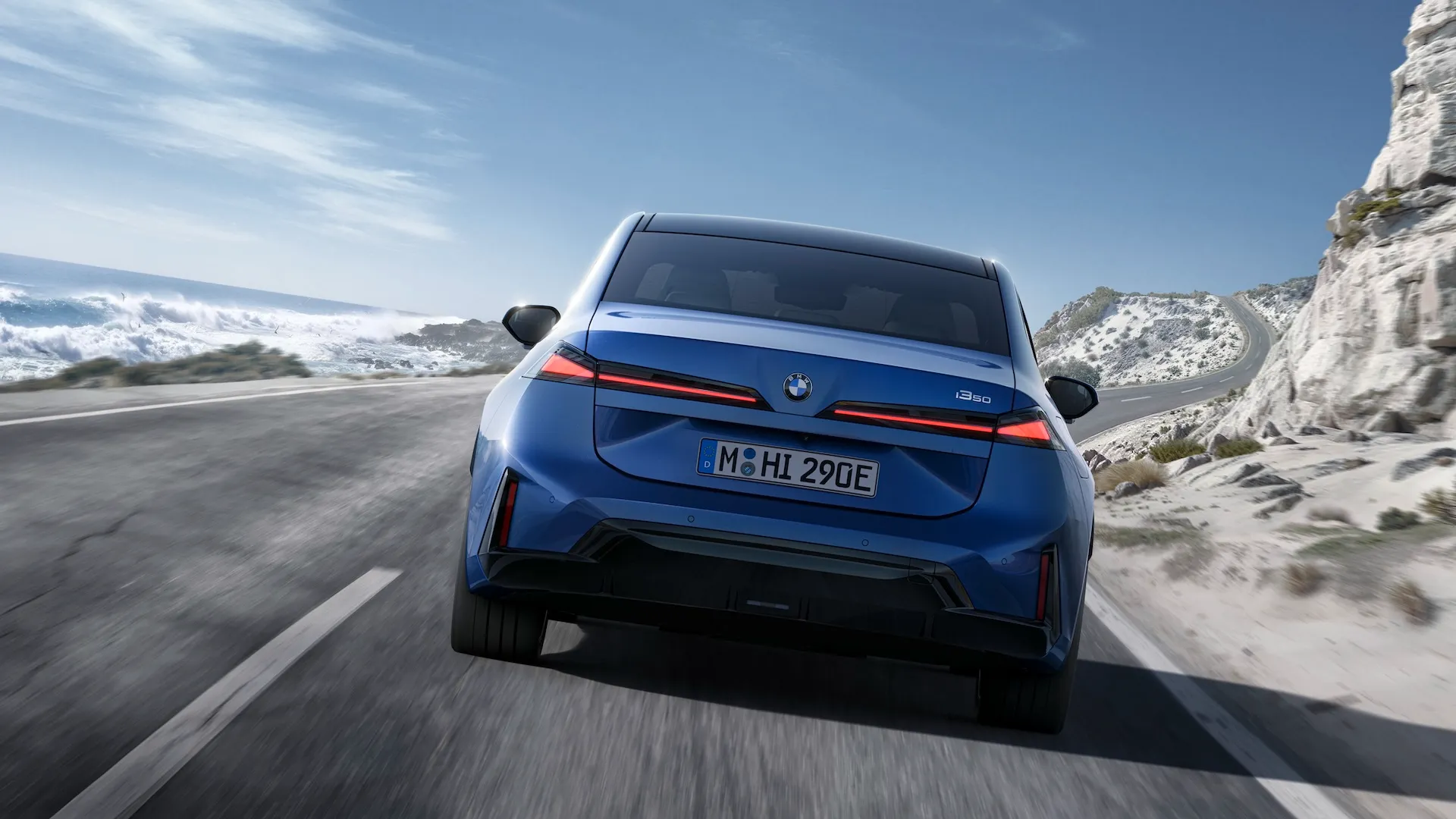
The front merges BMW’s kidney grille with twin headlights into a single light signature spanning nearly the full width. An optional Iconic Glow exterior package adds customizable lighting animations. Eleven exterior colors will be available at launch, including the exclusive M Le Castellet Blue metallic.
Interior and Technology
Inside, the BMW Panoramic iDrive system centers on Panoramic Vision, which projects information across the full width of the lower windshield. A 17.9-inch Free-Cut Design Central Display with 3,340 x 1,440 resolution sits angled toward the driver. An optional 3D Head-Up Display supplements the system.
The BMW Intelligent Personal Assistant integrates Amazon Alexa+ LLM technology for natural-language voice interaction. This feature will roll out starting in the second half of 2026, initially in Germany and the United States.
BMW Operating System X, built on the Android Open Source Project (AOSP), runs the infotainment system. Up to seven users can register via BMW ID for personalized settings. The BMW Digital Key Plus supports smartphones and smartwatches from Apple, Samsung, and Google using ultra-wideband and Bluetooth.
Software Architecture
Four dedicated high-performance computers handle driving dynamics, automated driving and parking, infotainment, and comfort functions. BMW claims up to 20 times more computing power than previous models. A four-zone cabling layout with Smart eFuses replaces traditional fuse boxes, reducing cable harness complexity and weight. Over-the-air updates will deliver ongoing feature additions.
Sustainability
BMW reports the i3 achieves a CO₂e advantage over a comparable combustion vehicle within one to two years of use. Supply chain emissions dropped approximately 33% during development. The vehicle uses roughly 30% secondary materials overall, including 80% recycled aluminum in swivel bearings and hub carriers, 70% in cast rims, and approximately two-thirds in the rear motor housing.
Battery cell production uses secondary cobalt, lithium, and nickel alongside renewable energy. The front bumper trim contains 30% recycled plastic, and recyclable plastic content in the full bumper assembly rose from about 46% to roughly 85%. The Econeer seat cover’s outer material uses 100% recycled polyester.
Production
The i3 will be built at BMW’s Munich-Milbertshofen plant, which has undergone a multi-year modernization including a new body shop and vehicle assembly area. The EESM is manufactured in Steyr, Austria, the high-voltage battery in Debrecen, Hungary, and the Energy Master unit in Landshut, Germany. One year after i3 production begins, the Munich plant will transition exclusively to Neue Klasse electric vehicles.
Sign up for our popular weekly email to catch all the latest EV news!