
Originally reported by Iulian Dnistran at InsideEVs (March 31, 2026). Read the full story → Additional reporting by Fred Lambert at Electrek (Read →) and Autoblog (Read →).
General Motors’ ongoing struggles with GM Factory Zero EV production now include a second shutdown in under three months. The automaker temporarily idled 1,300 workers at the Detroit facility on March 16, with operations expected to resume April 13. For fleet managers and EV industry stakeholders tracking the pace of electrification, this latest stoppage carries significant implications. It signals that even the nation’s second-largest EV seller is pulling back output of battery-electric trucks and SUVs amid weakening demand, shifting federal policy, and a growing mismatch between product pricing and market appetite. As a result, the broader trajectory for commercial and fleet EV adoption faces new uncertainty heading into the second half of 2026.
A Pattern of Cutbacks at Detroit’s Flagship EV Plant
This latest pause is far from an isolated event. GM’s Factory Zero facility — built on a $2.2 billion conversion of the former Detroit-Hamtramck assembly site — has experienced near-continuous disruption since mid-2025.
In October 2025, the company eliminated one of two production shifts and permanently cut 1,200 positions. That move was part of a wider 3,300-job reduction across GM’s electric vehicle and battery operations. The plant then sat idle from late October through late November before additional downtime stretched through year-end.
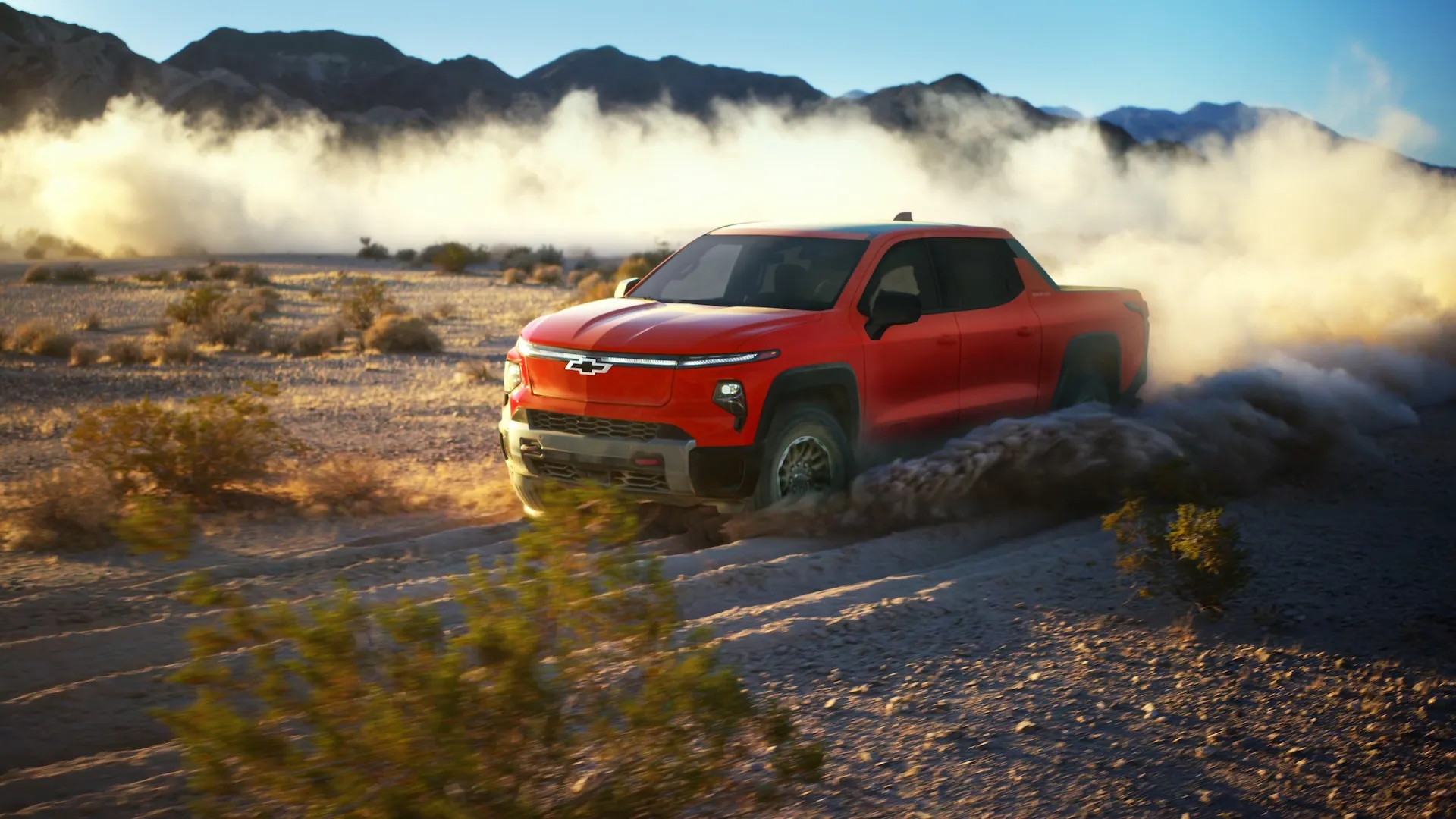
When assembly resumed in January 2026, it operated on a single shift. However, even that reduced capacity has proven excessive relative to current order volumes. The facility builds the GMC Hummer EV, Chevrolet Silverado EV, GMC Sierra EV, and Cadillac Escalade IQ — GM’s largest and most expensive battery-electric models.
Pricing Mismatch and Demand Headwinds
A core challenge for Factory Zero is its product lineup. The Hummer EV carries a starting price above $80,000, while the Escalade IQ begins at roughly $130,000. These price points position the vehicles as niche luxury offerings rather than volume-oriented fleet or consumer products.
Meanwhile, GM’s actual sales leader — the Chevrolet Equinox EV, which starts near $35,000 — rolls off a separate assembly line in Ramos Arizpe, Mexico. In contrast, Factory Zero’s high-cost models have struggled to attract sustained buyer interest, especially without federal incentive support.
Specifically, GM moved approximately 170,000 EVs in the U.S. during 2025, representing a 48% year-over-year increase, according to Electrek. However, that momentum collapsed in the fourth quarter after the elimination of the $7,500 federal EV tax credit in late September. Q4 sales dropped 43%, falling to just over 25,000 units.
Policy Shifts Accelerate the Pullback
The removal of the federal purchase incentive was only part of the headwind. The current administration has also relaxed tailpipe emissions standards that had previously pushed automakers toward higher EV output. Together, these policy reversals have reduced both consumer motivation and regulatory pressure to buy or build electric vehicles.
GM has responded by redirecting manufacturing capacity. The company is retooling its Orion Assembly plant in Michigan — originally planned for EV production — to build internal combustion pickups and SUVs instead. It also paused battery cell output at two Ultium Cells joint-venture facilities in Ohio and Tennessee. In addition, GM sold its stake in a third Ultium battery plant in Lansing, Michigan, to partner LG Energy Solution.
For its part, GM recorded $7.6 billion in EV-related charges during 2025. That figure included a $6 billion writedown tied to canceled production plans and terminated battery supply contracts. The company warned in January that it anticipates notably lower electric vehicle volume throughout 2026.
What This Means for EV Fleets and Industry Stakeholders
For fleet operators evaluating electric truck options, GM’s repeated production stoppages raise practical questions about model continuity, parts availability, and long-term support. Consequently, procurement teams may need to weigh whether GM’s large-format electric trucks remain viable fleet candidates in the near term.
At the same time, GM’s lower-priced models continue to gain ground. The Equinox EV and Cadillac Lyriq have propelled the company to second place among U.S. EV sellers, behind only Tesla. This suggests the demand issue is not about electric vehicles broadly — it is about pricing, segment fit, and the absence of purchase incentives for higher-cost models.
UAW Local 22 President James Cotton expressed cautious optimism. He noted that rising fuel costs could eventually revive interest in electrification. GM’s finance leadership has echoed that view, suggesting that roughly six months of elevated gasoline prices typically precedes a shift toward more efficient vehicles.
How quickly that shift materializes — and whether Factory Zero’s truck lineup benefits from it — remains an open question for the industry.
Bottom Line
GM’s repeated shutdowns at Factory Zero highlight a widening gap between the company’s premium EV truck strategy and actual market demand. With federal incentives gone and emissions rules relaxed, the near-term outlook favors GM’s affordable models like the Equinox EV over its six-figure electric trucks. Fleet managers and EV stakeholders should monitor whether GM adjusts Factory Zero’s product mix or continues scaling back output through 2026.
Sign up for our popular weekly email to catch all the latest EV news!