

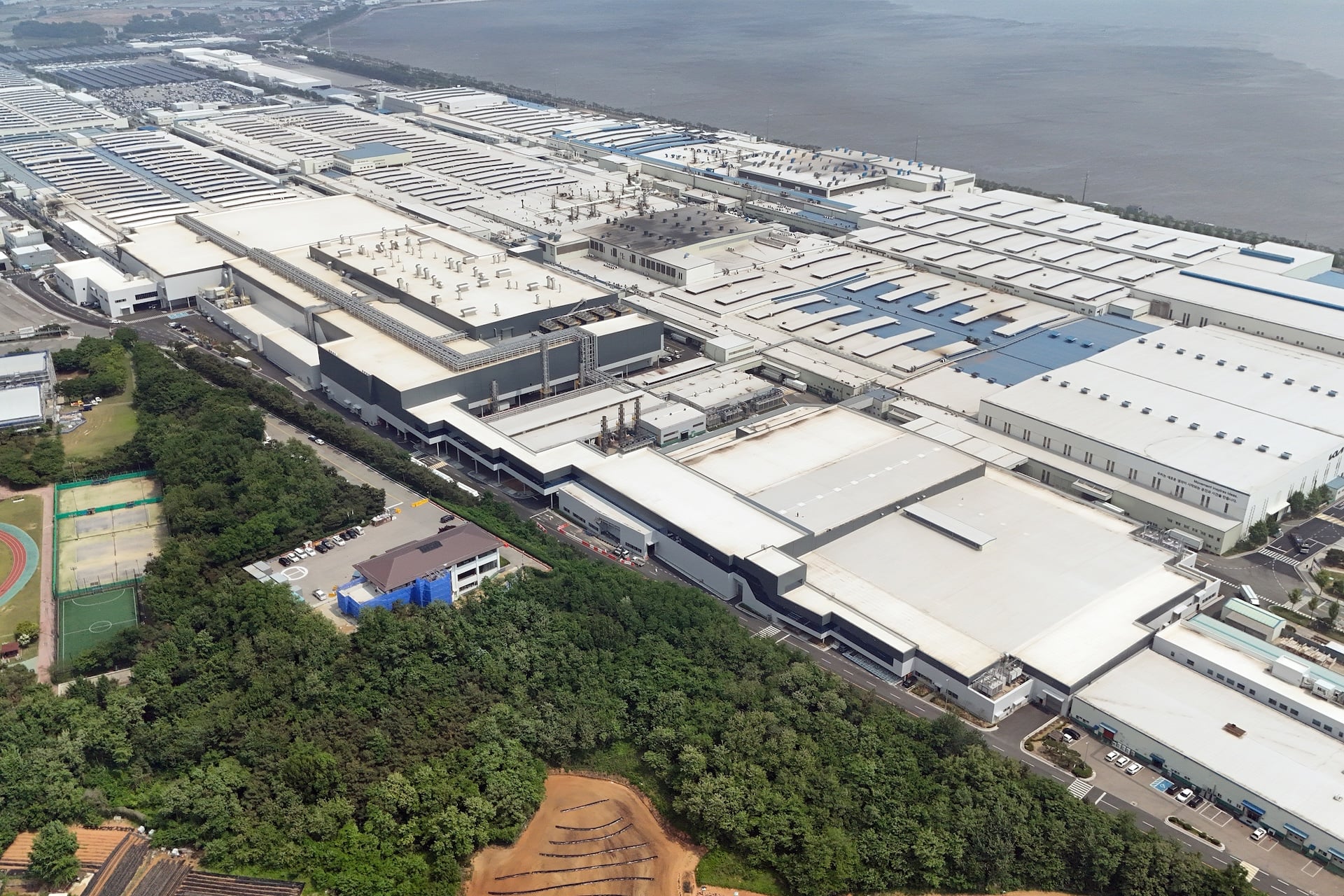
Kia Corporation completed its Hwaseong EVO Plant East and initiated construction of EVO Plant West at its AutoLand Hwaseong facility in Gyeonggi Province, South Korea. The development marks Hyundai Motor Group’s establishment of its first dedicated Platform Beyond Vehicle (PBV) production hub, with a combined annual capacity of 250,000 units following a KRW 4 trillion investment across approximately 297,000 square meters.
Highlights
- EVO Plant East will produce 100,000 PV5 mid-size PBV units annually, while EVO Plant West targets 150,000 PV7 and additional PBV units when operational in 2027
- The facility integrates automated guided vehicles, dry paint booth technology, and E-FOREST smart factory systems for real-time operation control
- A dedicated PBV Conversion Centre spanning 63,728 square meters will enable development of specialized models including open-bed trucks, box vans, and camping vehicles in partnership with strategic collaborators
Production Capacity and Timeline
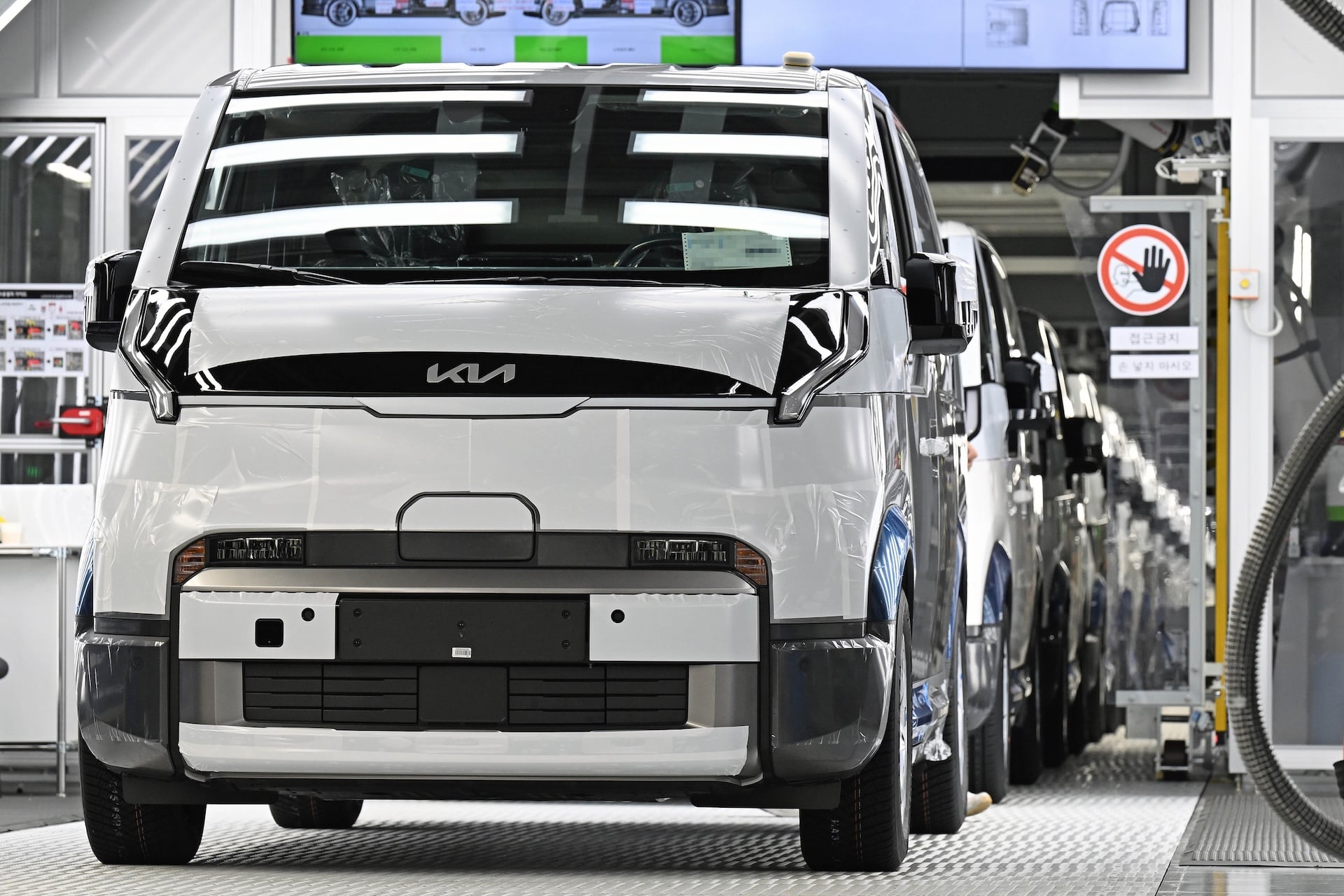
The newly completed EVO Plant East occupies 98,433 square meters and will manufacture Kia’s PV5 mid-size PBV lineup. Production variants include Passenger, Cargo, Chassis Cab, and Wheelchair Accessible Vehicle configurations.
EVO Plant West construction will establish 136,671 square meters of manufacturing space dedicated to large-size PBV models. The facility is scheduled to begin operations in 2027, focusing on the PV7 and subsequent large-format PBV variants.
Manufacturing Technology Integration
The EVO Plant name combines “Evolution” and “Plant,” reflecting the facility’s technological approach. The manufacturing complex applies multiple automation and sustainability technologies designed to minimize carbon footprint while maintaining production flexibility.
Body Shop Operations
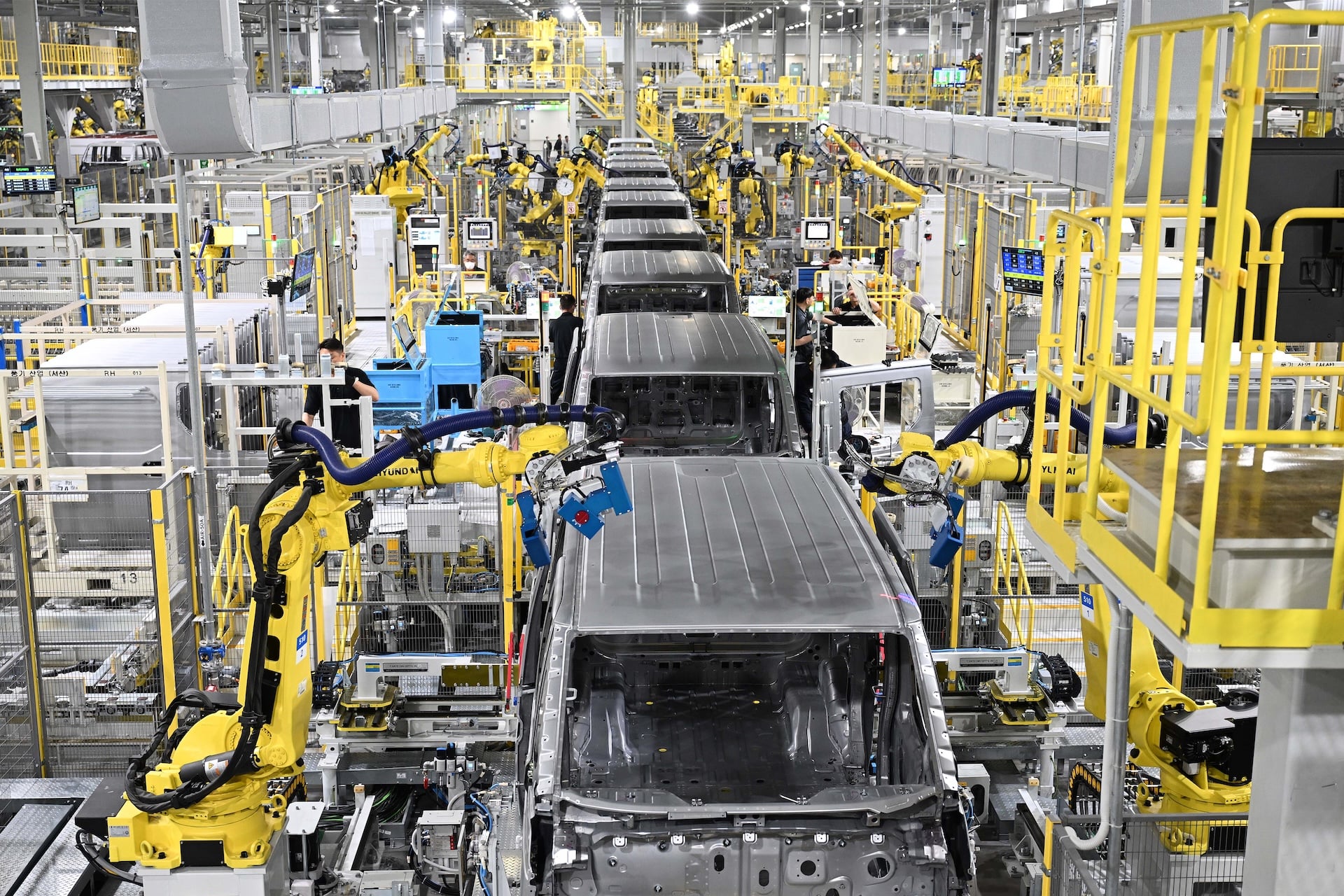
The body shop implements smart logistics through automated guided vehicle integration. The system enables real-time material handling and component delivery throughout the manufacturing process.
Paint Shop Configuration
Dry booth technology reduces controlled substance impact in the paint shop. The configuration supports Kia’s low-carbon facility objectives through reduced environmental emissions.
Assembly Line Design
The final assembly shop combines mass-production conveyor systems with cell-based production processes. This hybrid approach enables simultaneous manufacturing of different mobility types on the same production line.
Assembly line features include:
- Specification guidance monitors for error prevention
- Automated heavy component installation systems
- Low-noise equipment for improved working conditions
- Human-centric workspace design based on ergonomic principles
Strategic Partnership Model
The PBV Conversion Centre will operate as a collaborative development facility with strategic partners. The center enables production of customized PBV variants beyond standard factory configurations.
Initial conversion models will build on the PV5 platform before expanding to PV7-based variants. The facility aims to foster a sustainable PBV ecosystem through partner company collaboration.
Energy Infrastructure Development
Kia plans to install a 50 MW solar power generation facility within AutoLand Hwaseong. The renewable energy investment supports the company’s RE100 initiative for transitioning to 100% renewable electricity.
Executive Perspective
“Kia is leveraging the electrification of light commercial vehicles as a key opportunity to position PBVs as a core future business,” said Ho Sung Song, Kia President and Global CEO. “As we continue our journey toward sustainable future mobility, Kia remains committed to becoming a trusted partner in building a better future for Korea — and for humanity as a whole.”
The ceremony drew approximately 200 attendees including Min-seok Kim, Prime Minister of the Republic of Korea, Shinhak Moon, Vice Minister of Trade Industry and Resources, Dong Yeon Kim, Governor of Gyeonggi Province, and Myeong-geun Jeong, Mayor of Hwaseong Special City.
Hyundai Motor Group representation included Euisun Chung, Executive Chair, along with presidents from Strategic Planning and Advanced Vehicle Planning divisions.
Market Position Strategy
Kia’s PBV business strategy focuses on five operational pillars: Product, Manufacturing, Solutions, Services, and Channels. The company positions the Hwaseong EVO Plant complex as a strategic hub for global PBV business expansion.
The integrated facility structure—combining EVO Plant East, EVO Plant West, and the Conversion Centre—will enable full PBV lineup production once all operations reach capacity.
Visit the Kia website to learn more.
Sign up for our popular weekly email to catch all the latest EV news!