
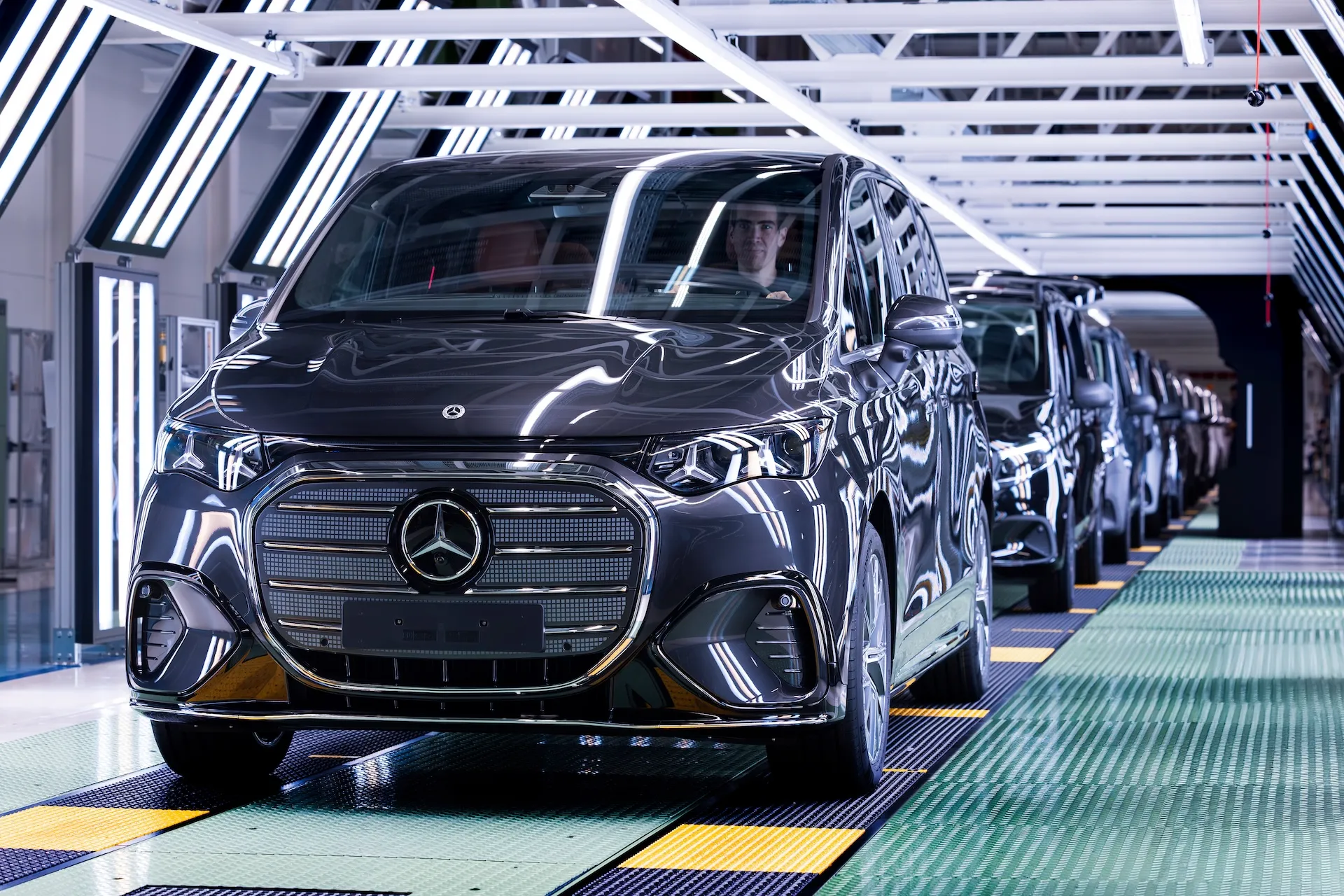
Mercedes-Benz has started series production of the all-electric VLE at its Vitoria plant in Spain, a multi-purpose vehicle the company says offers up to eight seats and a WLTP range of more than 435 miles (700 km). The VLE is the first model built on the automaker’s new modular, drivetrain-flexible Van Architecture, and the Vitoria site is the first in Mercedes-Benz’s global production network to build it in series. The Fuzhou plant in China is set to follow at the end of the year, producing vehicles for the Chinese market.
Highlights
- Vitoria is the first site in Mercedes-Benz’s global network to build the VLE in series; Fuzhou, China, follows at the end of the year for the Chinese market.
- The VLE offers up to eight seats and a WLTP range of more than 435 miles (700 km), with 800-volt technology and fast charging.
- About 5,000 direct employees completed more than 160 training programs to prepare for the new architecture, materials, IT standards, and processes.
- The Vitoria plant has been carbon-neutral on a net basis since 2022, with a largely electric paint shop due to begin operations in fall 2026.
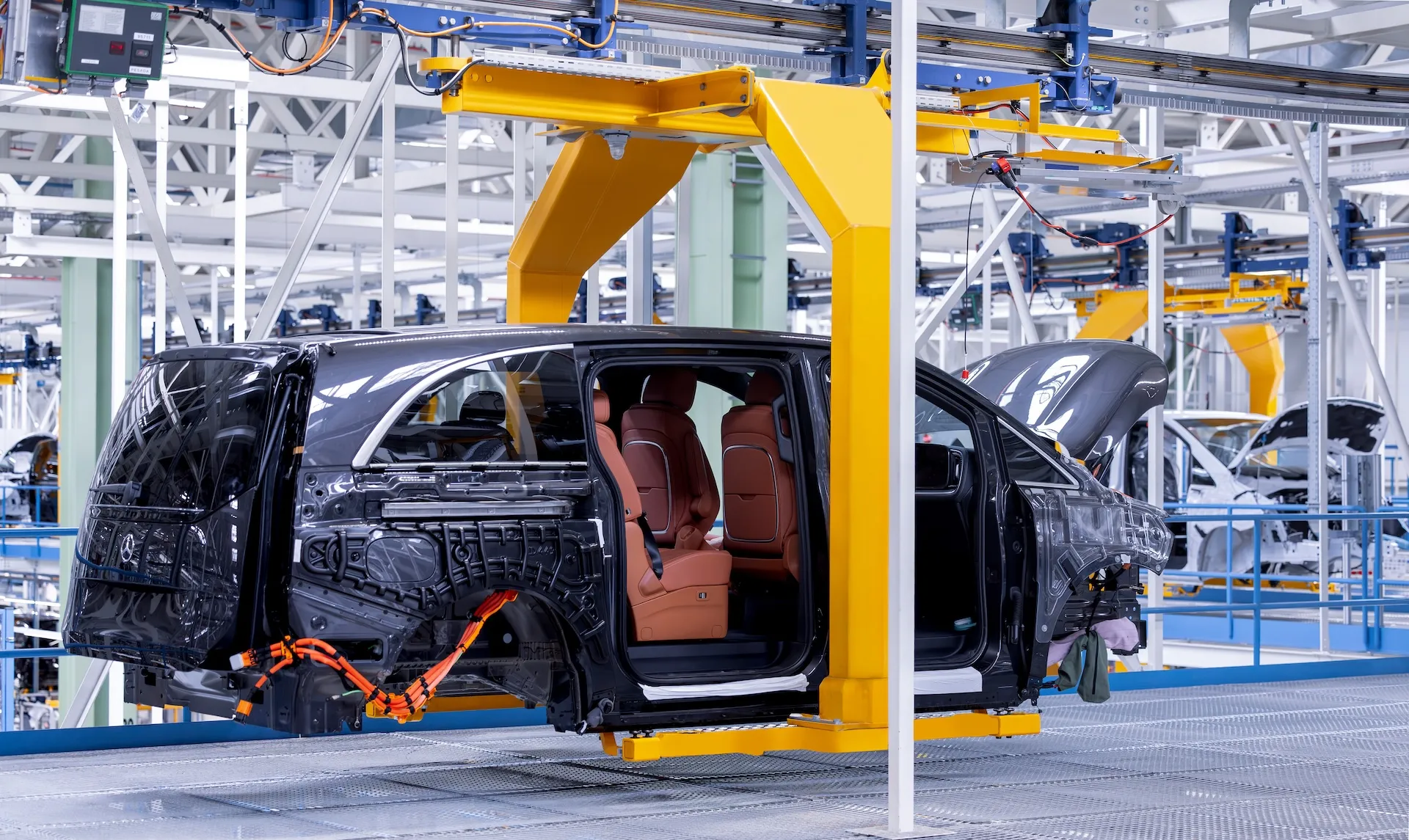
VLE Leads a New Van Architecture
The VLE is the first vehicle to use Mercedes-Benz’s modular and scalable Van Architecture, which the company says will form the technological basis for its entire van portfolio across both private and commercial segments. The vehicle, which Mercedes-Benz premiered in March, is positioned as what the company calls a Grand Limousine, combining limousine ride comfort and driving dynamics with the space and versatility of an MPV.
“The VLE shows how we drive innovation at Mercedes-Benz: fast, focused and with the highest quality ambition. We developed this vehicle in a very short time, enabled by a digital development approach, strong, cross functional international teams, and the Vitoria plant, which turns the Mercedes promise into reality on the road.”
— Ola Källenius, Chairman of the Board of Management, Mercedes-Benz Group AG
Eight Seats, 800-Volt Charging and MB.OS
Mercedes-Benz cites a WLTP range of more than 435 miles (700 km) for the VLE, supported by 800-volt technology and fast charging. WLTP figures typically run higher than the EPA estimates used in the United States. Preliminary figures for the VLE 300 electric put combined energy consumption at 18.4–20.7 kWh/100 km, with zero tailpipe CO₂ emissions and a CO₂ class of A1.
The vehicle runs the Mercedes-Benz Operating System (MB.OS), which the company says manages functions ranging from driver assistance and infotainment to driving performance.
“As a Grand Limousine, the new VLE is a perfect companion for a wide range of use cases – from a flexible vehicle for families and leisure-oriented customers to exclusive shuttle services. With the start of production of the VLE in Vitoria, we are now entering a new era.”
— Thomas Klein, Head of Mercedes-Benz Vans
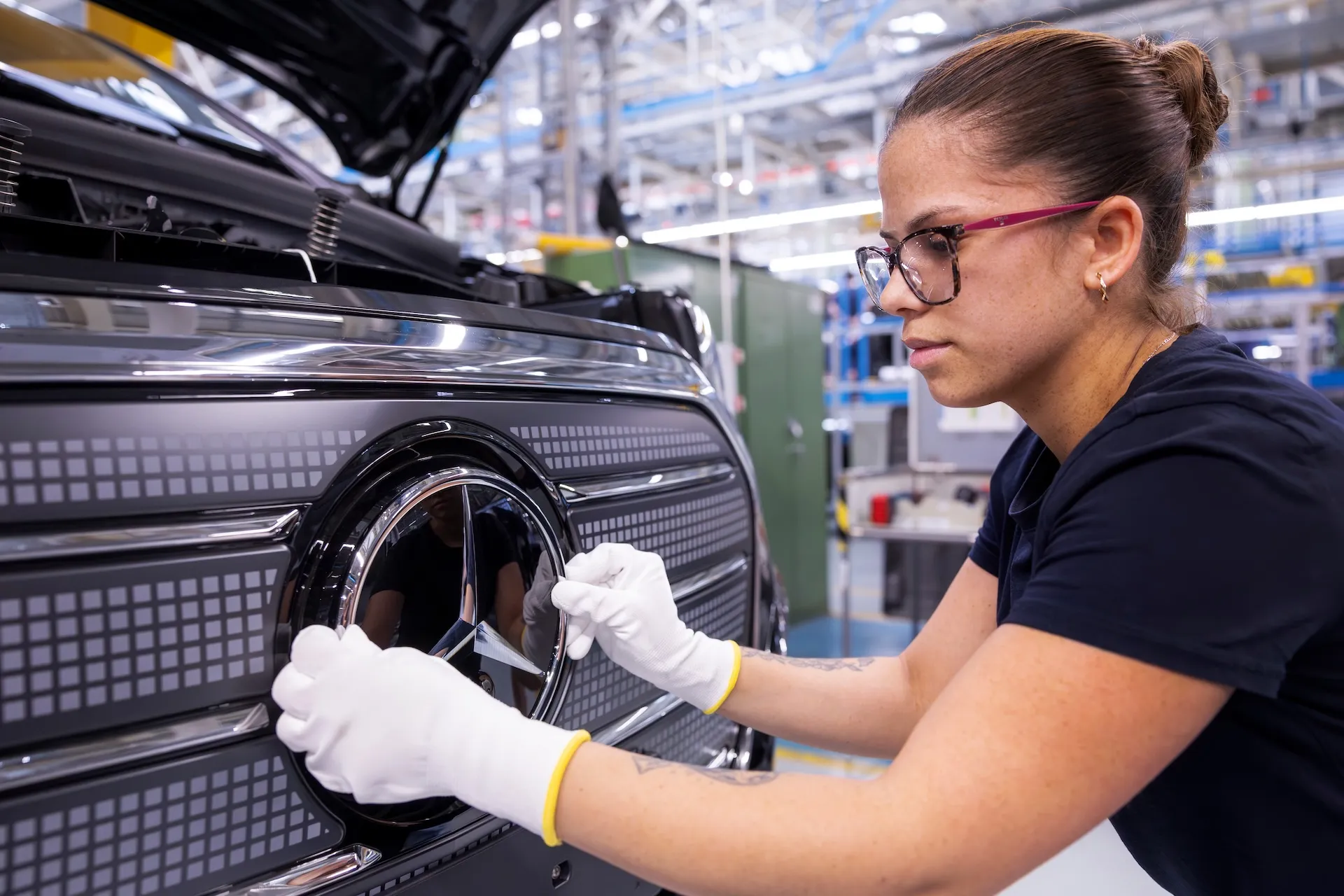
Inside the Vitoria Plant Transformation
The start of series production caps a comprehensive transformation of the Vitoria plant, which Mercedes-Benz describes as one of its largest industrial projects for Mercedes-Benz Vans in Europe. Investments in a new body shop, paint shop, and assembly areas, along with upgraded logistics and IT, now allow flexible, multi-powertrain production on a single line. The work was carried out while existing models, including the V-Class, Vito, and eVito, stayed in production.
Mercedes-Benz marked the milestone at a ceremony attended by Mercedes-Benz Vans head Thomas Klein, Mercedes-Benz Group AG chairman Ola Källenius, Spain’s Minister of Industry and Tourism Jordi Hereu, and Basque Autonomous Community President Imanol Pradales. The site employs roughly 5,000 direct workers, who completed more than 160 training programs to prepare for the new technologies and processes.
“The start of series production of the VLE fills me with great pride, especially when I look at our team. … They have carried this transformation and are making Vitoria a strong site for the future of Mercedes-Benz Vans.”
— Bernd Krottmayer, Plant Manager, Mercedes-Benz Vitoria
Sustainability at the Vitoria Site
The Vitoria plant has been carbon-neutral on a net basis since 2022, with unavoidable emissions offset through certified compensation projects, according to the company. The site draws on renewable electricity, geothermal energy, and waste heat from body construction and the paint shop, and all new buildings meet the Zero-Emission Building Standard. A photovoltaic system supports the site’s own renewable supply. A largely electric, flexibly designed paint shop is scheduled to begin operations in fall 2026, running on renewable electrical energy without fossil fuels.
Sign up for our popular weekly email to catch all the latest EV news!