

Brazil and Mexico have formalized their commitment to decarbonizing heavy-duty transport by signing the Global Memorandum of Understanding on Zero-Emission Medium- and Heavy-Duty Vehicles at COP30 in Belém, Brazil. The agreement, which now includes 42 national governments, establishes a target of 100% new zero-emission medium- and heavy-duty vehicle (ZE-MHDV) sales by 2040, with an interim milestone of at least 30% by 2030.
Highlights
- Brazil and Mexico join 40 other nations in committing to 100% zero-emission truck and bus sales by 2040
- Signatories represent nearly 25% of global truck volumes and 40% of world GDP
- E-Dutra Coalition announced to deploy 1,000 electric trucks on Rio de Janeiro–São Paulo corridor by 2030
- Private sector endorsers include Scania, Iberdrola, and EZVolt, citing economic and operational benefits
Strategic Policy Alignment
Dr. José Luis Samaniego Leyva, Undersecretary of Sustainable Development and Circular Economy at SEMARNAT, described the MoU as opening pathways for investment, production, and innovation in zero-emission vehicles. The agreement positions both nations to attract global fleet operators, infrastructure providers, and technology developers focused on commercial vehicle electrification.
John Boesel, CEO of CALSTART, emphasized that Brazil and Mexico are demonstrating regional leadership by sending clear market signals. The policy commitment is designed to catalyze private sector investment in charging infrastructure, vehicle manufacturing, and supply chain development across Latin America.
Industry Response and Technical Readiness
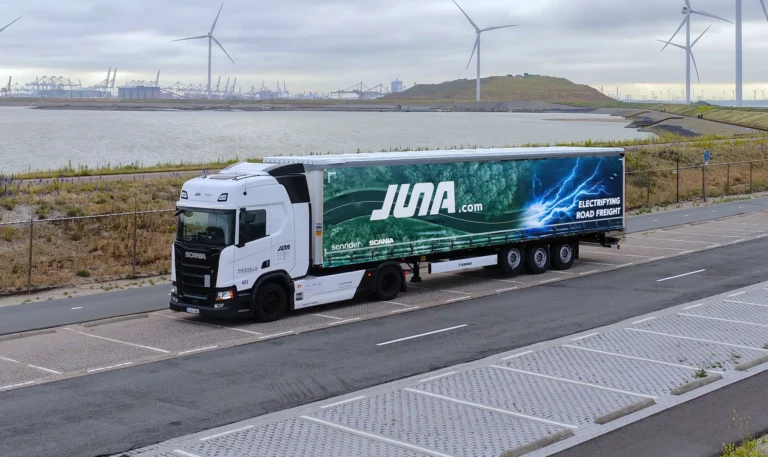
Christian Levin, President and CEO of Scania, stated that mature technical solutions for heavy-duty decarbonization are already available. The company confirmed its readiness to collaborate on making zero-emission freight transport operational across Latin America through coordinated public-private partnerships.
Francisco Laverón, Head of Energy Prospective for Iberdrola, highlighted the role of renewable electricity in powering the transition. The integration of clean energy infrastructure is positioned as essential for supporting the economic competitiveness of electrified commercial vehicle fleets.
Gustavo Tannure, CEO of EZVolt, provided operational benchmarks for electric commercial vehicles compared to diesel equivalents:
- 80% lower operating costs
- 80% to over 100% higher energy efficiency
- Zero particulate matter and CO2 emissions
- Improved driver and passenger comfort
E-Dutra Coalition and Infrastructure Development
A parallel announcement introduced the e-Dutra Coalition, a public-private partnership focused on establishing Brazil’s first zero-emission highway corridor between Rio de Janeiro and São Paulo. The coalition targets deployment of 1,000 electric trucks and supporting high-capacity charging infrastructure by 2030.
The initiative aligns with the Laneshift Initiative and Global Green Road Corridors, positioning Brazil as a leader in sustainable freight mobility. The corridor project is expected to generate measurable improvements in air quality, carbon reduction, and green economic development opportunities.
Global MoU Scale and Economic Impact
The 42 signatory countries collectively represent nearly one in four trucks globally. Endorsing companies and organizations account for more than $1.3 trillion in annual revenues. New endorsers announced at COP30 include Despacio, Dhemax, EnergyLab, Evolectric, Grutter Consulting, Kabisa, Industry Efficiency Solutions SpA, INTENT Platform, New Energy Transport, Municipalidad de Rancagua, and Transportes Patricio Gutiérrez VEIRL.
Stephanie Kodish, Senior Global Director of CALSTART’s Drive to Zero, noted that Latin America has emerged as a critical region for clean technology adoption in commercial vehicles. Local communities are positioned to benefit from economic, operational, and public health improvements associated with zero-emission transport systems.
Policy Framework and Implementation
The Global MoU, co-led by the Government of Colombia and CALSTART’s Drive to Zero, was first introduced at COP26 in Glasgow. The framework establishes binding interim targets while providing flexibility for national implementation strategies aligned with regional economic and infrastructure conditions.
Supporting organizations at the COP30 announcement included SLOCAT Partnership, Road Transport Breakthrough, Accelerating to Zero Coalition, ICCT, UIC, Smart Freight Center, C40, Volkswagen Truck & Bus, WRI Brazil, WBCSD, and the Ministries of Transport of Colombia and Brazil.
Sign up for our popular weekly email to catch all the latest EV news!