
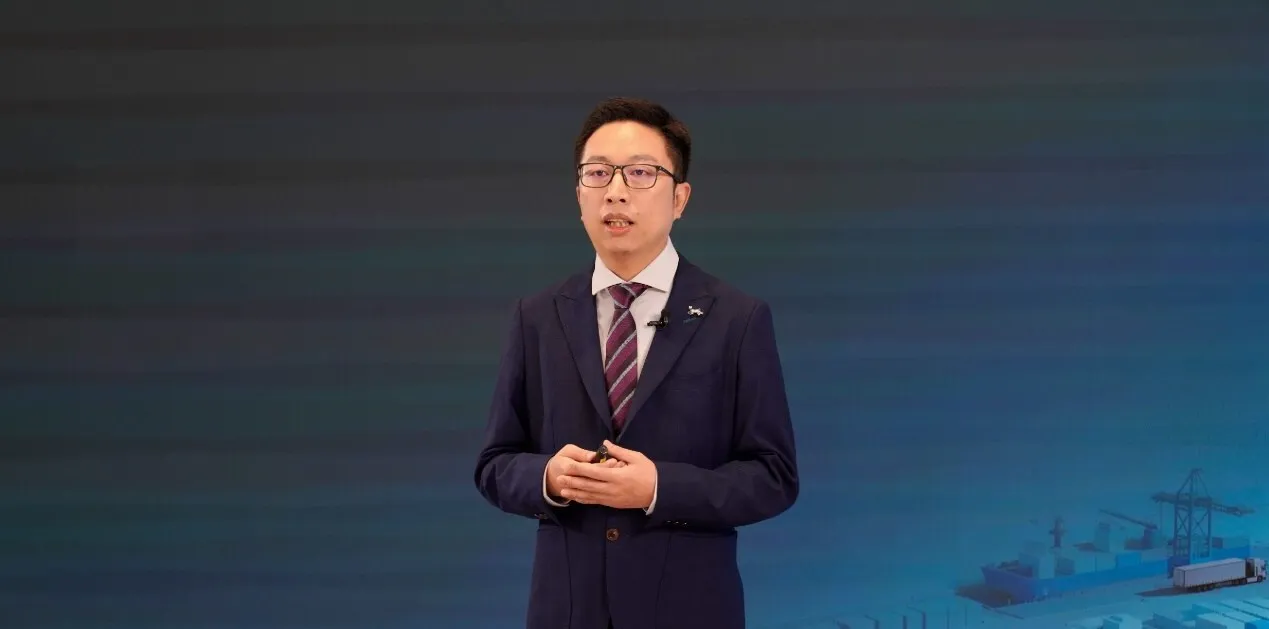
Huawei released its Top 10 Trends of Charging Network Industry 2026 on January 16. Wang Zhiwu, President of Huawei Smart Charging Network Domain, presented the company’s analysis of anticipated industry and technological developments for the coming year.
Highlights
- Megawatt-class charging for commercial vehicles emerges as a central theme, with predictions of widespread heavy goods vehicle electrification
- Liquid-cooled charging technology positioned to replace air-cooled systems for demanding environments and higher power applications
- DC-based energy storage and charger integration offers solutions for sites with limited grid capacity
- AI-driven network management expected to improve coordination across charging infrastructure
High-Quality Infrastructure Development
The first trend addresses infrastructure quality standards. As charging demands expand from passenger vehicles to commercial fleets, legacy charging equipment faces pressure for large-scale upgrades. Huawei anticipates unified planning, standards, supervision, and operations extending from ultra-fast charging deployments to megawatt-class charging networks.
Ultra-Fast Charging Market Expansion
Third-generation power semiconductor materials and high-C-rate traction batteries are expected to increase market penetration of ultra-fast-charging vehicles. Technology previously limited to premium segments will become more broadly available, while megawatt-charging commercial vehicles gain market share.
Megawatt-Scale Logistics Electrification
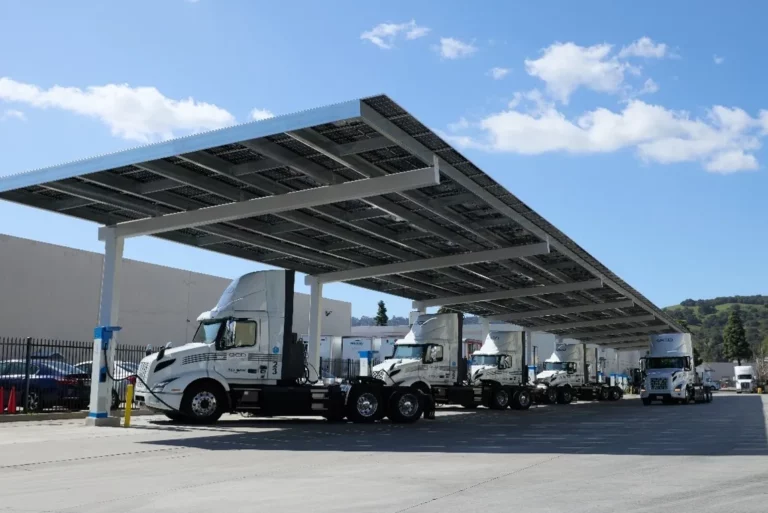
Heavy goods vehicle electrification is projected to expand from limited, closed applications to widespread adoption across all scenarios. Traction battery cost reductions combined with megawatt charging technology advances drive this transition, with implications for both economic returns and emissions reduction.
Hundred-Megawatt-Scale Charging Stations
Large-scale charging stations rated at 100 MW represent essential infrastructure for high-throughput commercial operations. Technical capability, competitive electricity pricing, and scalable deployment are identified as factors enabling sustainable investment returns.
Security and Trustworthiness Requirements
Commercial vehicle applications demand higher charging power levels and greater energy storage system capacity at charging stations. Comprehensive electrical safety protection architectures must safeguard personnel, vehicles, and charging equipment, supported by robust cybersecurity foundations.
Liquid-Cooled Charging Technology
Liquid-cooled ultra-fast charging provides advantages in heat dissipation and equipment protection across distributed charging scenarios. Key benefits include:
- Superior thermal management compared to conventional air-cooled systems
- Reliable operation in high heat, humidity, salt fog, and dusty environments
- Megawatt charging enablement through application in both vehicles and chargers
- Potential vehicle cost reductions through integrated cooling solutions
DC-Based Energy Storage Integration
DC-based ESS and charger systems increase effective power capacity, enabling deployment of ultra-fast charging stations at locations with limited grid power. Applications include:
- Upgrading legacy low-capacity stations
- Rapid deployment or repurposing of ultra-fast charging infrastructure
- Maximizing charging capability with minimal grid power requirements
Modular Station Construction
Station-level modular solutions address engineering construction and device commissioning requirements across various charging scenarios. The approach offers low cost, rapid deployment, easy relocation, and durable design for long-term operation.
Campus Microgrid Integration
Grid-forming photovoltaic and energy storage systems integrate with liquid-cooled ultra-fast charging technology, operating in on-grid or off-grid modes. This configuration creates integrated solutions combining PV, energy storage, chargers, vehicles, and network connectivity while enabling time-of-use electricity arbitrage.
AI-Enabled Network Management
Intelligent charging network evolution aims to enable coordination across networks, stations, chargers, and vehicles. Breaking down digital silos could improve the charging experience for vehicle operators while enhancing logistics and transportation efficiency.
Sign up for our popular weekly email to catch all the latest EV news!