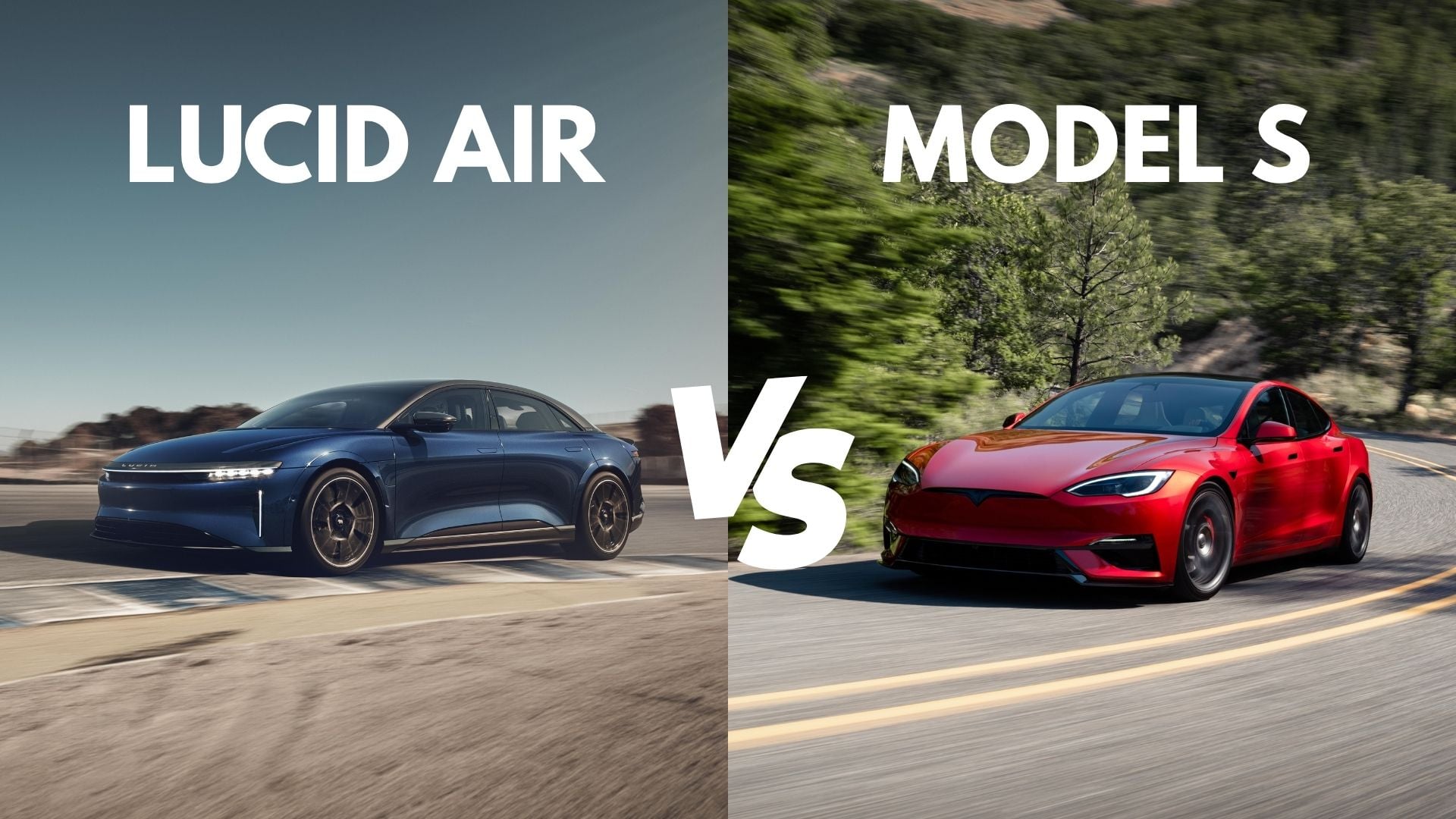

In the rapidly evolving world of electric vehicles, two American-made sedans stand out as benchmarks for luxury and performance: the Lucid Air and the Tesla Model S. Both represent the pinnacle of EV engineering, but they cater to slightly different priorities. The Tesla Model S, first introduced in 2012, pioneered the modern EV revolution with its blend of speed, range, and innovative tech. The Lucid Air, a relative newcomer debuting in 2021, positions itself as a more refined alternative, emphasizing efficiency, opulence, and cutting-edge battery tech. As of 2025, with both models receiving incremental updates, this comparison dives into their similarities and differences to help potential buyers decide which reigns supreme.
Design and Exterior: Aerodynamic Elegance Meets Timeless Minimalism
Both the Lucid Air and Tesla Model S feature sleek, aerodynamic designs optimized for efficiency and style, but they diverge in execution. The Lucid Air boasts a more curvaceous, futuristic silhouette with a low-slung profile (height: 55.4 inches, length: 195.9 inches, wheelbase: 116.5 inches), emphasizing a premium, almost spaceship-like aesthetic. Its optional panoramic Glass Canopy roof enhances the open feel, and details like slim LED headlights and flush door handles contribute to a drag coefficient as low as 0.197.
In contrast, the Tesla Model S maintains a minimalist, evolutionary design that’s slightly larger (height: approximately 56.9 inches, length: 196 inches), with a focus on functionality. Its yoke steering wheel (or optional round wheel) and hatchback practicality give it a sportier edge, but some critics note it feels dated compared to fresher rivals. Dimensionally, the Model S is marginally longer and taller, offering a bit more presence on the road. Cargo space favors the Tesla slightly in the trunk (25-28 cubic feet vs. Lucid’s 22.1), but the Air’s larger frunk (10 cubic feet vs. 3) and total capacity (up to 74.8 cubic feet with seats folded) make it more versatile for families.
Overall, the Lucid Air wins for a more luxurious, contemporary look, while the Model S appeals to those who prefer understated aggression.
Interior and Comfort: Opulence vs. Simplicity
Step inside, and the differences become stark. The Lucid Air’s cabin is a masterclass in luxury, with high-quality materials, ample padding, and supportive seats that rival traditional luxury sedans like the BMW 7 Series. Rear passengers enjoy more legroom (about two inches extra over the Model S), making it ideal for taller adults. Features like synthetic or genuine leather upholstery, excellent sound insulation, and a spacious feel elevate it to true opulence. User feedback on platforms like Reddit echoes this, praising the Air’s superior fit and finish.
The Tesla Model S, while comfortable with supremely cushy front seats and synthetic leather, feels more minimalist and tech-focused. Its interior is attractive but lacks the “clever details” and refinement of the Air, with some owners noting it shows its age. Passenger volume is similar (around 95-100 cubic feet), but the Model S’s rear space can feel cramped for larger groups. In real-world tests, the Air provides a softer, more compliant ride, absorbing bumps better, whereas the Model S feels taut and sporty.
If luxury and comfort are priorities, the Lucid Air takes the crown; Tesla excels in a no-frills, driver-centric setup.
Performance and Range: Powerhouses with Different Strengths
Both sedans deliver blistering performance, but specs vary by trim. Here’s a side-by-side comparison of key models:
| Feature | Lucid Air Pure (Base) | Lucid Air Sapphire (Top) | Tesla Model S (Standard) | Tesla Model S Plaid |
|---|---|---|---|---|
| Starting Price | $69,900 | $249,000 | $79,990 | $89,990 |
| Horsepower | ~410 hp | 1,234 hp | 670 hp | 1,020 hp |
| 0-60 mph | 4.5 seconds | 1.89 seconds | ~2.4 seconds | ~2.1 seconds |
| Top Speed | ~140 mph | Not specified | 163 mph | 162 mph |
| EPA Range | 420 miles | 427 miles | 402 miles | 359 miles |
| Battery Capacity | ~88 kWh | ~118 kWh | ~98 kWh | ~99.3 kWh |
The Lucid Air shines in efficiency and range, with the Grand Touring trim hitting an unmatched 512 miles—far surpassing the Model S’s max of 402 miles. This stems from Lucid’s advanced battery tech, originally developed as Atieva. Performance-wise, the Sapphire edges out the Plaid in acceleration (1.89 vs. 1.99 seconds), but both are neck-and-neck for everyday thrills. Handling favors the Air for comfort-oriented driving, while the Model S feels more agile.
Charging: Lucid adds 200 miles in 12-17 minutes on a DC fast charger, slightly quicker than Tesla’s 15 minutes, but Tesla’s vast Supercharger network (with V4 upgrades) provides unmatched convenience for long trips. Lucid’s home charger adds up to 80 miles per hour.
For sheer range and efficiency, Lucid leads; Tesla dominates in accessible infrastructure and raw fun.
Technology and Features: Intuitive vs. Immersive
Technology is where these EVs truly innovate. The Lucid Air’s 34-inch curved display combines the gauge cluster and infotainment, offering wireless Apple CarPlay, Android Auto, Bluetooth, and an intuitive interface that’s less distracting. Safety features include advanced driver aids like blind-spot monitoring and automatic emergency braking. The DreamDrive suite enhances safety without over-reliance.
Tesla’s 17-inch central touchscreen controls everything, including a rear-seat display, but it lacks CarPlay/Android Auto, requiring app integrations that can be finicky. Autopilot (standard) and Full Self-Driving (optional) lead in autonomy, though they require driver attention. Over-the-air updates keep it fresh, but the interface can distract during use.
Users often praise Tesla’s software maturity and ecosystem, while Lucid’s is catching up but excels in user-friendliness. Lucid wins for integration with popular apps; Tesla for advanced autonomy and network perks.
Pricing and Value: Entry-Level Edge vs. Proven Reliability
The Lucid Air starts lower at $69,900 (Pure) but scales up quickly—Touring at $78,900, Grand Touring at $110,900, Sapphire at $249,000. Leasing options begin at $649/month with incentives like 0.99% APR. The Model S opens at $79,990 (standard) or $89,990 (Plaid), with no major changes for 2025. Tesla’s resale value and lower maintenance (e.g., 200k-mile reliability) add long-term appeal.
Warranties are similar: both offer 4 years/50,000 miles basic and 8 years on powertrain/battery (Tesla unlimited miles on powertrain). Lucid provides better value at entry level, but Tesla’s ecosystem (charging, software) justifies the premium for many.
Which One Should You Choose?
The 2025 Lucid Air emerges as the overall winner in most head-to-head comparisons, excelling in range, interior luxury, and refinement—making it a compelling rival to traditional luxury sedans. It’s ideal for buyers seeking opulent comfort and top-tier efficiency. However, the Tesla Model S remains a powerhouse with superior software, a proven track record, and the best charging network, appealing to tech enthusiasts and long-haul drivers. Ultimately, test drive both: if you prioritize luxury and range, go Lucid; for innovation and reliability, stick with Tesla. As EV tech advances, this rivalry only pushes the industry forward.
Stock It To Me
Sign up for our popular weekly email to catch all the latest EV news!