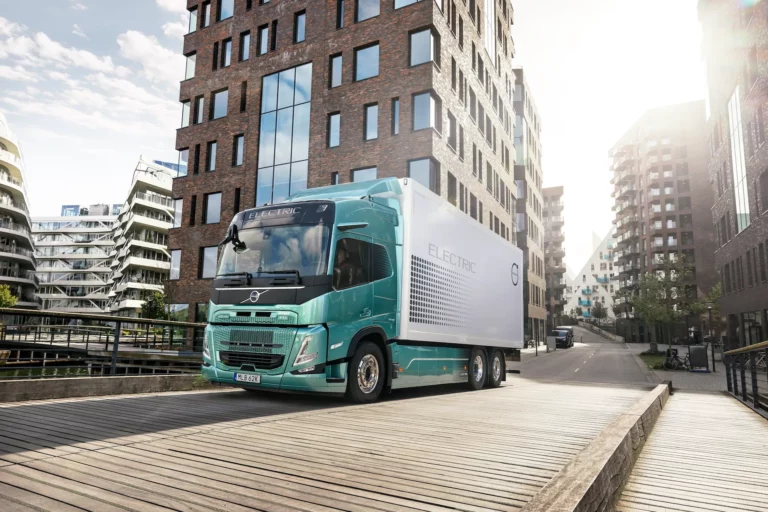


Mercedes-Benz Trucks has launched a 2,400-kilometer field test to evaluate Megawatt Charging System (MCS) compatibility on its eActros 600 battery-electric long-haul truck. Two MCS-equipped test vehicles are traveling from the company’s Wörth am Rhein plant in Germany to Linköping, Sweden, passing through the Netherlands, Belgium, and Denmark.
Highlights
- Two eActros 600 trucks are testing MCS charging under real-world winter conditions across a 2,400-km European route.
- MCS enables 20% to 80% charging in approximately 30 minutes, compared to slower CCS technology currently in widespread use.
- Development engineers are evaluating charging curves, average power output, and infrastructure compatibility across multiple manufacturers’ stations.
- The CharIN organization is leading international standardization efforts for uniform truck-to-charger interfaces.
Testing Vehicle-to-Charger Compatibility
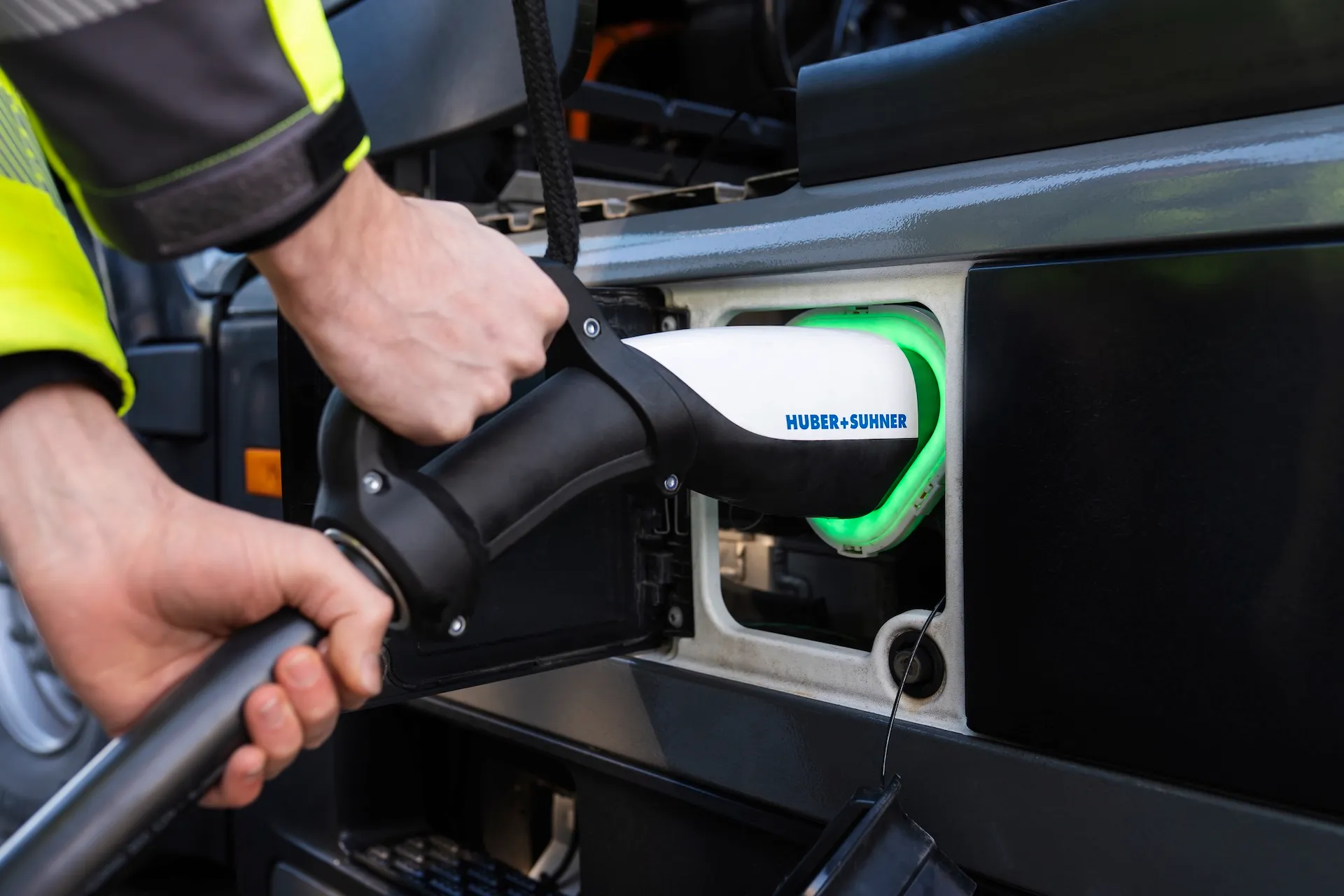
The primary objective centers on verifying compatibility between the eActros 600 and megawatt charging stations from different manufacturers. Engineers are collecting data on charging performance, thermal management under high-current conditions, and overall infrastructure reliability.
Peter Ziegler, Head of E-Charging Components at Mercedes-Benz Trucks, stated that harmonizing vehicles with various charging systems presents a key challenge. The extreme charging currents in MCS charging place significant demands on thermal management systems.
MCS Advantages for Long-Haul Operations
MCS technology delivers charging capacities up to 1,000 kW, substantially faster than current CCS infrastructure. This speed improvement allows fleet operators to increase vehicle utilization and implement more flexible logistics scheduling.
Public MCS infrastructure remains limited across Europe. However, the technology offers economic benefits for freight forwarders by enabling longer daily operating ranges. The eActros 600 can cover more than 1,000 kilometers per day when drivers use mandated rest periods for intermediate charging.
eActros 600 Technical Specifications
The eActros 600 features three lithium iron phosphate (LFP) battery packs with a combined nominal capacity of 621 kWh. LFP chemistry provides long service life and allows utilization of more than 95% of installed capacity.
Key specifications include:
- Range: 500 km without intermediate charging at 40-ton gross train weight
- Payload: Approximately 22 tons in the EU with standard semi-trailer
- Gross train weight: Up to 44 tons combined
- Battery configuration: Three packs at 207 kWh each
The vehicle incorporates a newly developed high-efficiency electric drive axle. Actual range varies based on driving conditions, ambient temperature, and route profile.
Standardization and Infrastructure Development
The CharIN organization is coordinating MCS standardization in collaboration with truck manufacturers worldwide. Uniform interfaces between charging stations and electric trucks support development of a pan-European fast-charging network for heavy-duty commercial vehicles.
The binding MCS standard remains under development. Current charging time estimates are based on internal simulations conducted by Mercedes-Benz Trucks.
Additional information: www.daimlertruck.com
Sign up for our popular weekly email to catch all the latest EV news!