
Renault has unveiled an updated Megane E-Tech electric built around a new 67 kWh lithium iron phosphate (LFP) battery rated at up to 310 miles (WLTP), a figure the company lists as pending final confirmation. The hatchback pairs that battery with a 220 hp (160 kW) wound-rotor synchronous motor and supports DC rapid charging at up to 165 kW. Renault frames the revision around four areas — exterior design, electric efficiency and charging, connected technology and driver assistance, and a simplified two-trim range — for a model that first launched in 2022.
Highlights
- New 67 kWh usable LFP battery uses a cell-to-pack architecture with 232 cells and is rated at up to 310 miles (WLTP), pending final confirmation.
- 220 hp (160 kW) wound-rotor synchronous motor producing 221 lb-ft (300 Nm), built at Renault’s Cléon plant in France and using no rare earth materials.
- DC rapid charging up to 165 kW, taking the battery from 15% to 80% in around 24 minutes, alongside an 11 kW AC onboard charger.
- openR link with Google built-in and Google Gemini, more than 100 in-car apps and three years of internet connectivity as standard.

Sharper Design and a Simplified Range
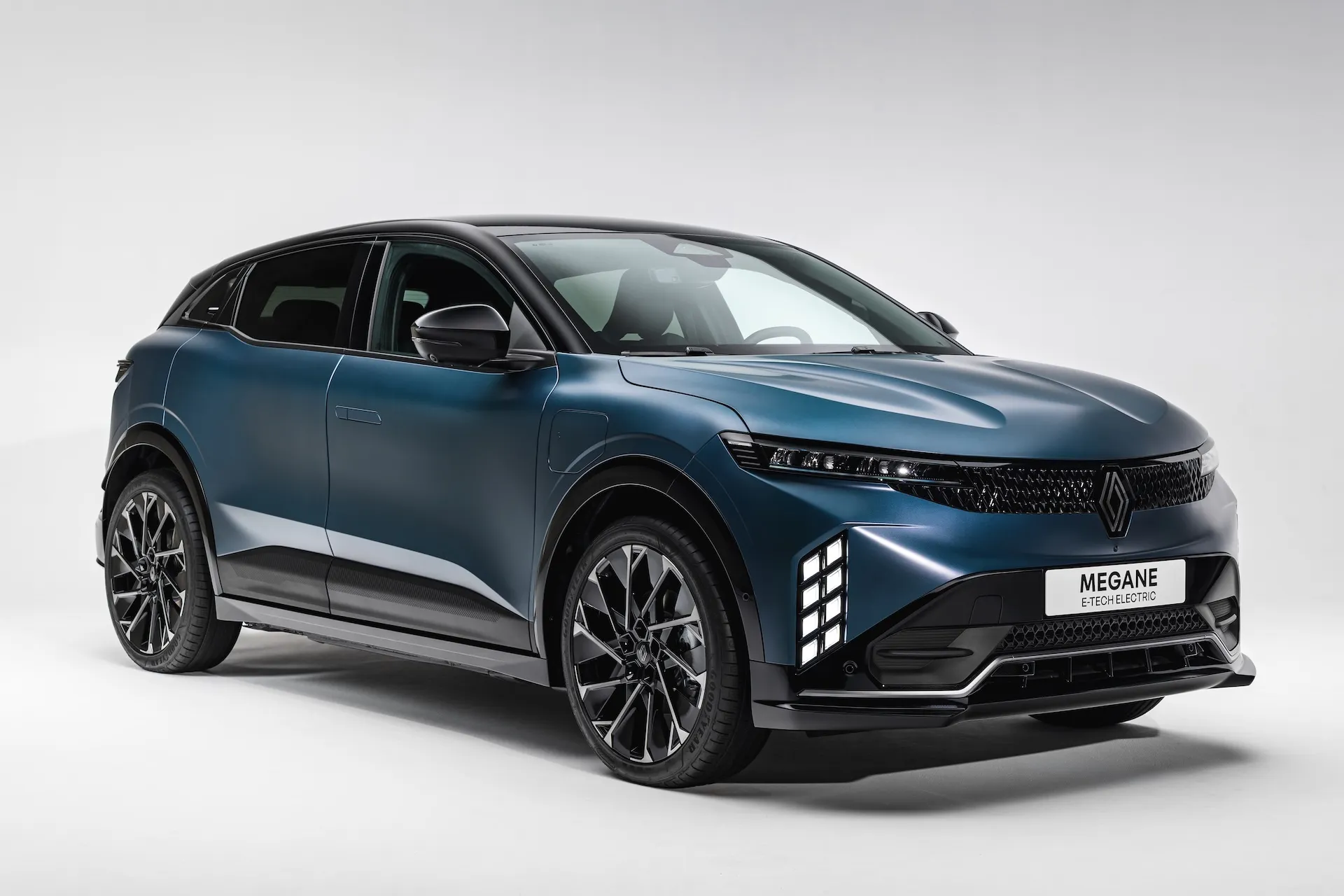
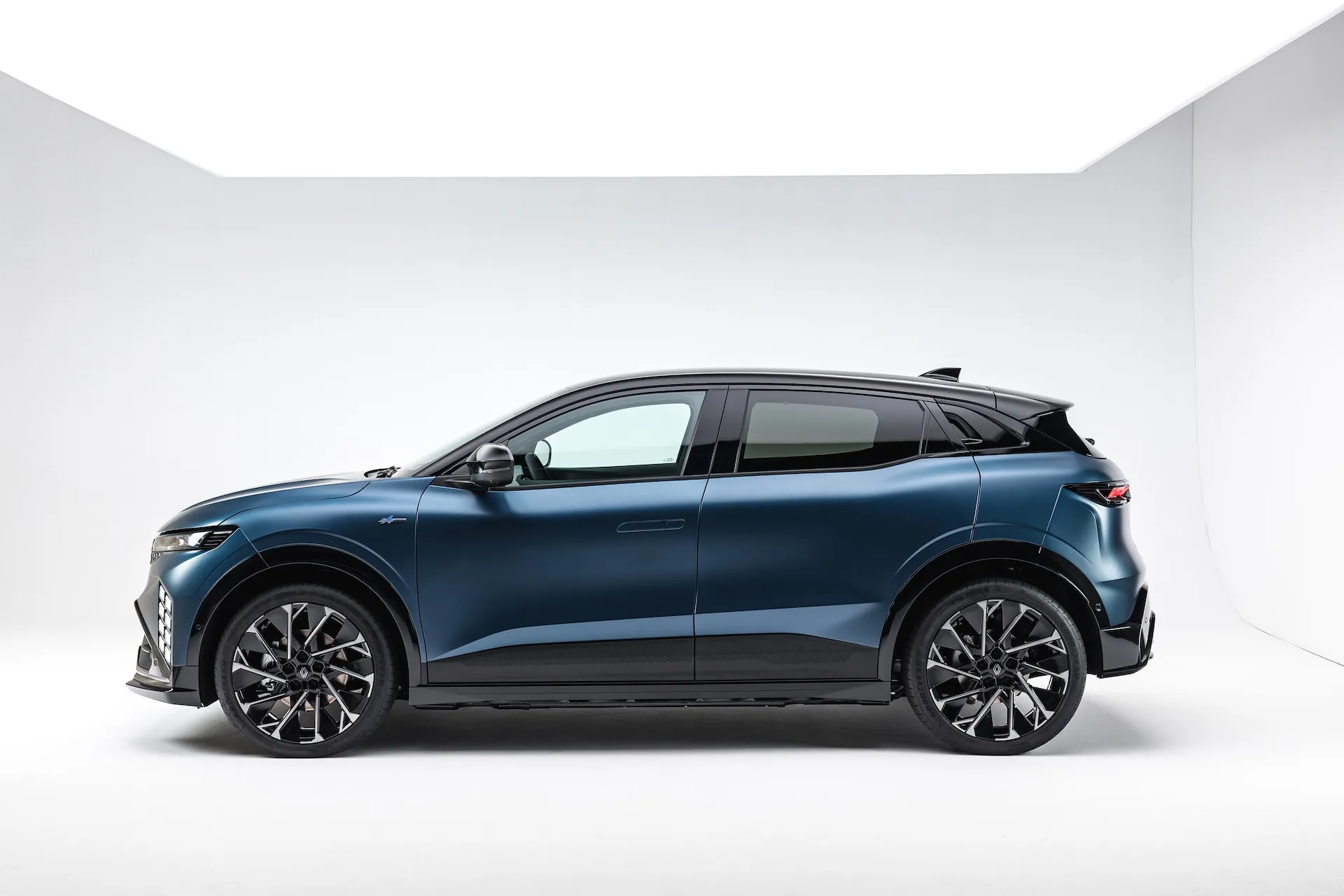
The updated car carries a remodeled front end; apart from the headlights, all front-end components are new. A body-colored front bumper replaces the former side air intakes with a light signature of eight diamond-shaped elements in a checkerboard pattern at the outer edges. The closed grille gains a gloss-black diamond-pattern finish, the Renault logo sits beneath the hood, and the daytime running lights adopt a new diamond pattern. The full-width rear lights are designed as 3D elements without a covering lens.
The car is 0.8 inch (20 mm) taller than before to accommodate the larger battery, and retains the original model’s long wheelbase, pronounced wheel arches, sloping roofline and flush door handles, riding on 19- or 20-inch wheels. Six body colors are offered, including a new Satin Blue, with two-tone options available.
The range is restructured around two trim levels, techno and esprit Alpine. techno includes body-colored front bumper trim, 19-inch alloy wheels and a TEP dashboard finish; esprit Alpine adds 20-inch alloy wheels, spectral grey door panel trim and distinct design details. LED ambient lighting can be personalized by the driver.
Battery, Motor and Charging
The new 67 kWh usable LFP battery uses new-generation lithium iron phosphate chemistry and a cell-to-pack architecture with 232 closely packed cells to improve packaging efficiency and usable capacity. It is paired with a wound-rotor synchronous motor built at Cléon in Normandy that uses no rare earth materials and develops 220 hp (160 kW) and 221 lb-ft (300 Nm).
DC rapid charging rises to 165 kW, allowing a 15% to 80% charge in around 24 minutes, and an 11 kW AC charger is fitted. Vehicle-to-load capability can power a 220V device of up to 3,700 W using an adaptor, while vehicle-to-grid functionality, where available by market, can feed electricity back into the grid. A heat pump, battery pre-conditioning and Google Maps route planning that accounts for charging stops round out the energy package.
The car uses the dedicated RG medium 1.0 platform, formerly AmpR Medium, with the battery under the floor for balanced weight distribution and a low center of gravity. The springs, dampers and steering have been retuned for the new battery, and a multi-link rear suspension supports stability. A One Pedal function and four levels of regenerative braking are selectable from the steering wheel paddles.
Connected Technology and Driver Assistance
The cockpit centers on openR link, with an inverted L-shaped layout pairing a 12.3-inch digital instrument cluster and a 12-inch multimedia screen as standard across all versions. The system runs Google built-in, with Google Assistant for voice control and Google Maps for navigation and EV route planning, and has received around 60 upgrades since the model launched in 2022. Google Gemini is added for more conversational interaction, maintaining context across requests. More than 100 apps are available through Google Play, and three years of connectivity lets owners use downloaded apps without a separate subscription.
A new driver recognition feature uses a camera in the windshield pillar; once a facial-scan profile is created, the car activates personalized settings, with the data stored only in the vehicle and not sent to a server. A Smart Mode function replaces MySense, switching between Multi-Sense modes based on driving behavior, and a Qi2 wireless charger compatible with MagSafe is available.
More than 30 safety and driver assistance systems are offered, including intelligent adaptive cruise control, an improved in-dash view, emergency stop assist, predictive eco driving advice, and Safety Score, Safety Coach and Safety Monitor functions. The new my rnlt mobile app lets drivers plan EV routes and send them to the car via Google Maps, monitor charge status and range, control charging remotely, pre-condition the cabin and locate nearby chargers; it will roll out gradually across Europe.
Key Specifications
- Length / width / height: 165.4 in (4,200 mm) / 70.2 in (1,782 mm) / 59.9 in (1,522 mm)
- Wheelbase: 105.7 in (2,685 mm)
- Trunk capacity: 15.5 cu ft (440 liters); 47.0 cu ft (1,332 liters) with rear seats folded
- Unladen weight: 3,907 lbs (1,772 kg)
- Power / torque: 220 hp (160 kW) / 221 lb-ft (300 Nm)
- Battery: 67 kWh usable LFP
- Range: up to 310 miles (WLTP), pending final confirmation
- Charging: 11 kW AC; up to 165 kW DC (15–80% in around 24 minutes)
- Top speed: 99 mph
- 0–31 mph: 3.4 seconds; 0–62 mph: 7.6 seconds
Sign up for our popular weekly email to catch all the latest EV news!