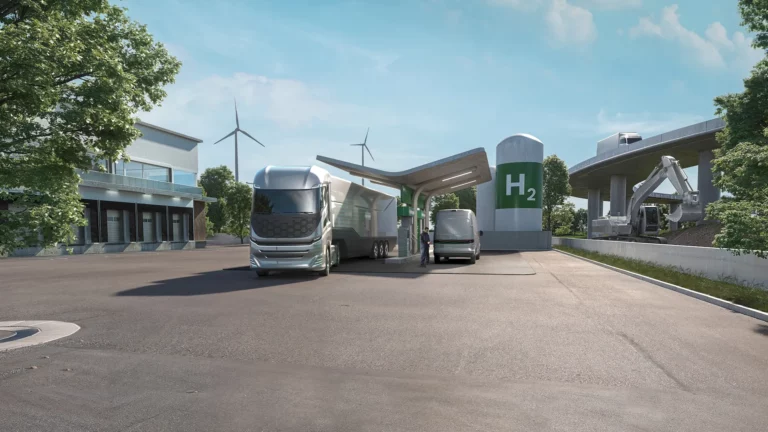


Scania continues its comprehensive evaluation of sustainable transport technologies through an expanded Pilot Partner initiative that now includes hydrogen fuel cell testing. While battery-electric transport remains the Swedish manufacturer’s primary decarbonization strategy, the company is conducting systematic real-world assessments of complementary technologies to understand their operational viability and technical performance parameters across different transport applications.
Highlights
- Hydrogen pilot program launched with Asko Norge AS to evaluate fuel cell technology in commercial operations, achieving initial ranges up to 1,000 kilometers per refueling
- Battery-electric powertrain remains strategic focus for Scania’s sustainable transport roadmap, with hydrogen testing conducted to understand alternative technology performance characteristics
- Pilot Partner program established 2021 as dedicated customer collaboration framework for testing battery-electric, hydrogen fuel cell, and range-extender solutions under real operational conditions
- Partnership-driven development approach enables Scania to collect practical performance data on total cost of ownership, operational efficiency, and technology validation across diverse transport segments
Asko Norge Hydrogen Fuel Cell Collaboration
At Transport.CH in Bern, Switzerland, Scania presented its hydrogen fuel cell pilot project with Asko Norge AS, a Norwegian logistics operator with established sustainability credentials. The collaboration involves testing hydrogen-powered commercial vehicles in business operations to evaluate technical performance metrics, operational feasibility parameters, and commercial viability under real-world conditions.
The hydrogen fuel cell vehicles under test are not yet available for commercial order. They represent one component of Scania’s broader Pilot Partner assessment framework, which the manufacturer established with selected customers to evaluate electrification technologies and alternative powertrain solutions under daily operational demands.
Technical Performance and Range Capabilities
Scania’s hydrogen pilot vehicles integrate the company’s established electric powertrain architecture with hydrogen fuel cell systems. Initial testing with Asko has demonstrated operational ranges up to 1,000 kilometers per refueling cycle, with water vapor as the sole tailpipe emission.
“Being part of Scania’s Pilot Partner initiative gives us a unique opportunity to test and influence the development of sustainable solutions that fit our operations,” states Jørn Arvid Endresen, CEO of ASKO Midt.
The technical evaluation focuses on quantifying real-world performance characteristics that include:
- Range and refueling efficiency under varied load conditions
- Powertrain performance across different operational profiles
- Integration complexity with existing fleet operations
- Total cost of ownership compared to battery-electric alternatives
Scania Pilot Partner Program Framework
Launched in 2021, the Scania Pilot Partner initiative functions as a structured collaboration platform between the manufacturer and selected commercial customers. The program evaluates multiple sustainable transport technologies spanning battery-electric vehicles, hydrogen fuel cells, and combustion engines with range extender configurations.
“By testing in real transport environments, we learn what works best in practice and how to accelerate progress,” explains Tony Sandberg, Head of Scania Pilot Partner.
The program structure enables systematic data collection on:
- Technology performance under diverse operational conditions
- Operational efficiency across different transport segments
- Total cost of ownership modeling
- Infrastructure requirements and integration complexity
Each Pilot Partner project operates as a hands-on evaluation platform where Scania and participating customers assess sustainable transport solutions across applications from urban distribution to long-haul operations.
Strategic Decarbonization Approach
The hydrogen fuel cell testing initiative does not alter Scania’s core decarbonization strategy, which prioritizes direct electrification through battery-electric vehicles. The hydrogen pilot serves to establish empirical performance data on alternative technologies and understand their potential role in specific transport applications where battery-electric solutions may face operational constraints.
“This is where innovation meets application,” notes Sandberg. “By working side by side with customers, we turn pilots into progress and strengthen Scania’s role in leading the shift towards a sustainable transport system.”
The comprehensive testing approach enables Scania to evaluate multiple technology pathways while maintaining strategic focus on battery-electric transport as the primary decarbonization solution.
Additional information on Scania’s electrification strategy is available at: www.scania.com/emobility
Sign up for our popular weekly email to catch all the latest EV news!