

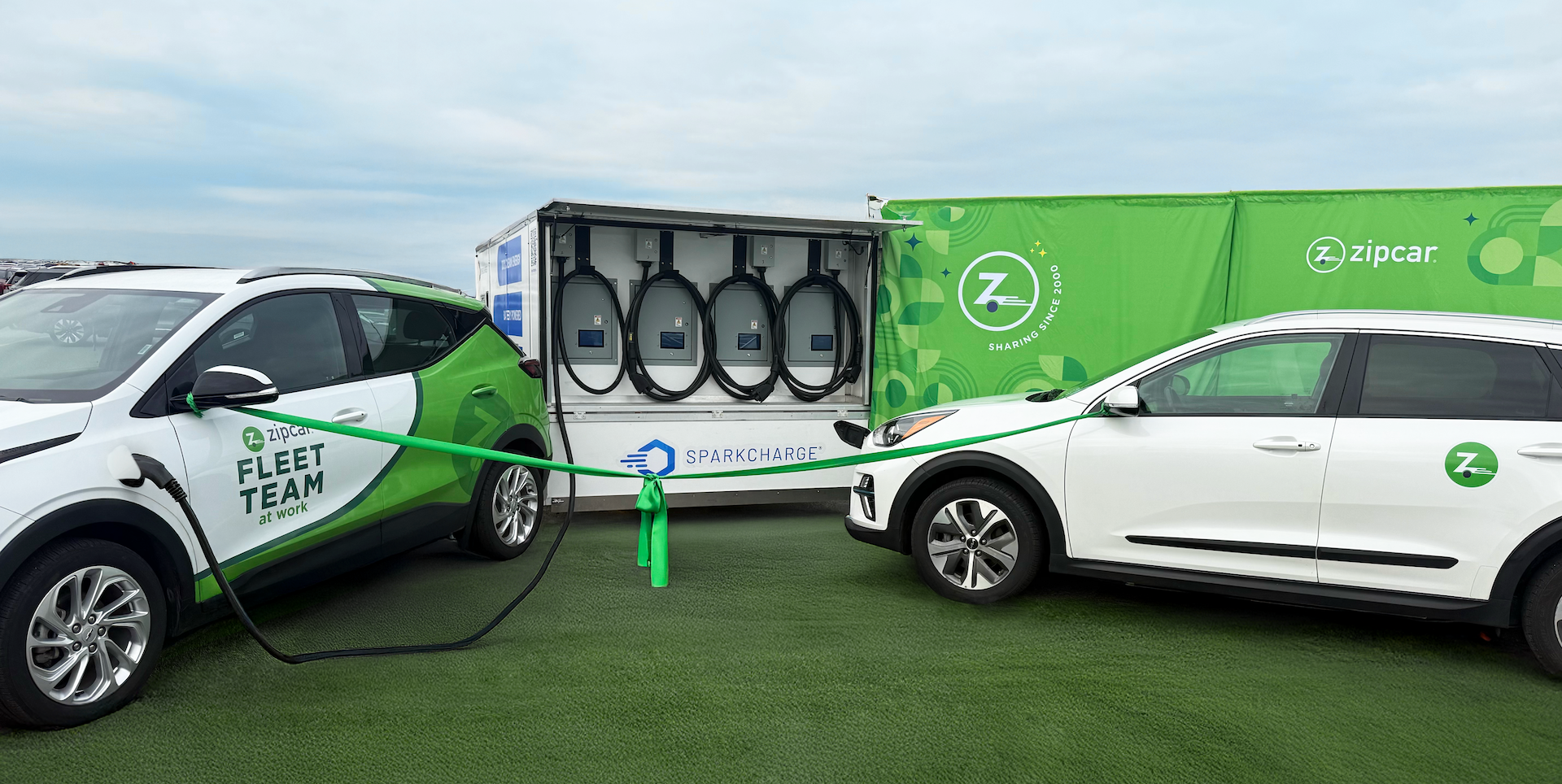
SparkCharge has partnered with the Massachusetts Clean Energy Center (MassCEC) and Zipcar to launch a mobile DC fast charging hub. Located at Zipcar’s East Boston maintenance facility, the project utilizes off-grid technology to support shared electric vehicles. This initiative aims to expand infrastructure in an Environmental Justice community without traditional grid reliance.
Highlights
- Partnership deploys mobile charging for Zipcar fleet.
- Hub features 320kW DC fast charging capabilities.
- System eliminates need for major grid upgrades.
- Project funded through MassCEC’s InnovateMass program.
Flexible Infrastructure for Shared Mobility
The pilot program introduces a flexible charging model designed for Zipcar’s rotating EV fleet. Funded by MassCEC’s InnovateMass program, the system allows on-site mechanics to rapidly recharge vehicles.
This capability ensures faster dispatch times for members and rideshare drivers across Greater Boston. The project targets scalable implementation within Environmental Justice (EJ) communities.
Joshua Aviv, CEO of SparkCharge, noted that the project demonstrates how fleets can scale operations independently of fixed utility timelines. The deployment emphasizes delivering clean mobility solutions without geographic limitations.
Technical Specifications and Grid Independence
The Mobile Battery-Powered Trailer provides substantial power without the latency of fixed infrastructure construction. The unit offers specific technical advantages for fleet operators:
- 320kW DC fast charging capacity.
- Integration with existing onsite power sources.
- High-capacity battery storage for consistent output.
The system draws supplemental energy from the facility to recharge its internal batteries between sessions. This approach prevents local grid overload while maintaining high-speed charging capabilities.
By mitigating the need for major utility construction, the project demonstrates a rapid-deployment solution. It presents a zero-upfront-cost model for enhancing Zipcar’s EV availability.
Strategic Implications for Fleet Electrification
Fleet electrification is essential for Massachusetts to meet its net-zero 2050 targets. The East Boston hub addresses a critical transit corridor while enhancing service availability.
It delivers cost-effective scalability to neighborhoods often lacking public infrastructure. Leslie Nash, MassCEC’s Senior Director of Technology-to-Market, described the project as a blueprint for future charging.
Nash emphasized that the partnership ensures the economic benefits of electrification reach diverse communities. The model prioritizes fast, convenient access to reliable transportation.
Enhancing Operational Efficiency
Zipcar President Angelo Adams highlighted the operational benefits for the shared mobility network. The collaboration allows Zipcar to bring reliable charging directly to their maintenance workflow.
This improves accessibility for members and rideshare drivers utilizing the platform. The initiative reinforces the commitment to sustainable urban living and clean transportation access.
More information is available at www.zipcar.com.
Sign up for our popular weekly email to catch all the latest EV news!