
Volkswagen Commercial Vehicles achieved a significant sustainability milestone in 2025, reducing carbon dioxide emissions by more than 100,000 tonnes across its European production facilities. The reductions represent a 65 percent decrease compared to 2018 levels as the brand advances toward its stated goal of carbon-neutral production by 2040.
Highlights
- VWCV reduced CO2 emissions by over 100,000 tonnes in 2025, marking a 65 percent decrease from 2018 baseline levels
- Hanover plant transitioned to 100 percent renewable electricity in January 2025, joining Polish facilities that converted in 2019
- Września’s 18.3 MW photovoltaic installation achieved full self-sufficiency in September 2024, covering 25 percent of annual electricity demand
- Biomass CHP plant partnership with enercity delivers 40 percent reduction in thermal energy emissions at Hanover
Green Electricity Powers All VWCV Production Sites
The manufacturer has completed its transition to renewable electricity across all three production locations. The Hanover plant began operating exclusively on green electricity in January 2025. Facilities in Poznań and Września have maintained 100 percent renewable electricity supply since 2019.
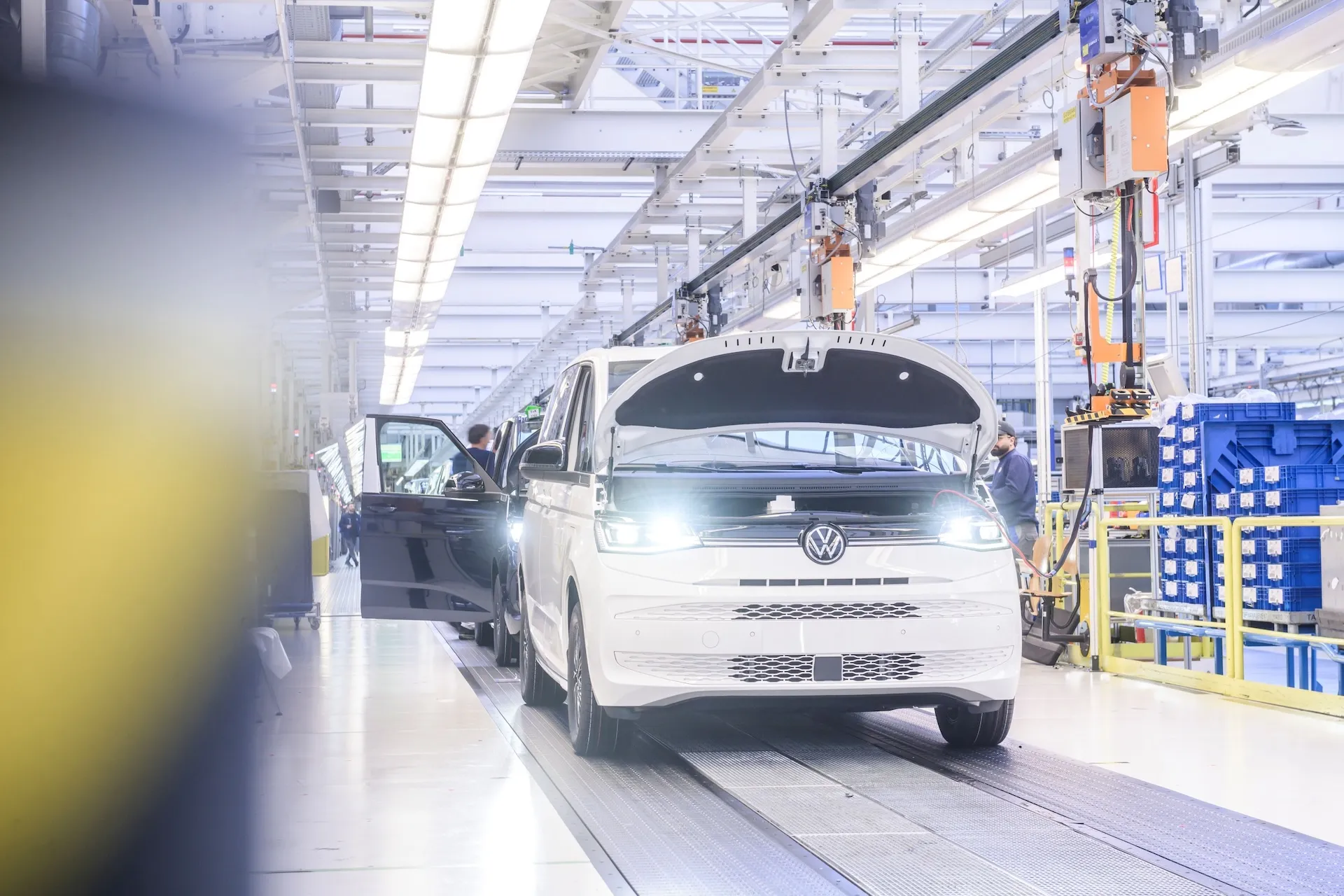
This standardized approach to climate-friendly power represents a core strategy for emissions reduction across operations that produce vehicles including the Transporter, Multivan, California, Caddy, Crafter, Amarok, and ID. Buzz electric van.
Solar Installation Achieves Self-Sufficiency
The Września facility reached a notable achievement in September 2024 when its photovoltaic system supplied solar energy to all production operations simultaneously. The installation comprises 31,000 modules generating 18.3 megawatts of output capacity.
On an annual basis, the system covers approximately 25 percent of the plant’s total electricity demand. VWCV has indicated additional renewable energy projects are in planning stages.
Biomass Partnership Reduces Heating Emissions
VWCV partnered with regional energy company enercity to commission a biomass combined heat and power plant serving the Hanover facility. The installation uses non-recyclable waste wood sourced regionally, combining incineration with large-scale heat pump technology and modern flue gas cleaning systems.
The result is a 40 percent reduction in CO2 emissions for thermal energy at Hanover compared to 2024 levels. The technology enables near-complete fuel recycling while substantially reducing emissions output.
Path to Carbon-Neutral Production
“Sustainability is not a short-term goal for Volkswagen Commercial Vehicles, but a permanent commitment,” said Steffen Reiche, Member of the Brand Board of Management responsible for Production and Logistics. “By 2040, we want the production processes at all locations to be climate-neutral.”
The brand employs approximately 22,200 workers across its Hanover, Poznań, and Września manufacturing sites. VWCV also serves as the lead brand within Volkswagen Group for autonomous driving development connected to Mobility-as-a-Service and Transport-as-a-Service applications.
Sign up for our popular weekly email to catch all the latest EV news!