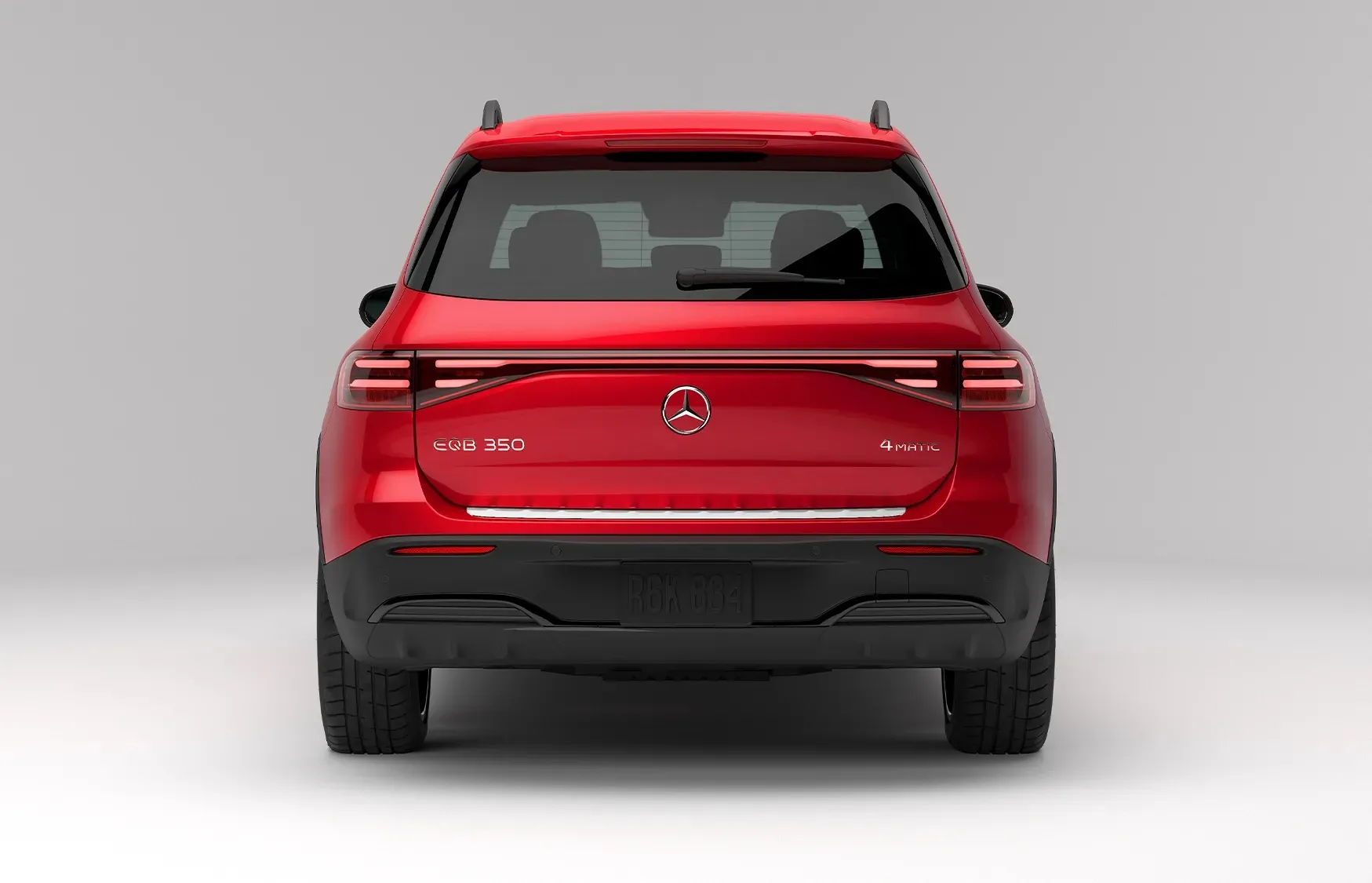

Mercedes-Benz USA has issued a recall affecting 11,895 EQB electric SUVs due to a high-voltage battery defect that could cause a vehicle fire. The automaker is advising owners to park outside and away from structures until the repair is completed. NHTSA has assigned recall number 26V073.
Highlights
- 11,895 model year 2022–2024 EQB vehicles are affected across three variants: the EQB 250+, EQB 300 4MATIC, and EQB 350 4MATIC.
- Battery cells from supplier Farasis Energy may develop internal short circuits at high states of charge, creating a fire risk while driving or parked.
- A previous software-based fix has failed. This recall supersedes two earlier campaigns (25V050 and 25V894) after post-repair fires were reported in Europe.
- Dealers will replace the entire high-voltage battery free of charge. Owners should limit charging to 80% and park outdoors until repairs are made.
Defect Details
Mercedes-Benz AG determined that deviations in the supplier production process left certain battery cells less robust against stress factors encountered during normal vehicle use. When combined with external influences such as charging infrastructure irregularities or physical damage, an internal short circuit in individual cells cannot be ruled out at high states of charge.
The affected lithium-ion battery cells were manufactured by Farasis Energy (Ganzhou) Co. Ltd. in China. Production records identified the involved vehicles as those built between December 13, 2021, and May 9, 2024.
Warning Indicators
If a thermal event occurs while driving, the driver would receive a high-voltage battery malfunction warning in the instrument cluster. However, no warning would be provided if the incident occurs while the vehicle is parked.
Failed Prior Remedies
This recall marks Mercedes-Benz’s third attempt to address the EQB battery issue. The original recall (25V050) was filed in January 2025, with a supplemental expansion (25V894) following in October 2025. Both campaigns relied on a software update as the remedy.
After the global field action began in April 2025, Mercedes-Benz received reports of additional thermal events in May 2025, all outside the United States. In November 2025, two fire incidents involving vehicles that had already received the software update were reported in Europe. One of those fires could not be attributed to a definitive root cause.
Expanded Investigation
Between December 2025 and January 2026, Mercedes-Benz conducted an in-depth investigation with Farasis Energy. The work included cell and battery teardown analysis, laboratory experiments, and on-site inspections of production facilities.
The conclusion was significant: the effectiveness of the software update could not be fully confirmed for all affected vehicles. On January 30, 2026, Mercedes-Benz committed to full battery replacement as the new remedy.
Affected Vehicles
- 2023–2024 Mercedes-Benz EQB 250+ — 3,674 units
- 2022–2024 Mercedes-Benz EQB 300 4MATIC — 6,513 units
- 2022–2024 Mercedes-Benz EQB 350 4MATIC — 1,708 units
All vehicles are battery-electric passenger cars built on the 243 platform. Mercedes-Benz estimates 100% of the recalled population contains the defect.
Remedy and Owner Actions
Authorized Mercedes-Benz dealers will replace the high-voltage battery at no cost. The replacement battery (part number A2433406703) is considered sufficiently robust at high states of charge. A production process change at the supplier resolved the issue for vehicles produced from July 31, 2024, onward.
Until repairs are completed, owners should take the following precautions:
- Park outside and away from structures
- Charge to a maximum of 80% state of charge
Recall Timeline
- February 13, 2026: Dealer notification and VINs searchable on NHTSA.gov
- February 27, 2026: Interim owner notification letters mailed
- April 3, 2026: Final remedy owner notification (phased recall)
Vehicles previously repaired under recall 25V050 or 25V894 will need the new battery replacement completed. Owners may contact Mercedes-Benz USA customer service at 1-800-367-6372.
Two fire incidents have been reported within the United States, both involving vehicles within the original recall scope. No U.S. fires have been reported after the software update was applied. The completion rate for the original recall stands at approximately 74%.
Sign up for our popular weekly email to catch all the latest EV news!