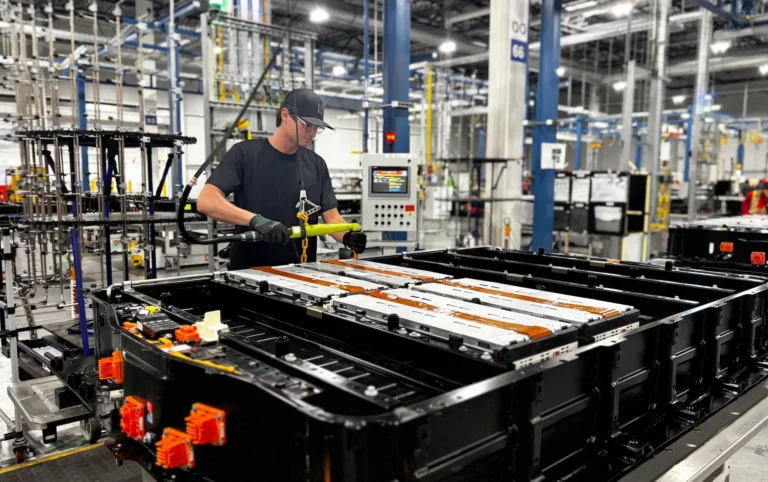
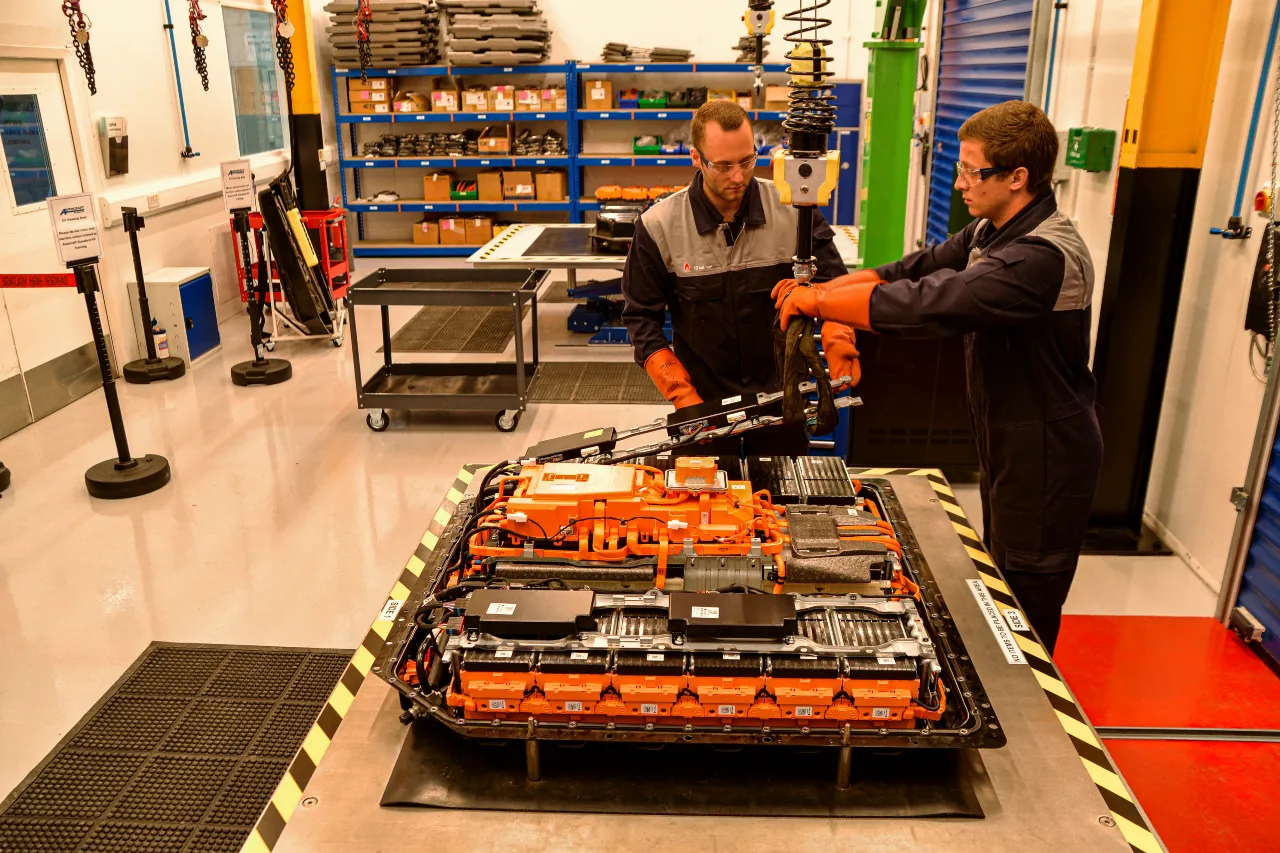

Autocraft Solutions Group is repairing between 300 and 400 EV battery packs a month at its Grantham, UK, and Arnhem, Netherlands, workshops and plans to extend its battery remanufacturing network into Germany, Spain, and Italy. The company’s REVIVE® battery workshops recently won the Green Award at the Automechanika Frankfurt Innovation Awards 2026, selected from 185 entries by an international jury. According to Autocraft, the timing matters because the first mass-market wave of end-of-life EVs is beginning to reach the aftermarket.
Highlights
- 300–400 battery packs a month repaired for OEM customers across the Grantham and Arnhem workshops
- More than 90% of original performance restored by replacing only affected cells or modules, according to the company’s commercial repair data
- Green Award selected from 185 global entries at the Automechanika Frankfurt Innovation Awards 2026
- About 13.2 tons (12 metric tonnes) of CO₂ avoided by repairing an 82.5 kWh pack rather than replacing it, per RECOVAS consortium figures
The End-of-Life Wave Is Arriving
Autocraft describes the next several years as decisive for how the industry handles aging battery packs. Most mass-market EVs sold in the UK and Europe from the mid-2010s onward are only now approaching the end of their first useful life, the company says, with volumes expected to accelerate significantly over the next four to five years.
Building on its existing UK and Netherlands operations, Autocraft wants to expand into Germany, Spain, and Italy, which it identifies as the markets where OEM demand for battery repair capacity is expected to concentrate.
Why Repair EV Batteries Instead of Recycling Them?
Until now, batteries that fail in service have typically been replaced outright and often sent for recycling regardless of the fault, according to the company. Autocraft’s position, which it says is backed by its commercial repair data, is that most failures are localized at the cell or module level and that packs can be restored to more than 90% of original performance by replacing only the affected components.
The company cites figures from the RECOVAS consortium, a UK government-backed collaboration between vehicle manufacturers, recyclers, and academic partners, showing that repairing an 82.5 kWh pack rather than replacing it avoids about 13.2 tons (12 metric tonnes) of CO₂. Past The EV Report coverage of EV battery remanufacturing detailed how Autocraft’s cell-level replacement approach differs from engine remanufacturing.
Green Award at Automechanika Frankfurt
REVIVE® workshops were named winner of the Green Award from 185 entries assessed by an international panel of judges. The company says the award was a newly created category designed to recognize its innovation, and it characterizes the recognition as an endorsement of remanufacture over unnecessary recycling as the preferred environmental route for failed EV batteries.
Executive Comment
Mike Hague-Morgan, Executive Director and Co-Owner of Autocraft Solutions Group, said: “We must wake up to the reality that a replace-and-recycle approach is unsustainable. As the EV parc expands, so too will the number of battery failures, especially as packs age and degrade over time. Yet most batteries can be restored to optimal health, making repair the only logical way forward. The Automechanika Green Award confirms that argument is now being accepted across the industry.”
The “parc” Hague-Morgan refers to is the total population of vehicles in operation.
He added: “The next challenge is design. Manufacturers and legislators must work together to ensure future battery designs allow for effective repair, rather than making repair more difficult through increasingly complex architectures. If we do not act now, we risk locking in a throwaway model at exactly the point the volume is about to arrive. Our commitment to expanding remanufacturing capability across Europe reflects that reality.”
How Does the REVIVE Process Work?
The REVIVE® EV battery service covers triage, fixed-workshop remanufacture, and full vehicle collection and return. Battery health is assessed and faults diagnosed at the cellular level through the company’s OptEVizer® testing platform, which Autocraft says goes beyond the battery management system to actively stress the battery.
The captured data is then analyzed against the OptEVizer® digital twin, which the company says contains thousands of real-world test cycles and millions of individual data points, to locate cell weaknesses and produce an independent state-of-health assessment. Autocraft previously extended the platform with Latent-IQ diagnostics aimed at avoiding battery recalls.