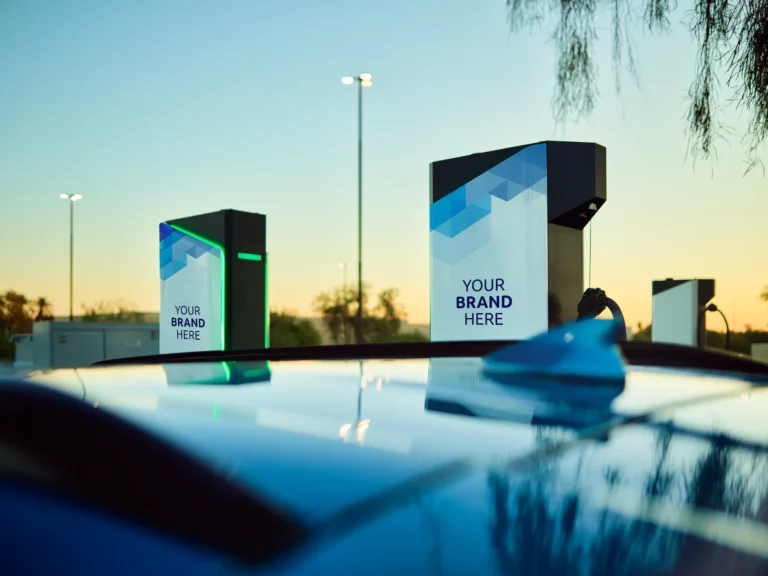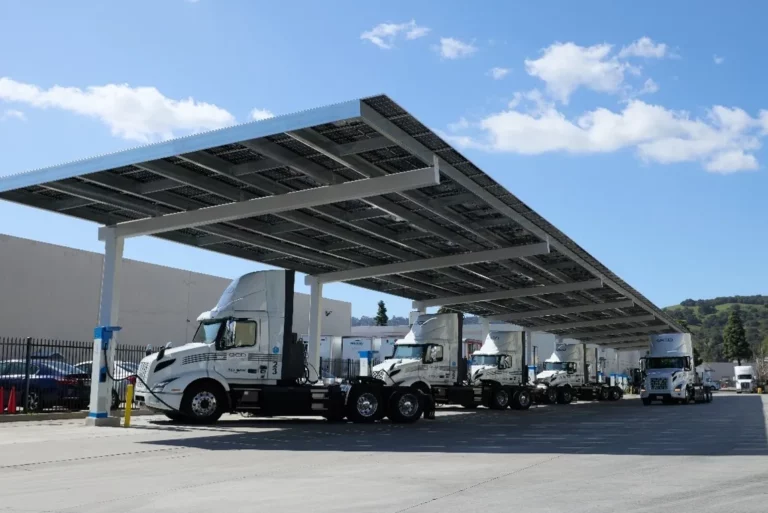

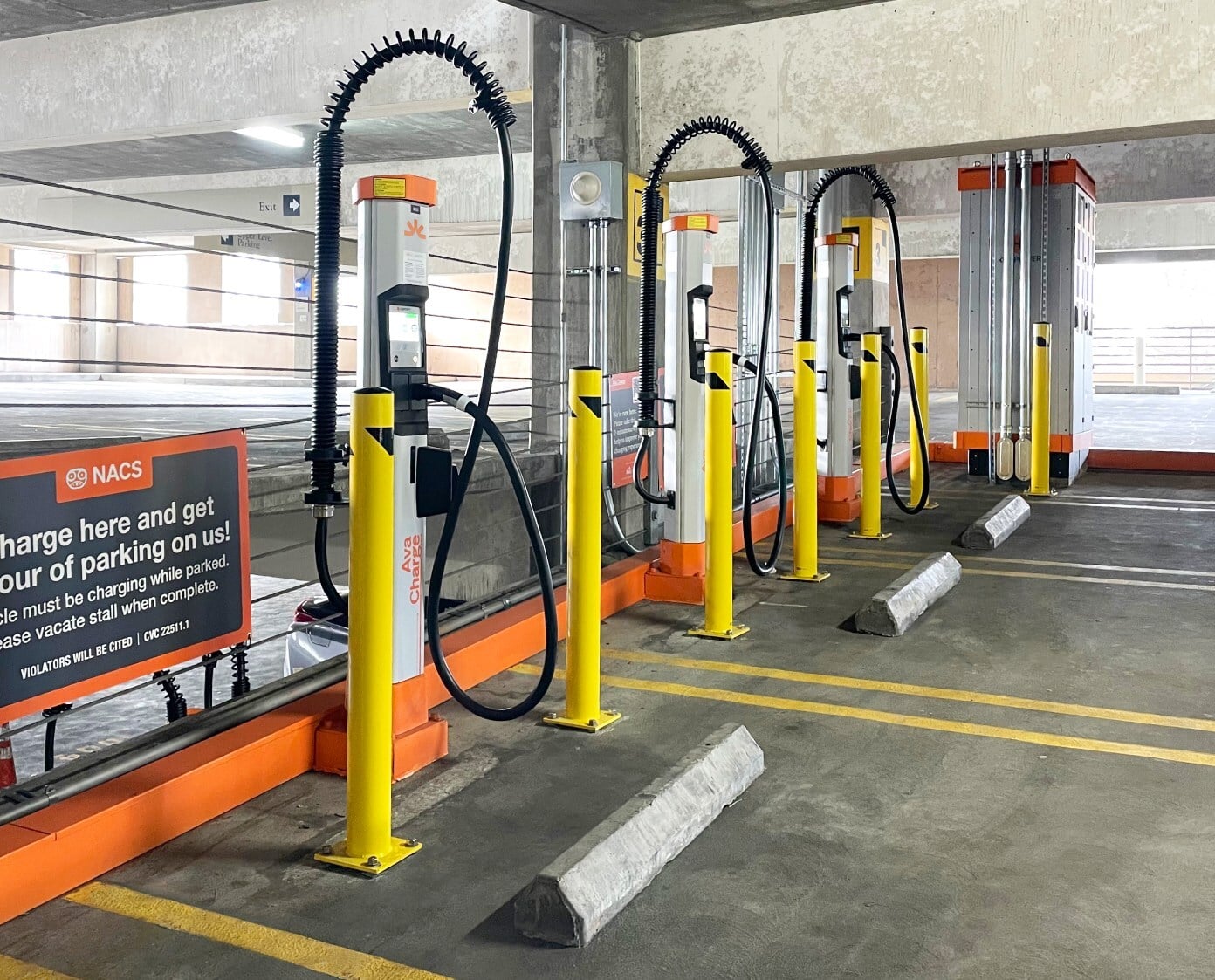
Ava Community Energy has opened its first electric vehicle fast charging station in downtown Oakland, marking the initial deployment in a planned network of up to 15 charging hubs across its service territory. The Oakland City Center West Garage facility represents the largest non-Tesla fast charging station currently operating in Northern California.
Highlights
- Oakland City Center West Garage station features 18 chargers with 31 connectors supporting all EV models
- Station targets underserved populations including renters in areas where 50% of Alameda County residents lack home charging access
- Ava plans to deploy 14 additional fast charging stations across its service territory by end of 2030
- Site partnership includes EV Realty for engineering and operations, Kempower for charging hardware
Strategic Deployment in High-Density Areas
The charging station location reflects Ava’s focus on equity-driven infrastructure placement. Howard Chang, Ava Community Energy CEO, emphasized the strategic importance of downtown Oakland for the agency’s inaugural charging site. The community choice aggregator collaborated directly with member cities to identify locations maximizing access for populations historically underserved by charging infrastructure.
Site selection prioritized proximity to multi-family housing, recognizing that nearly half of Alameda County residents rent their homes. The station’s placement near workplaces, residential areas, and freeway access addresses charging accessibility challenges for renters who cannot install home charging equipment.
Technical Specifications and Operational Framework
The Oakland City Center West Garage installation comprises:
- 18 Kempower charging dispensers
- 31 total connectors
- Universal compatibility across all current EV makes and models
- Downtown location with multi-modal access
EV Realty, a San Francisco-based firm, managed engineering, procurement, and construction phases. The company maintains ongoing responsibility for site maintenance and operations. Kempower supplied all charging hardware deployed at the facility.
Policy Alignment with Climate Action Goals
The charging station advances objectives outlined in Oakland’s 2030 Equitable Climate Action Plan, which prioritizes frontline communities in climate mitigation efforts. Oakland City Councilmember Rowena Brown, who serves on the Ava Community Energy Board, identified the project as supporting the city’s commitment to equitable clean energy infrastructure.
The ECAP framework emphasizes expanding EV adoption infrastructure while ensuring existing EV owners access reliable, community-centered charging facilities. The plan targets improved air quality through reduced transportation emissions in areas disproportionately affected by pollution.
Expansion Timeline and Service Territory
Ava Community Energy serves over 2 million residential and commercial customers across Alameda County and the cities of Tracy, Stockton, and Lathrop. Following the Oakland launch, the agency will work with member cities to deploy 14 additional fast charging stations by December 2030.
The charging network represents one component of Ava’s broader decarbonization strategy, which includes solar system deployment, electric bike programs, and building electrification initiatives. As a community choice aggregator, Ava has contracted over one gigawatt of renewable energy projects and delivered more than $170 million in customer savings since operations began.
Infrastructure Development Model
Chang outlined Ava’s approach to charging infrastructure as addressing systemic barriers to EV adoption. The agency identified limited charging access as a primary obstacle for renters and residents without dedicated parking. By establishing fast charging stations in city-owned garages, parking lots, and curbside locations near business districts, Ava aims to reduce range anxiety and provide charging alternatives comparable to traditional fueling infrastructure.
The not-for-profit structure allows Ava to prioritize accessibility and community benefit over profit maximization in site selection and pricing strategies. This model aligns with California’s community choice aggregation framework, which enables local agencies to procure power on behalf of residents while maintaining investor-owned utility responsibility for transmission and distribution infrastructure.
Sign up for our popular weekly email to catch all the latest EV news!