
BMW Group will begin series production of the new BMW i3 at its Munich plant in August 2026. The i3 is the second model in BMW’s Neue Klasse electric vehicle platform. The company has invested approximately €650 million ($750 million USD at current exchange rates) to transform the 104-year-old facility into a fully electric production site. From 2027, Munich will produce only all-electric vehicles.
Highlights
- Series production of the BMW i3 begins in August 2026 at Plant Munich, the second Neue Klasse model after the iX3 from Debrecen.
- BMW has invested around €650 million ($750 million) to modernize the plant with a new body shop, assembly area and logistics systems spanning 200,000 square meters.
- A new body shop features 800 industrial robots and 98% automation, while the plant will produce up to 1,000 vehicles per day.
- Plant Munich will become the first existing BMW facility to manufacture exclusively all-electric vehicles, beginning in 2027.
Production Costs and Efficiency Gains
BMW says the transformation will yield a 10% reduction in overall production costs at Munich, bringing them below the level of the current vehicle generation.
“We have been making rigorous preparations. With the BMW iFACTORY we have devised a consistent, strategic framework for our production,” said Milan Nedeljković, Member of the Board of Management of BMW AG, Production. “We have paved the way for the upcoming start-ups in all our plants and have invested heavily in technologies, digitalisation and AI.”
Peter Weber, Head of BMW Group Plant Munich, added: “We have considerably reduced production costs over recent years. With the start of production of the BMW i3, we will reduce overall production costs at the Munich plant by a further 10 per cent, bringing them below the level of the current vehicle generation.”
New Body Shop and Press Shop Upgrades
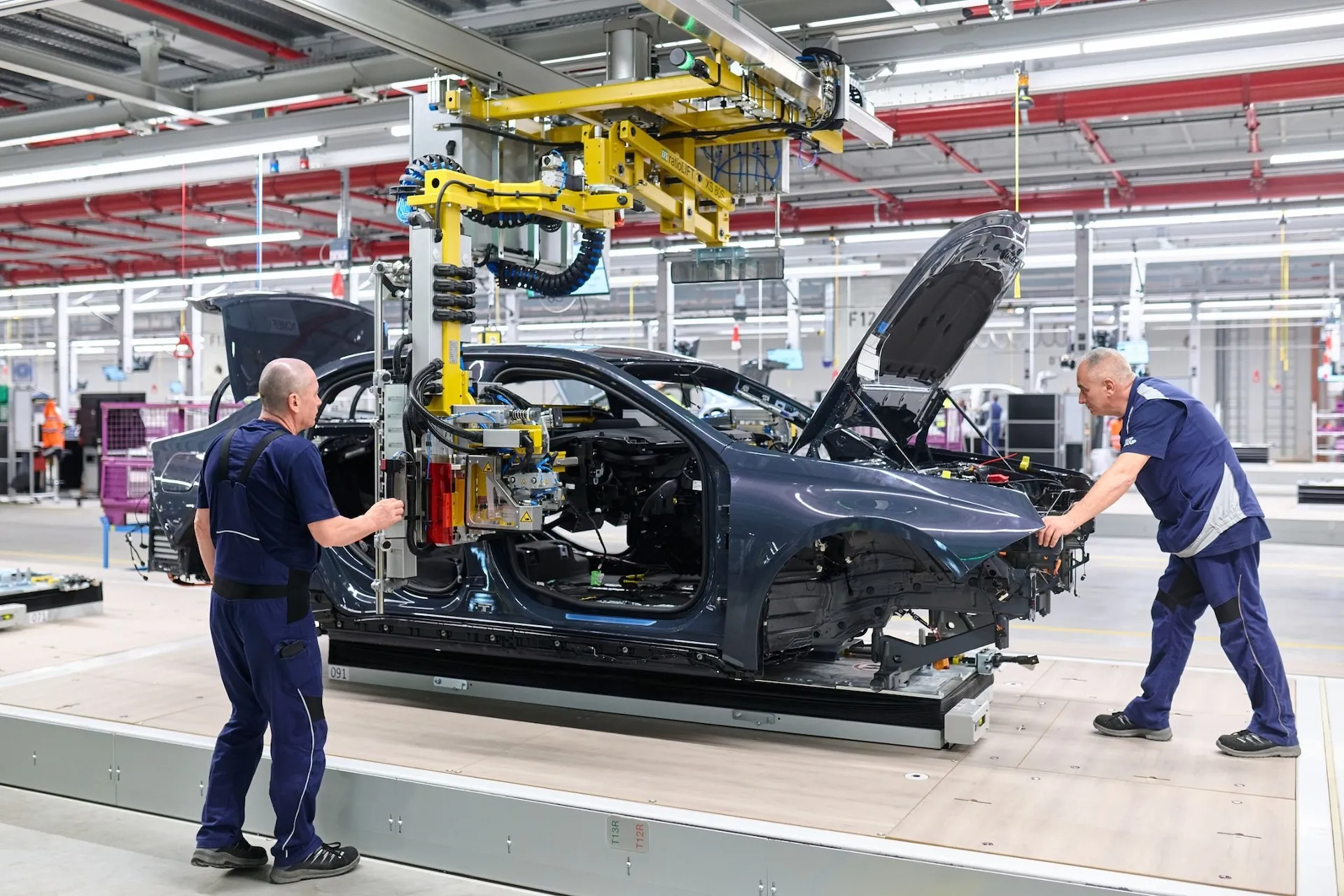
The centerpiece of the plant overhaul is a new three-floor body shop with roughly 51,000 square meters of production space on a 17,000-square-meter footprint. The facility was planned and simulated using a virtual twin before construction.
Around 800 new industrial robots handle joining processes at an automation rate of approximately 98%. BMW reduced the number of joining processes to five for the Neue Klasse, lowering complexity. Servo-electric welding guns perform roughly 3,800 spot-welds per car body. Automated surface inspection uses cameras and AI to detect surface deviations.
In the press shop, automated lines produce up to 30,000 parts daily — around five million components annually. BMW invested approximately €12 million ($13.8 million) in press shop modernization, yielding a 30% increase in outer panel capacity and a 10% reduction in operating costs.
Digital Assembly and Vehicle Self-Checks
The new assembly area occupies what was formerly BMW’s engine manufacturing hall. It is the most compact assembly facility in BMW’s global production network, spread across three levels.
During assembly, each BMW i3 digitally transmits the status of up to 20,000 features to the production system. Camera systems and AI-driven sensors perform inline quality checks, eliminating the need for traditional chassis dynamometers. Conveying equipment continuously self-monitors and reports maintenance needs automatically.
“We have rethought the entire value stream from supplier to finished customer vehicle. We have looked at every single process in detail and made optimisations. Now our plant is even more efficient, more flexible and even more digitised than ever before. We are thereby safeguarding the future viability of the plant,” Weber said.
Simplified Wiring and Modular Architecture
The Neue Klasse architecture introduces a zonal wiring harness that uses 600 fewer meters of cable and weighs 30% less than the previous generation. High-speed data connections link the vehicle’s central processors to smaller zone controllers, allowing shorter and lighter cables throughout.
BMW also reduced connecting elements across the vehicle. The front end consists of over a third fewer components compared to prior models, and modularization groups many small individual parts into larger assemblies.
Logistics Overhaul for Urban Production
BMW’s Munich plant sits in the heart of the city, creating unique logistics challenges. The company redesigned its supply chain around a multi-story structure, with truck deliveries at ground level and automated conveyor systems distributing parts to upper production floors.
Direct deliveries to assembly workstations increased from a previous range of 40–60% to 70%. Around 60% of the plant’s 17,000 daily logistics missions are now fully automated, handled by Smart Transport Robots and driverless transport systems. A new Logistics Control Room manages all processes centrally.
Additionally, 125 hydrogen-powered forklifts are deployed in the new assembly hall. They refuel in roughly three minutes, improving uptime compared to battery-electric forklifts.
Gen6 Battery and E-Drive Supply Chain
High-voltage Gen6 batteries for the Munich-built i3 will come from a new BMW assembly plant in Irlbach-Straßkirchen, Lower Bavaria — roughly 30 kilometers from Dingolfing. The facility will create up to 1,600 jobs in the region. Series battery production there begins in October 2026.
The Gen6 e-motor is manufactured at BMW Group Plant Steyr in Austria, where new production lines and clean-room environments have been established. All core components — rotor, stator, inverter and transmission — are produced on-site. Over 450 employees worked in e-motor production at Steyr by the end of 2025. BMW also plans to begin fuel cell system production at Steyr in 2028.
In-House Seat Manufacturing
Plant Munich operates the only in-house seat manufacturing facility in BMW’s production network. Around 550 employees produce seats for all Neue Klasse models built in Munich across three production lines. AI-assisted cameras check 127 quality features at 21 stations, and safety checks — including belt buckle testing — are fully automated.
The facility serves as a competence center for BMW’s broader network, testing new materials and manufacturing concepts.
Sign up for our popular weekly email to catch all the latest EV news!