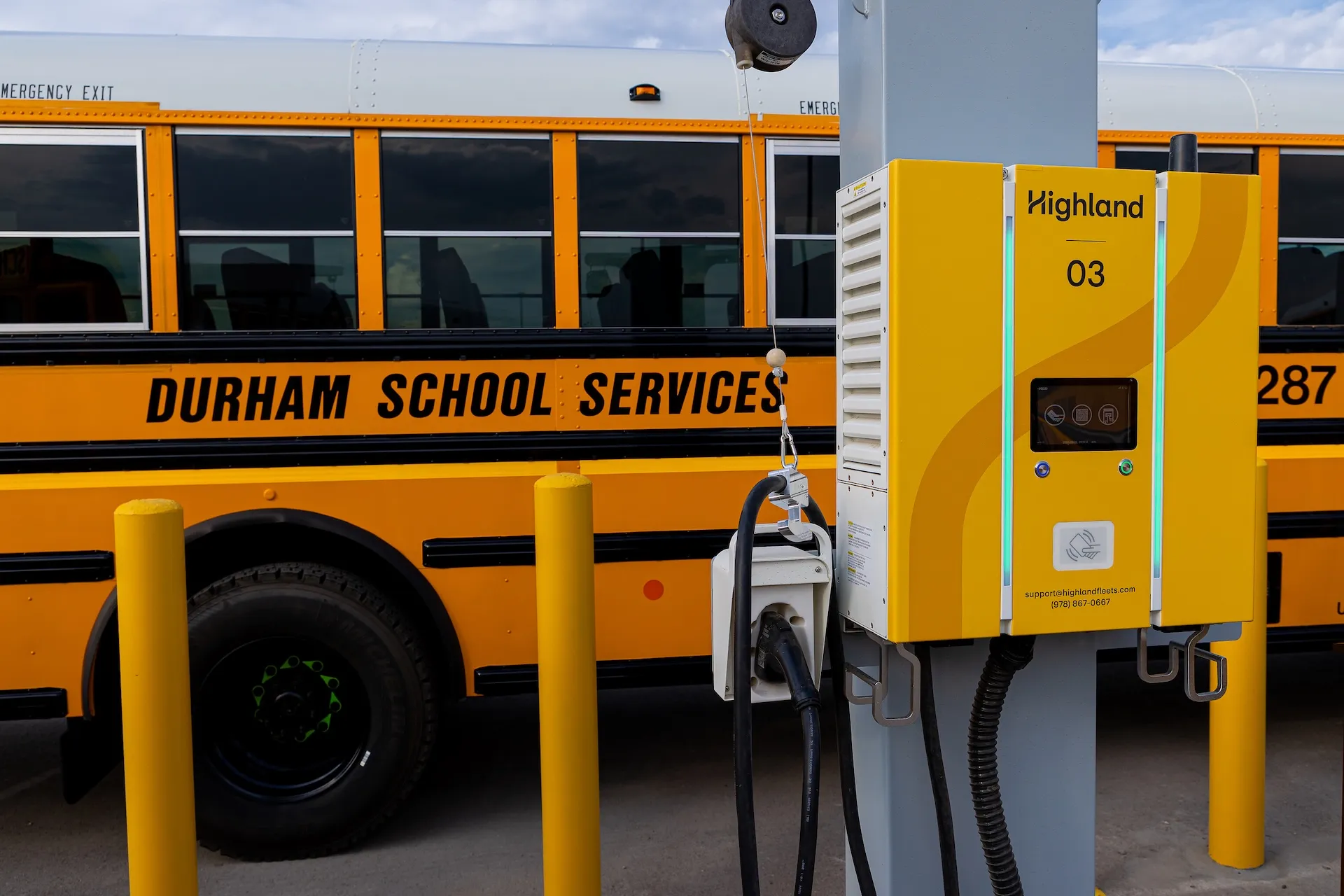

Boise School District will put eight IC Bus electric school buses and supporting charging infrastructure into service for the 2026-27 school year, funded in part by a $2.76 million U.S. Environmental Protection Agency Clean School Bus Program award. The buses are being deployed under a three-way arrangement with contractor Durham School Services and fleet electrification provider Highland Electric Fleets. Boise School District serves roughly 21,650 students across 33 elementary schools, eight junior high schools and six senior high schools. The district says the federal award carried the project from planning through to operation, covering both the vehicles and the depot charging equipment.
Highlights
- Fleet size: Eight IC Bus electric school buses plus supporting charging infrastructure entering service for the 2026-27 school year
- Funding: $2.76 million awarded through the EPA’s Clean School Bus Program
- Operating structure: Durham School Services runs the buses; Highland Electric Fleets handles vehicle and charging deployment plus long-term fleet management
- District scale: Approximately 21,650 students across 47 schools, including Boise Online Secondary School
What the Federal Award Covers
The EPA award funded the bus purchase and the charging infrastructure that supports it. The Clean School Bus Program has been the primary federal mechanism behind district-level diesel replacement, and Boise’s eight-unit order follows the pattern of mid-size awards going to districts pairing vehicles with depot charging rather than buying buses alone.
“Bringing these eight electric school buses into service is an important investment in modernizing student transportation, being good neighbors by using public resources responsibly and building a more sustainable future for our community,” said Boise School District Superintendent Wendy Johnson. “We are grateful for the federal funding and the partnership of Durham School Services and Highland Electric Fleets, which have made it possible to introduce this innovative technology while creating meaningful opportunities to connect sustainability with student learning. We also thank Boise School District Sustainability Supervisor Ali Ward and Transportation Supervisor Lanette Daw for their leadership and dedication in bringing this important project to fruition.”
How Does Highland’s Electrification-as-a-Service Model Work?
Highland supported the district and Durham across the electrification process, including vehicle and charging infrastructure deployment and ongoing management of the electric fleet. Its Electrification-as-a-Service model places the company alongside districts and transportation contractors for the life of a project rather than at the point of sale.
“Replacing just five diesel school buses with electric buses can reduce the risk of pediatric asthma for approximately 1,500 students,” said Brian Buccella, Chief Commercial Officer, Highland Electric Fleets. “We’re proud to work alongside Boise School District and Durham School Services to bring eight new electric buses to the community and help create a healthier transportation environment for students, families and the broader Boise community.”
Durham operates the routes. “The addition of these eight new electric school buses is another meaningful step forward towards a healthier tomorrow for Boise School District students and the community. We are proud to have had a helping hand in driving this EV project across the finish line,” said Wayne Skinner, Senior Vice President of Fleet and Procurement, Durham School Services. “This project is truly a phenomenal reflection of our shared commitment to providing our students and the communities we serve with safe, innovative transportation that they can trust and parents can depend on. Thank you to all our partners for helping bring this project to life.”
Operating Case for the Switch
Electric school buses produce no tailpipe emissions, removing diesel exhaust from the immediate area around students during loading and transit. The district also points to regional air quality as a factor, particularly for children and other vulnerable populations. On the cost side, electric buses carry fewer moving parts than diesel equivalents, which the district expects to reduce maintenance requirements and associated operating costs over time.
Fit With District Sustainability Programs
The bus order sits inside a broader district program covering energy conservation, water stewardship, waste reduction and environmental education, alongside a clean energy commitment adopted by the Board of Trustees. The district has also pursued energy-efficiency work, solar and geothermal projects across its schools, and has tied those efforts into classroom instruction.
Boise School District will mark the fleet launch with a ribbon-cutting ceremony on August 26, 2026 at 10:00 a.m. at its transportation facility at 465 W. Gowen Road in Boise, followed by bus tours and a demonstration ride.