
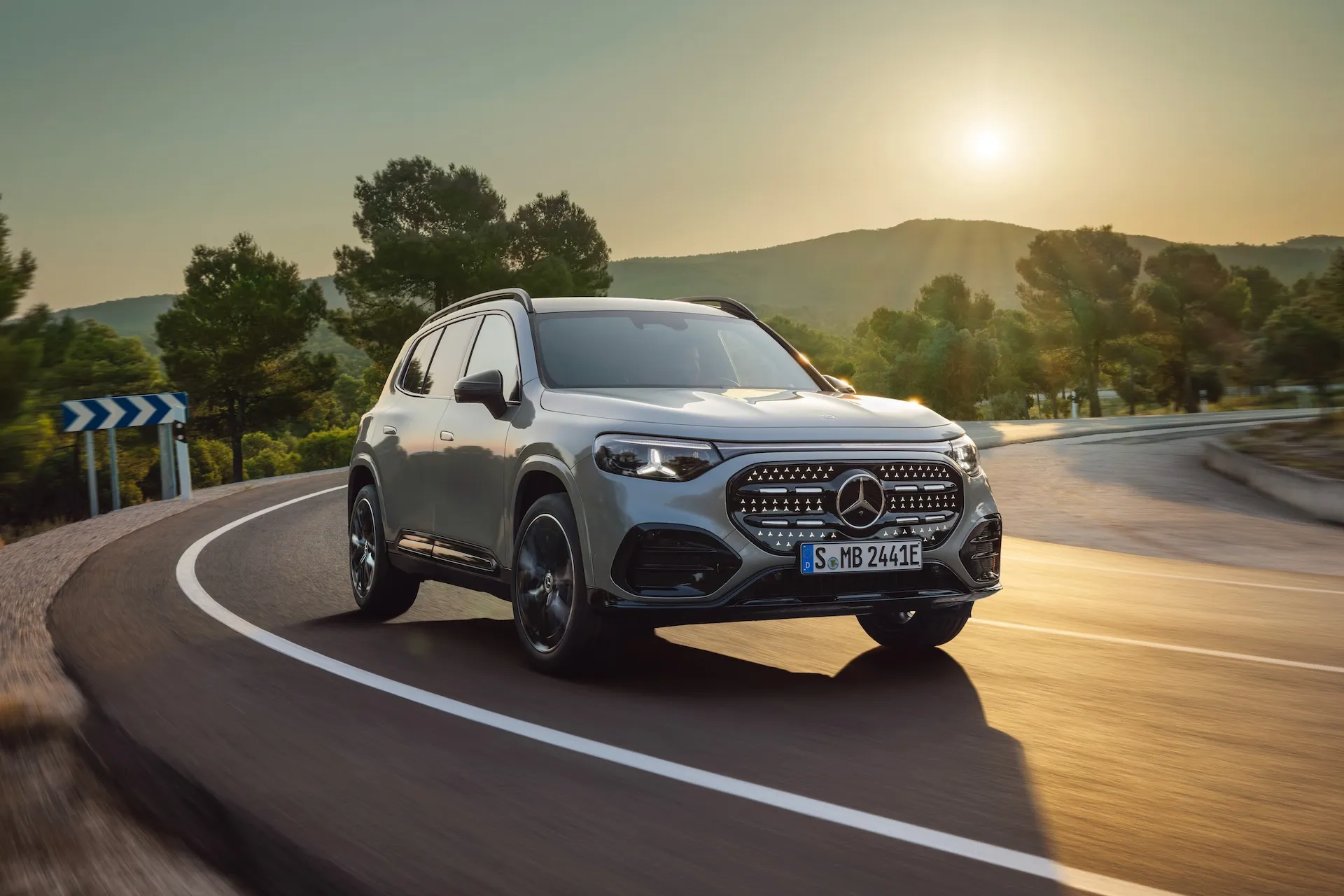
Mercedes-Benz says the all-new electric GLB delivers an approximate 21 percent reduction in supply-chain CO₂ emissions and saves up to three tons of CO₂ per battery pack through renewable energy and recycled-content measures. The figures come from the automaker’s 360° Environmental Check for the compact electric SUV, an independently audited lifecycle assessment released this week from the company’s Stuttgart headquarters. The check covers the battery, aluminum, steel, and thermoplastic content of the GLB, all four of which Mercedes-Benz targeted as the highest-impact inputs during MMA platform development. Production runs at the Kecskemét plant in Hungary, which Mercedes-Benz has classified as net carbon-neutral since 2022 through a mix of avoidance, reduction, and certified offsetting.
Highlights
- Battery cell production using renewable electricity cuts cell-level carbon footprint by roughly 40 percent, equating to approximately three tons of CO₂ saved per battery pack
- More than half of the GLB’s aluminum content — about 359 lbs — comes from smelters powered by renewable energy, reducing those components’ footprint by roughly 30 percent for 0.6 tons of CO₂ saved
- About 44 lbs of CO₂-reduced steel produced in renewable-powered electric arc furnaces is incorporated into the vehicle, with steel and ferrous materials accounting for roughly 46 percent of total material content
- 99 lbs of recycled thermoplastics across the GLB, including 100 percent recycled jacking points and a 50 percent recycled frunk tub, deliver approximately 156 lbs of CO₂ savings versus primary materials
How Mercedes-Benz Calculated the Reduction
The 21 percent figure compares production of the electric GLB with the same vehicle built without the targeted reduction measures applied. It is not a comparison against the combustion-powered GLB or against an industry baseline. The automaker said the result was achieved through close collaboration with suppliers combined with renewable-energy inputs and carbon-reduced materials.
The 360° Environmental Check is based on a full lifecycle assessment, verified by independent auditors. Mercedes-Benz has published product-specific environmental data since 2005 and frames the program as a transparency tool for customer decision-making.
Battery Cell Production Drives the Biggest Gain
The largest single contributor is the high-voltage battery. Renewable electricity in cell manufacturing reduces the carbon footprint of the cells themselves by approximately 40 percent. Across the full pack, that translates to roughly three tons of CO₂ saved per vehicle.
This mirrors the pattern Mercedes-Benz disclosed in the electric GLC 360° Environmental Check published in March, where renewable-powered cell production also delivered the largest per-component improvement. The consistency across two MMA-platform vehicles suggests Mercedes-Benz has standardized renewable-energy sourcing at its cell suppliers rather than treating it as a model-specific intervention.
Aluminum, Steel, and Thermoplastics
More than half of the GLB’s aluminum content — roughly 359 lbs — is sourced from smelters powered by renewable energy. That cuts the carbon footprint of those parts by approximately 30 percent and saves about 0.6 tons of CO₂ per vehicle.
Steel and ferrous materials make up the largest material category at approximately 46 percent of the vehicle. About 44 lbs of that is CO₂-reduced steel from electric arc furnaces running on renewable power. Mercedes-Benz said the combination of green hydrogen and electric steelmaking has the potential to enable virtually CO₂-free steel production in the future, though it did not specify a timeline.
Thermoplastic recyclate content totals 99 lbs across the vehicle. The breakdown:
- Frunk tub: 50 percent recycled content
- Jacking points: 100 percent recycled materials
- Longitudinal member claddings and bumper substructures: up to 30 percent recycled
Combined, the thermoplastic recyclates save approximately 156 lbs of CO₂ versus primary materials.
Comparing the GLC and GLB Disclosures
The electric GLC, released two months earlier, achieved a 23 percent production-phase reduction and roughly a two-thirds reduction across the full lifecycle versus the combustion-powered GLC. The GLB disclosure stops short of a comparable lifecycle-versus-ICE figure, focusing instead on supply-chain-only reductions versus a baseline build of the same vehicle without the measures.
For readers, the implication is that the two disclosures are not directly comparable. The GLC figure spans the full lifecycle and benchmarks against the combustion variant; the GLB figure isolates the production phase and benchmarks against an internal counterfactual. Both metrics are valid, but Mercedes-Benz has not yet published the equivalent lifecycle-versus-ICE comparison for the GLB.
Kecskemét Plant and 2039 Target
The GLB is built at Mercedes-Benz’s plant in Kecskemét, Hungary. The site has been net carbon-neutral since 2022, a status the company defines as combining reduction, avoidance, and certified offsetting rather than zero gross emissions. Mercedes-Benz is investing in expanded photovoltaic capacity across the Kecskemét site and continues to target reductions in water use and waste.
The company’s broader manufacturing goal is to cover more than 70 percent of production energy needs with renewables by 2030, and to run all global plants entirely on renewable energy without CO₂ emissions by 2039.
Sign up for our popular weekly email to catch all the latest EV news!