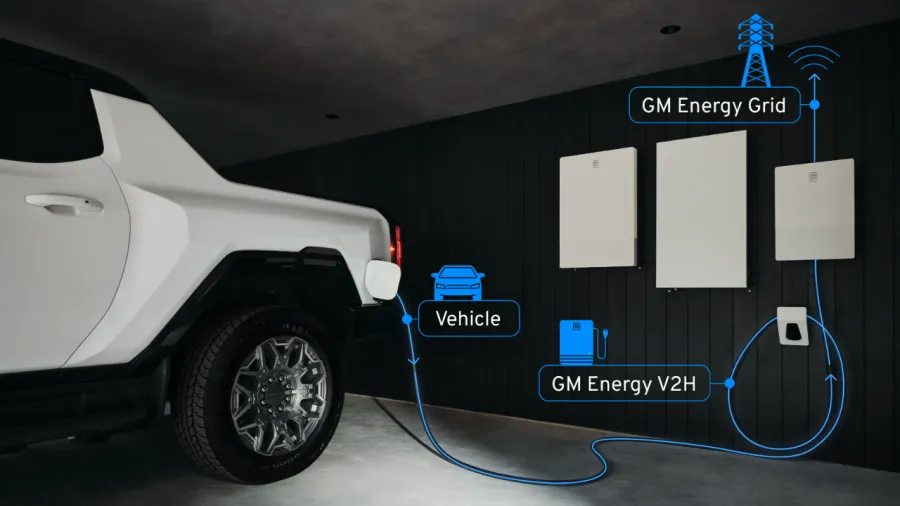

General Motors builds bidirectional charging into electric vehicles including the Chevrolet Equinox EV, GMC Sierra EV, and Cadillac LYRIQ, allowing electricity to flow out of the vehicle as well as in. The company groups two functions under this capability: Vehicle-to-Home (V2H) and Vehicle-to-Grid (V2G). According to GM, the GM Energy V2H system — a bidirectional charger paired with an enablement kit — can turn a compatible EV into a backup power source during an outage, while V2G lets a plugged-in vehicle send energy to the local grid through participating utility programs where available.
Highlights
- Bidirectional capability is built into GM EVs including the Chevrolet Equinox EV, GMC Sierra EV, and Cadillac LYRIQ.
- V2H requires a V2H-capable GM EV plus the GM Energy V2H system, which pairs a bidirectional charger with an enablement kit.
- V2G connects a compatible EV to the local grid through participating utility programs where available, and GM says it can lower bills in time-of-use markets such as California.
- GM advises against using the V2H system to power medical devices.
V2H vs. V2G at a Glance
| Capability | Where Power Flows | Primary Use | Key Requirements |
|---|---|---|---|
| Vehicle-to-Home (V2H) | From the EV to a properly equipped home | Backup power during an outage | V2H-capable GM EV; GM Energy V2H system (bidirectional charger plus enablement kit); properly equipped home; grid interconnection |
| Vehicle-to-Grid (V2G) | From the EV to the local power grid | Sending energy to the grid; potential bill savings | Compatible GM EV; GM Energy bidirectionally capable products; active OnStar where applicable; properly equipped home; participating utility program |
How Vehicle-to-Home Works
V2H is designed to turn a compatible GM EV into a home backup source. If a storm knocks out power, the vehicle sends electricity into a properly equipped house to help run appliances such as the refrigerator, lights, and air conditioning.
Using it requires a V2H-capable GM EV and the GM Energy V2H system, which includes a bidirectional charger and an enablement kit. GM says the setup is built to run home appliances safely without pushing electricity back onto public power lines, where utility crews may be working during an outage.
GM places several conditions on the system. It requires an adequately charged V2H-capable EV, a properly equipped home, and proper grid interconnection, and the company says weather, battery life, vehicle usage, and other factors can affect how much power is available and for how long. GM also states that power supply may be interrupted and advises against using the system to run medical devices.
How Vehicle-to-Grid Works
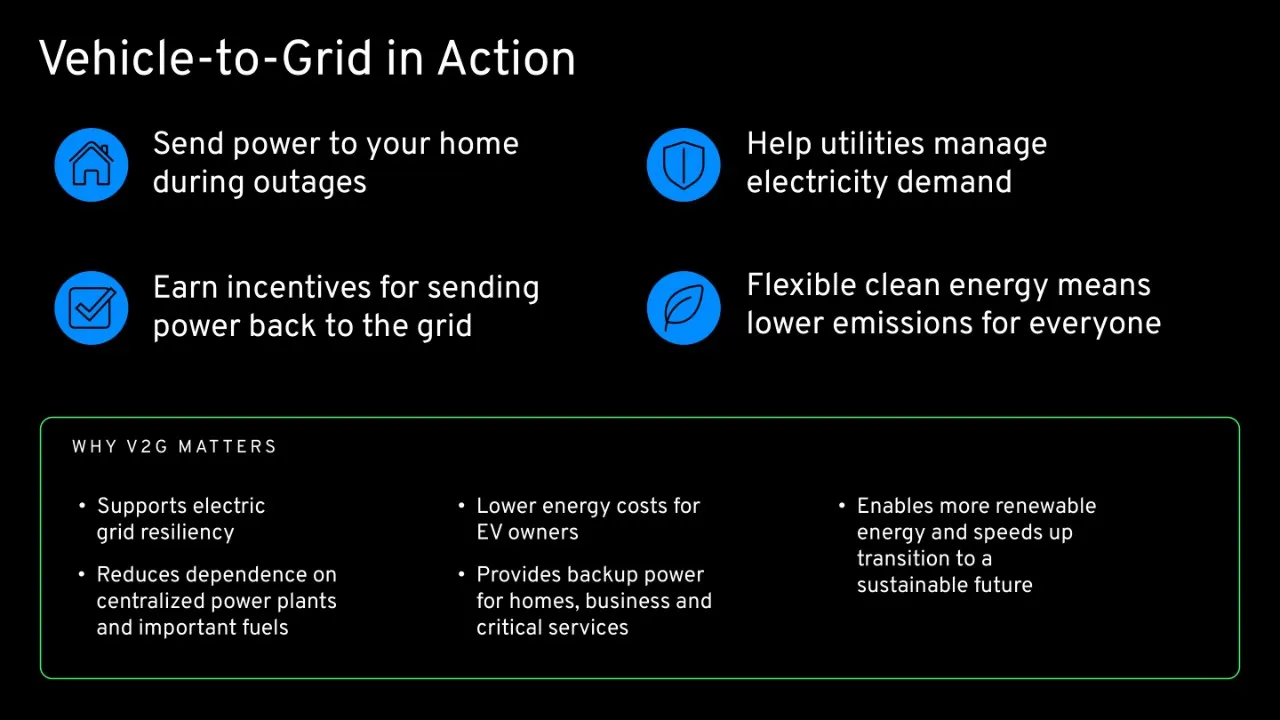
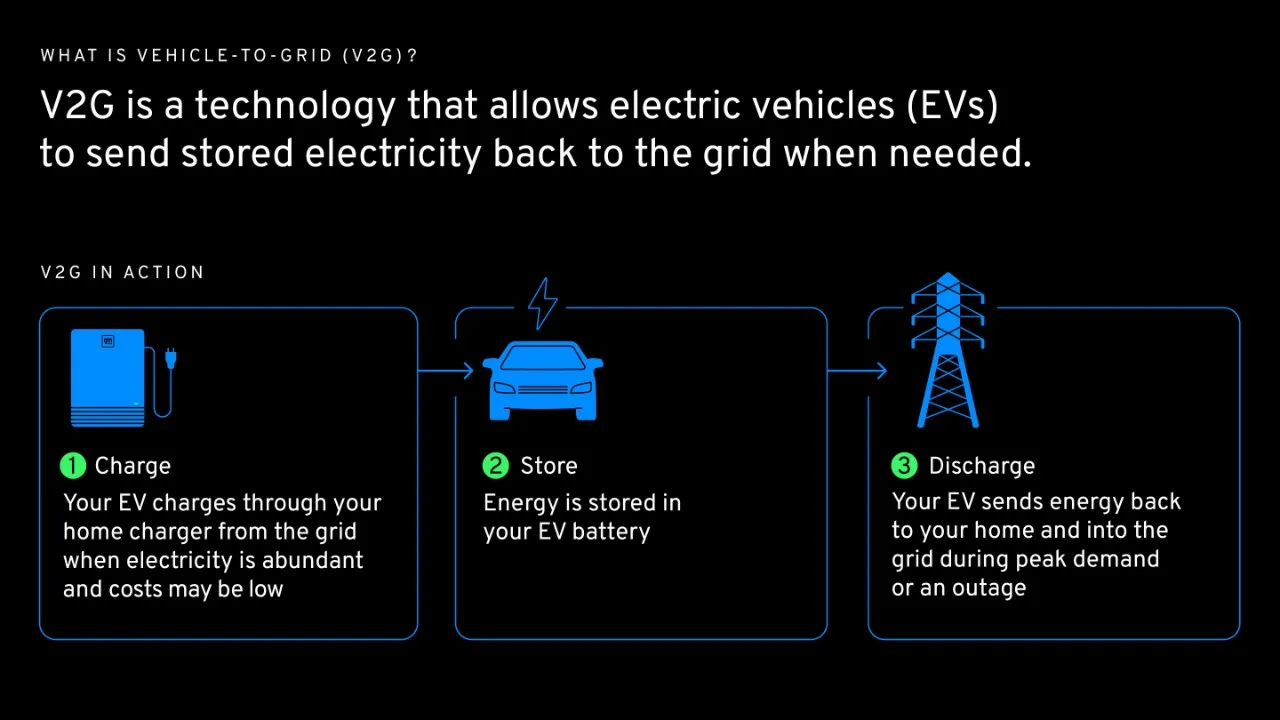
V2G connects a compatible GM EV to the local power grid through participating utility programs where available, letting the vehicle return energy during normal operations. According to GM, that can save owners money and support local infrastructure.
The company frames the value around grid strain. Electrical grids can come under heavy load during heat waves and winter storms as demand spikes, and some utilities meet that demand by running expensive, higher-emission backup plants. GM says V2G could let large numbers of parked, plugged-in EVs feed small amounts of power back into the grid, helping meet local demand without bringing those additional plants online.
For drivers, the company says V2G can lower electricity bills by drawing less grid power during expensive peak hours, particularly in places with time-of-use rates such as California. In some areas, participating utilities may also pay customers to send power back when demand is high — an option GM describes as limited today but expected to expand.
GM positions the same capability as a resource for utilities, which it says could treat EVs parked in driveways and lots as stored energy that helps reduce peak strain, supports reliability, and may limit the need for costly upgrades or new power plants. The company notes that savings are not guaranteed and depend on factors including utility tariffs, time-of-use eligibility, usage, vehicle state of charge, and equipment configuration.
Why Bidirectional Charging Matters Now
GM ties the case for bidirectional charging to mounting pressure on the grid from extreme weather, rising demand from data centers, and broader electrification. The company argues that V2G offers a flexible, distributed way to ease that strain while keeping power available at a properly equipped home during an outage — using EV hardware that, in many cases, is already sitting in garages and driveways.
GM also frames bidirectional charging as added value for a vehicle an owner already has, and as a potential contributor to lower total cost of ownership for an EV that needs no oil changes or fuel. Beyond transportation, the company says, a compatible EV can serve as home backup and, where programs exist, as a grid resource when demand peaks.
Sign up for our popular weekly email to catch all the latest EV news!