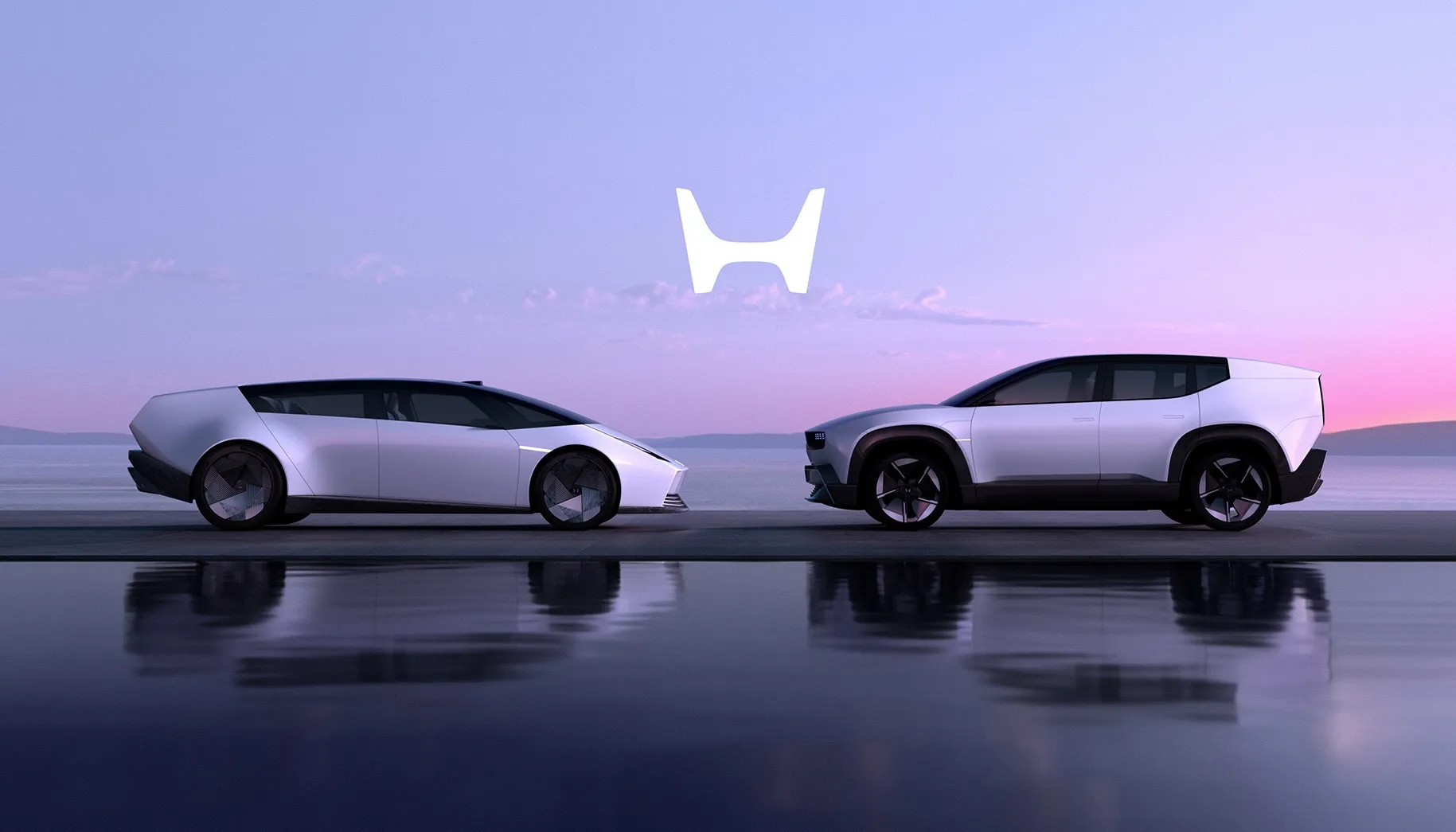

Honda Motor Co. has canceled the development and launch of three electric vehicle models planned for North American production. The automaker scrapped the Honda 0 SUV, Honda 0 Saloon, and Acura RSX as part of a broader reassessment of its electrification strategy. Honda cited declining EV demand, unfavorable U.S. tariff policies, and intensifying competition in China as key factors behind the decision.
Highlights
- Three EV models canceled: Honda 0 SUV, Honda 0 Saloon, and Acura RSX will not enter production in the United States.
- Losses could reach ¥2.5 trillion (~$15.8 billion USD): Combined current and future fiscal year losses from the strategy reassessment may total up to ¥2.5 trillion.
- Operating profit forecast reversed: Honda now expects an operating loss of ¥270 billion to ¥570 billion (~$1.7 billion to $3.6 billion USD), down from a previously forecast ¥550 billion profit.
- Hybrid pivot: Honda plans to strengthen its hybrid vehicle lineup and reassess EV resource allocation while monitoring market trends.
Why Honda Pulled the Plug
Honda determined that launching the three models in a market with significantly declining EV demand would result in further long-term losses. The company had committed heavily to electrification after a major U.S. policy push to accelerate EV adoption. However, several factors undermined that strategy.
In the U.S., the EV market has slowed due to eased fossil fuel regulations and revised EV incentives. Meanwhile, newly imposed tariffs have eroded the profitability of Honda’s gasoline and hybrid models. Those vehicles had served as the stable earnings base funding Honda’s EV development.
China Competition Proved Insurmountable
In China, Honda faced a competitive environment that shifted rapidly toward software-defined vehicles and advanced driver-assistance systems. Newer Chinese EV manufacturers leveraged short product development cycles and SDV strengths. Honda acknowledged it could not deliver products with competitive value for money against these rivals.
The automaker said its inability to respond flexibly to these market shifts, combined with tariff-related margin pressure, created what it described as an “extremely challenging earnings situation.”
Financial Impact
Honda expects to record significant losses in its fiscal year ending March 31, 2026. Key figures include:
- Operating expenses: ¥820 billion to ¥1.12 trillion (~$5.2 billion to $7.1 billion USD) from asset write-offs and cancellation-related costs
- Equity method investment losses: ¥110 billion to ¥150 billion (~$694 million to $946 million USD), tied to reassessed China joint venture investments
- Non-consolidated special losses: ¥340 billion to ¥570 billion (~$2.1 billion to $3.6 billion USD)
These figures are preliminary estimates. Honda noted that additional expenses or losses may follow in the next fiscal year. Revenue forecasts remain unchanged at ¥21.1 trillion (~$133.1 billion USD).
Executive Compensation Cuts
Honda’s president and vice president will return 30% of monthly compensation for three months. Executive council members and managing executive officers involved in automobile operations will return 20% for the same period. Additionally, top executives will forfeit their short-term performance-linked compensation for the current fiscal year. Total compensation for representative executive officers will fall by roughly 25% to 30%.
What Comes Next
Honda plans to pivot toward strengthening its hybrid model lineup. The company will also expand its presence in India, where market growth is expected. In other Asian markets, Honda intends to introduce next-generation hybrid models and reallocate resources accordingly.
EV development will continue on a longer timeline. Honda said it will implement future EV initiatives flexibly while monitoring the balance between profitability and market trends. A detailed mid- to long-term automobile business strategy is expected at a press conference in May.
Honda maintained its dividend forecast despite the revised financial outlook. The company cited its DOE-based shareholder redistribution policy and the cash-generating strength of its motorcycle and financial services businesses.
Note: All USD conversions use an approximate exchange rate of ¥158.5/USD as of March 12, 2026.
Sign up for our popular weekly email to catch all the latest EV news!