
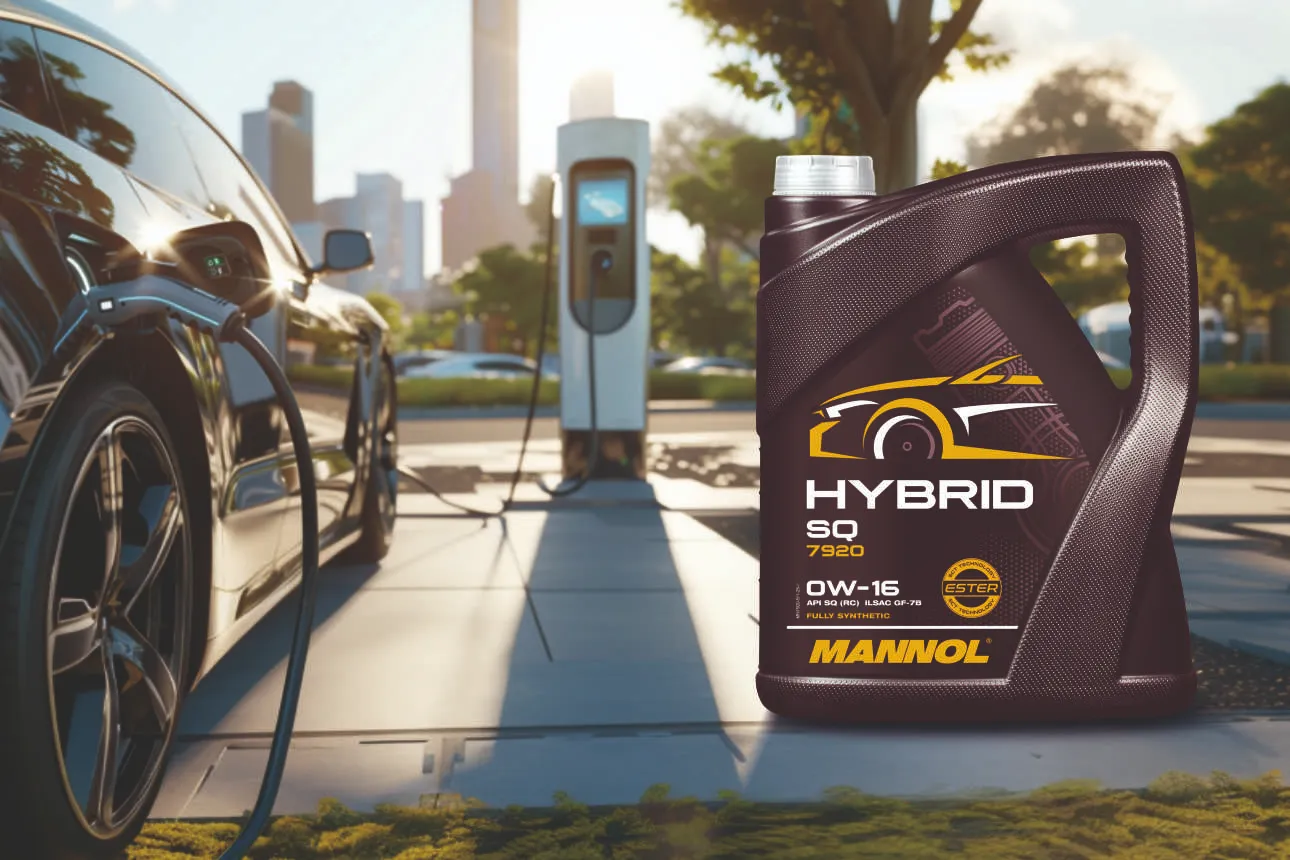
German lubricant manufacturer MANNOL is formulating engine oils to counter three specific stresses that hybrid powertrains place on lubrication: frequent start-stop cycling, repeated cold starts, and highly variable load profiles. MANNOL, a brand of Wedel, Germany-based Sudheimer Car Technik-Vertriebs GmbH within the SCT Group, says hybrid operation differs fundamentally from the continuous thermal and mechanical loads of a conventional combustion engine, shifting what an oil must deliver in wear protection, aging stability, and efficiency. The company reports that hybrid-specific formulations are needed because the combustion engine in a hybrid vehicle runs only intermittently, often at unfavorable temperatures, unlike in vehicles powered solely by combustion engines.
Highlights
- Start-stop cycling, cold starts, and variable load profiles are the primary stress factors MANNOL cites for hybrid-powertrain engine oil.
- Fuel carry-over and condensation in the crankcase alter oil viscosity and can promote corrosion during hybrid operation, according to the company.
- MANNOL says oil must resist oxidation under the higher local temperatures produced when hybrid control systems keep the combustion engine in narrow, efficient operating bands.
- In architectures where electric motors and power electronics sit near the combustion engine, MANNOL says oil must also meet material- and electrical-compatibility requirements.
Why Hybrid Operation Strains Conventional Engine Oil
Conventional combustion engines run under largely continuous thermal and mechanical loads. Hybrid powertrains, by contrast, are marked by highly dynamic load changes, frequent cold starts, and prolonged periods where oil temperature stays low, according to MANNOL. The company says this shift moves the priorities for engine oil toward wear protection, long-term resistance to aging, and efficiency, rather than continuous-duty durability alone.
Start-Stop Cycling Raises Fuel and Moisture Risks
The high frequency of start-stop cycles is the central factor, MANNOL says. Because the combustion engine in a hybrid often runs only intermittently, sometimes at unfavorable temperatures, the oil must build a stable lubricating film quickly after each start-up and maintain strong low-temperature properties. At the same time, the company reports an increased risk of fuel entering the oil and condensation forming inside the engine, both of which alter viscosity and can promote corrosion. MANNOL says its additive technologies are designed to compensate for water and fuel contamination while limiting deposit formation.
Meeting Sudden Power Demands
Hybrid control systems generally keep the combustion engine within its most efficient operating range to conserve fuel, which MANNOL says can produce higher local temperatures and place added strain on the oil. That requires long-term resistance to oxidation and consistent performance under sustained thermal stress, the company reports. Minimizing friction is also a priority, since MANNOL says even small efficiency gains reduce fuel consumption across the system.
Konstantin Gaab, Managing Director of MANNOL/SCT Germany, described how these demands intensify during sudden acceleration: “Even under high-stress conditions, such as during a sudden overtaking manoeuvre or rapid acceleration, the engine must deliver its maximum power within a very short time. In such cases, the engine is often not yet within its optimum operating temperature range, but is virtually cold. Under these conditions, the engine oil must immediately form a reliable lubricating film whilst simultaneously meeting the increased demands for wear protection, friction minimisation and thermal stability. These specific operating profiles clearly demonstrate that hybrid powertrains place specific demands on modern engine oils.”
Electrification Adds Compatibility Requirements
In certain hybrid architectures, electric motors and power electronics operate close to the combustion engine, which MANNOL says adds requirements around material compatibility and, in some cases, electrical properties — for example, how the oil interacts with nearby electrically active components. This is a design consideration distinct from the combustion-only lubrication requirements the industry has relied on for decades.
MANNOL says it continues to refine its engine oil formulations specifically for hybrid powertrain requirements, using base oils and additive technologies intended to speed lubricant-film formation, improve oxidation stability, and protect against wear, deposits, and corrosion. The brand, founded in 1993 by Juri Sudheimer, is distributed in more than 130 countries and produces engine and transmission oils, operating fluids, and other lubricant products under the SCT Group umbrella.
Sign up for our popular weekly email to catch all the latest EV news!