

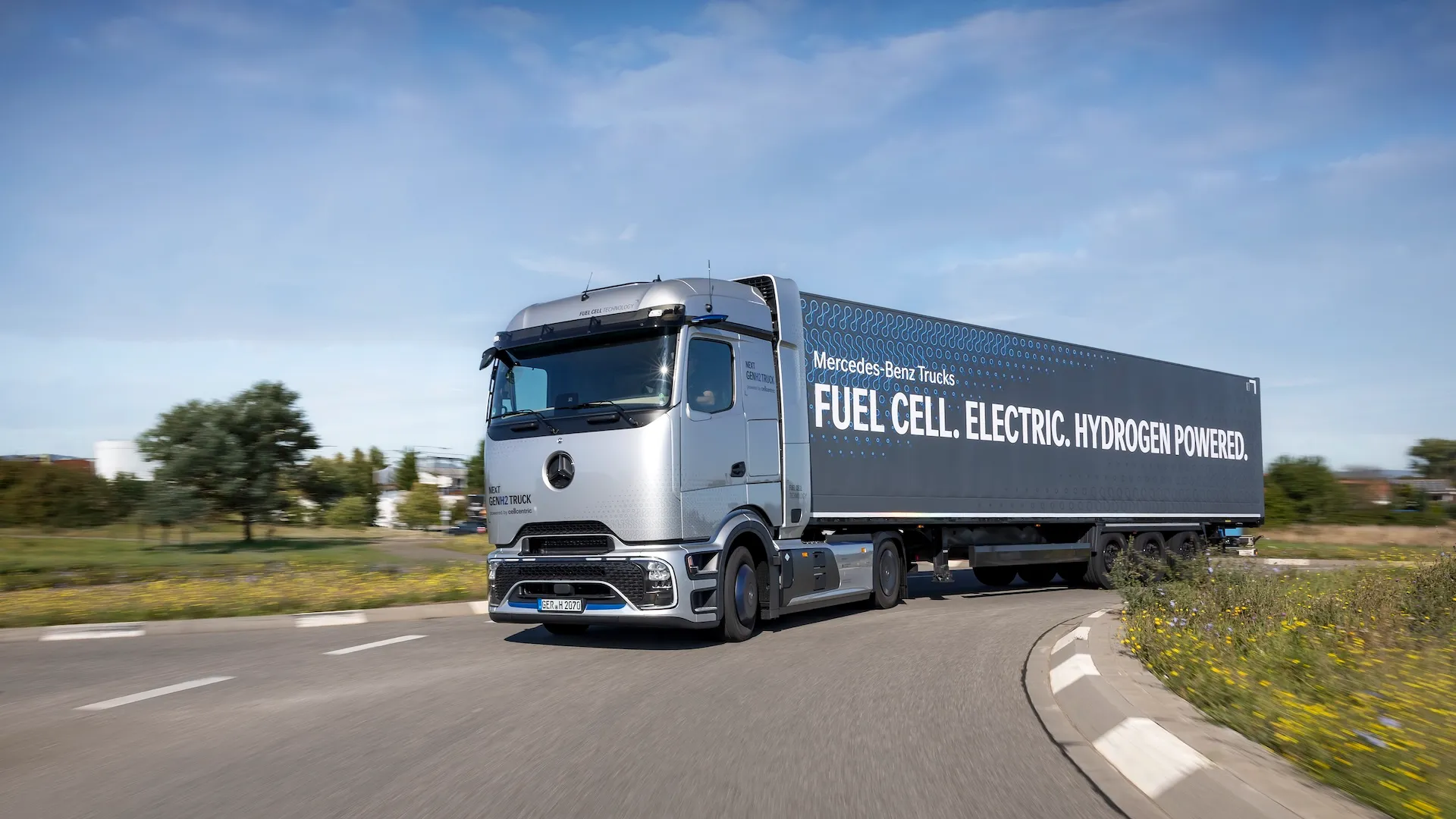
Daimler Truck has unveiled the Mercedes-Benz NextGenH2 Truck, a hydrogen fuel cell semi-trailer tractor scheduled for limited production beginning late 2026. The company will manufacture 100 units at its Wörth, Germany plant for deployment with select customers, marking a significant milestone in the commercialization of hydrogen-powered heavy-duty transportation.
Highlights
- Small-series production of 100 NextGenH2 Trucks begins at the Mercedes-Benz Wörth plant from late 2026, with full series production targeted for the early 2030s.
- Liquid hydrogen storage capacity increased to 85 kg, enabling ranges exceeding 1,000 kilometers on a single fill with 10-15 minute refueling times.
- Proven series components from the eActros 600 include the integrated e-axle, ProCabin, and latest safety systems, accelerating technological maturity.
- German federal and state funding totaling €226 million supports development, production, and customer deployment of the NextGenH2 fleet.

Liquid Hydrogen Delivers Diesel-Comparable Range
Daimler Truck continues to prioritize liquid hydrogen over gaseous alternatives for its fuel cell truck program. At -253 degrees Celsius, liquid hydrogen offers substantially higher energy density than compressed gaseous hydrogen, enabling greater onboard storage capacity and extended operating range.
The NextGenH2 Truck features two interconnected liquid hydrogen tanks with a combined capacity of 85 kg, an increase from the first-generation GenH2 Truck. This configuration enables ranges exceeding 1,000 kilometers at full load, matching the operational flexibility of conventional diesel trucks.
Refueling utilizes the sLH2 standard co-developed by Daimler Truck and Linde. The system allows drivers to fill both tanks from either side of the vehicle in 10-15 minutes. Daimler Truck notes that liquid hydrogen also offers logistical advantages, with tanks providing cost and weight benefits over high-pressure gaseous storage systems.
The company demonstrated these capabilities during the 2023 #HydrogenRecordRun, when a GenH2 Truck at approximately 40 tonnes gross combined weight covered 1,047 km on a single fill.
Cellcentric Fuel Cell System Produces 300 kW
The NextGenH2 Truck retains the BZA150 fuel cell from cellcentric, the joint venture between Daimler Truck and Volvo Group. Two fuel cell units operate in a twin configuration, producing a combined 300 kW (150 kW each) while fitting compactly within the engine compartment beneath the cab.
Early customer trials with the GenH2 Truck recorded hydrogen consumption between 5.6 kg/100 km and 8 kg/100 km across gross combined vehicle weights ranging from 16 to 34 tonnes. The fuel cell generates electricity through hydrogen-oxygen reaction, with water vapor as the only emission.
A 101 kWh lithium-iron-phosphate (LFP) battery developed by Daimler Truck serves as a buffer for the fuel cell system and captures energy during regenerative braking. The truck delivers up to 340 kW in Economy Mode and 370 kW in Power Mode.
eActros 600 Components Accelerate Development
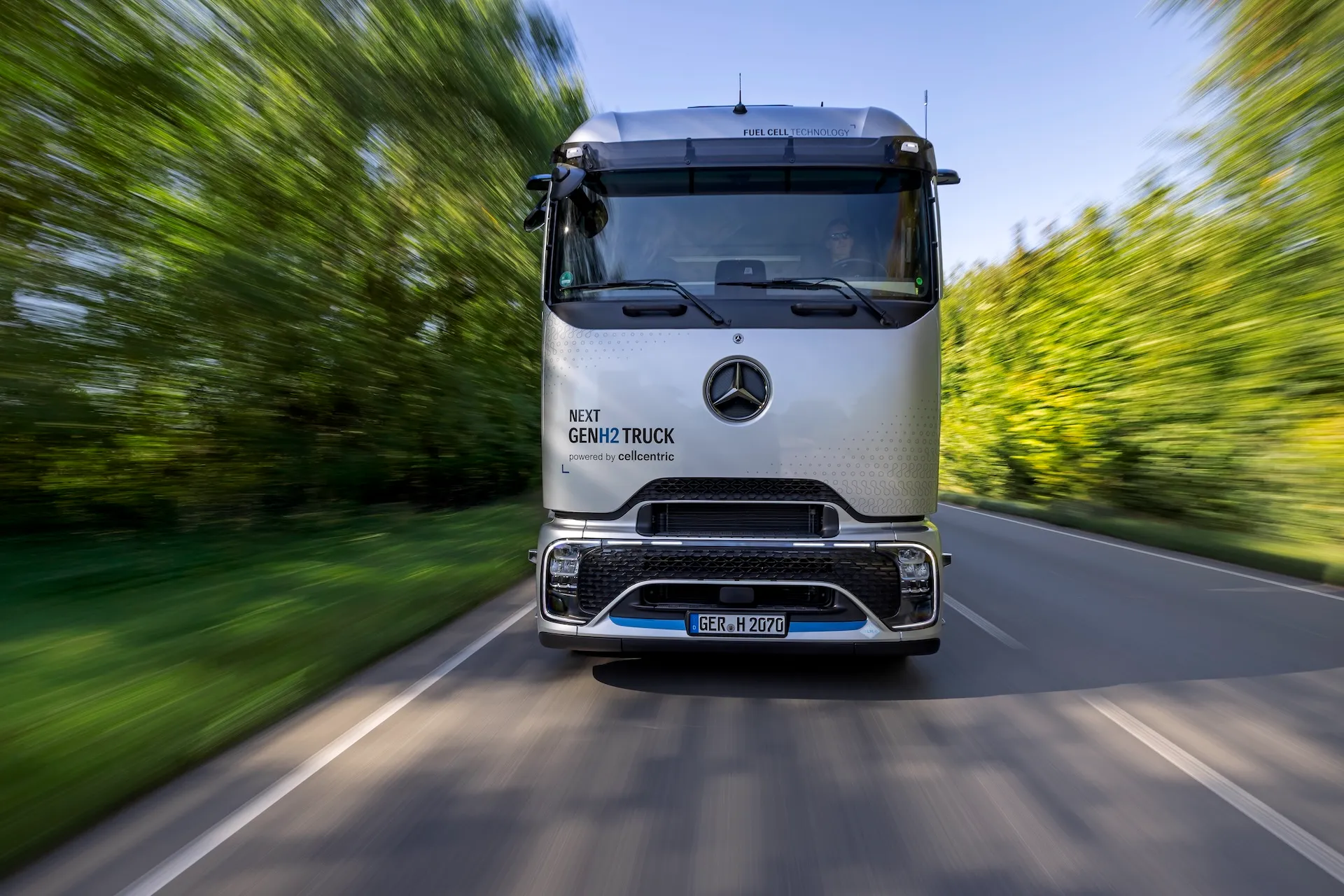
The NextGenH2 Truck incorporates several production-validated components from the battery-electric Mercedes-Benz eActros 600:
- ProCabin provides a 9% improvement in drag coefficient compared to the previous cab design
- Integrated e-axle with 4-speed transmission (including two reverse gears)
- Multimedia Cockpit Interactive 2 delivers modern driver interface
- Latest E/E architecture enables advanced safety and cybersecurity compliance
Safety systems carried over from the eActros 600 include Active Brake Assist 6, Front Guard Assist, and Active Sideguard Assist 2.

Compact Tech Tower Improves Trailer Compatibility
Customer feedback from GenH2 Truck trials directly influenced packaging improvements in the NextGenH2 Truck. Engineers reduced the wheelbase by 150 mm to 4,000 mm through more compact arrangement of components in the Tech Tower behind the cab. This shorter wheelbase increases compatibility with standard trailers within EU length regulations.
The Tech Tower houses several new systems:
- Boil-off management system meets regulatory requirements for hydrogen handling, including parking in enclosed spaces
- Integrated cooling system maintains stable operating conditions at high ambient temperatures and demanding terrain
- Hydrogen leak detection sensors enable overnight stays in the cab’s two standard beds
A redesigned side panel with integrated crash elements provides improved protection for the liquid hydrogen tanks. The aerodynamically optimized panel includes practical tread plates for improved accessibility.

Testing and Government Support
Daimler Truck conducted prototype testing of the NextGenH2 Truck under extreme conditions in the Swiss Alps during both winter and summer trials. Insights from these tests informed the final production design.
The German Federal Ministry of Transport (BMV) and the federal states of Rhineland-Palatinate and Baden-Württemberg are providing €226 million to support development, production, and customer deployment of the NextGenH2 fleet.
Further information is available at www.daimlertruck.com.
Sign up for our popular weekly email to catch all the latest EV news!