

Hino Trucks will begin production of the Le Series battery-electric medium-duty truck in Q3 2026, the company confirmed with the model’s debut at ACT Expo 2026 in Long Beach. The Le Series carries a 269 kWh Hexagon Purus ProPack battery and is offered in 25,950-pound (L6e) and 33,000-pound (L7e) GVWR configurations, placing it in Class 6 and lower Class 7 territory. The reveal expands a Hino zero-emission lineup that already includes the Tern RC8 Class 8 tractor, which shares the same supplier stack of Hexagon Purus battery systems, Panasonic Energy cells, and an Accelera by Cummins e-axle. The Le Series replaces an earlier Le Series concept first previewed in 2023 under a since-discontinued partnership with SEA Electric.
Highlights
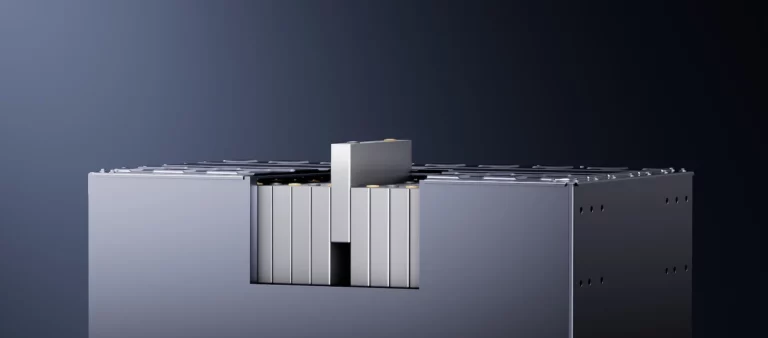
- Battery: 269 kWh Hexagon Purus ProPack with Panasonic Energy lithium-ion cells, operating at up to 750 volts
- Charging: CCS Type 1 DC fast charging at 120 kW, supporting 0–80 percent state of charge in roughly 1.8 hours
- Powertrain: Accelera 14Xe Gen 4.5 integrated e-axle delivering 260 kW (348 hp) peak and 180 kW (241 hp) continuous
- Production: Manufacturing slated to begin in Q3 2026, with two GVWR configurations at 25,950 lbs (L6e) and 33,000 lbs (L7e)
Powertrain and Battery Architecture
The Le Series is built around the Hexagon Purus ProPack battery system, the same supplier that provides the dual 269 kWh packs used in the Tern RC8 Class 8 tractor distributed by Hino. In the medium-duty Le Series, a single 269 kWh pack is paired with the Accelera by Cummins 14Xe Gen 4.5 integrated e-axle, which combines the motor, two-speed transmission, and drive axle into one unit. Peak output is 260 kW (348 hp), with 180 kW (241 hp) available continuously.
Panasonic Energy supplies the lithium-ion cells. According to prior coverage of the Tern program, Panasonic is in the process of shifting production from Japan to a new facility in De Soto, Kansas, which would bring Le Series cell sourcing within scope of evolving North American battery content rules. Hino has not stated whether Le Series cells will be drawn from the Kansas facility once it ramps.
DC fast charging uses the CCS Type 1 standard at 120 kW, which Hino says will recover a 0–80 percent state of charge in approximately 1.8 hours. That charging profile is consistent with depot-based duty cycles where the truck sits idle overnight or between routes rather than relying on highway-corridor charging.
Driver and Body-Builder Considerations
Hino said the Le Series includes programmable regenerative braking and revised weight distribution intended to improve handling under load. Driver-facing changes include the smoother torque delivery and reduced cabin noise typical of battery-electric medium-duty platforms, factors the company linked to fatigue reduction on multi-stop urban routes.
For body builders, Hino retained a clear back-of-cab design to simplify upfit work across box, dry van, refrigerated, and utility configurations — an important consideration for a medium-duty platform that fleets typically buy as a chassis cab.
Standard Safety Equipment
Two driver-assist features come standard: an automatic emergency braking system and a lane departure warning system. Hino did not specify supplier or sensing-suite details for either system in the launch materials.
Executive Comment
“Introducing the Le Series is an important step in our efforts to reduce environmental impact and support our customers’ sustainability goals,” said Rodney Shaffer, Vice President, National Accounts & Zero Emission Vehicles of Hino Trucks. “We’ve focused on delivering a solution that builds on our proven platform and is well-suited for the applications where electric vehicles make the most sense, helping fleets take practical and meaningful steps toward lower emissions.”
Market Position
The Le Series enters a Class 6–7 BEV segment that has filled in considerably since Hino first announced an electric medium-duty product in 2023. Competitors and adjacent products in The EV Report archives include the Accelera-powered Isuzu F-Series, which uses the same e-axle supplier stack, and Class 5 and Class 8 entries from Lion Electric. Hino’s pitch leans on its existing dealer service network and total cost of ownership rather than headline range or peak-power figures, neither of which the company disclosed at launch.
What to Know
How does the Le Series compare to the Tern RC8 that Hino also distributes?
The two trucks share the same supplier ecosystem — Hexagon Purus ProPack batteries, Panasonic Energy cells, and an Accelera-built drive system — but target different segments. The Le Series is a Class 6/lower Class 7 medium-duty truck with a single 269 kWh pack and a 260 kW peak motor, while the Class 8 Tern RC8 uses dual 269 kWh packs (538 kWh total) and a 680 hp peak output for tractor applications. The Le Series is a Hino-branded vehicle; the RC8 is a separate Tern brand distributed by Hino.
When can fleets order and take delivery of the Le Series?
Hino has set Q3 2026 as the production start. The company has not yet published a public order book opening date, dealer allocations, or pricing in the launch announcement. Fleets in California and the seven other states that have adopted Advanced Clean Truck rules are the most likely early customers given existing zero-emission vehicle sales mandates.
What is the expected range of the Le Series?
Hino did not publish a range figure at launch. With a 269 kWh usable battery in a Class 6/lower Class 7 vocational truck, comparable competitor specs suggest a working range in the 100–175 mile band depending on duty cycle, payload, and HVAC load, but a Hino-disclosed figure has not yet been provided. This is flagged for follow-up coverage when EPA-equivalent or fleet-test numbers become available.
Why are programmable regenerative braking systems significant on a medium-duty BEV?
Programmable regen lets fleets tune how aggressively the e-axle decelerates the vehicle when the driver lifts off the accelerator. On stop-and-go urban routes, more aggressive regen recaptures more energy and reduces friction-brake wear. On highway-leaning duty cycles, lighter regen settings preserve coastdown efficiency. The trade-off between regenerative and friction braking is an area of growing focus across the medium-duty BEV segment.
Sign up for our popular weekly email to catch all the latest EV news!