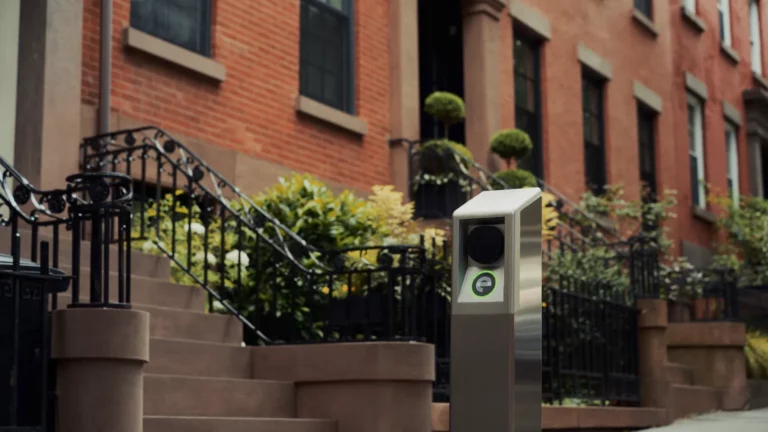


SWTCH Energy has announced its expansion into the single-family residential market with a new home charging program designed to monetize residential energy consumption. By leveraging Canada’s federal Clean Fuels Regulation (CFR) Carbon Credit market, the Toronto-based company will provide homeowners with Level 2 electric vehicle (EV) supply equipment at no upfront cost, while offering a revenue-sharing model based on charging activity.
Highlights
- Hardware Incentive: Qualified Canadian homeowners receive a Level 2 EV charger (up to 48A) with no initial hardware fee.
- Revenue Generation: Participants earn $0.03 CAD per kWh for home charging, leveraging federal carbon credits.
- Payout Structure: Earnings are distributed via direct deposit once a $100 threshold is reached.
- Strategic Shift: The move marks SWTCH’s pivot from exclusively multi-family and commercial sectors into the distributed residential grid.
Monetizing the Residential Grid
The program’s core mechanism relies on the aggregation of carbon credits generated under Canada’s Clean Fuels Regulation. Traditionally, these credits are complex for individual homeowners to access and trade. SWTCH acts as the aggregator, tracking the kilowatt-hours (kWh) dispensed at the residential level and converting this data into tradable carbon credits.
A portion of the revenue generated from selling these credits to obligated parties (such as fuel suppliers) is returned to the homeowner. Participants earn a fixed rate of 3 cents per kWh. For an average Canadian driver, this translates to estimated annual earnings between $100 and $150, effectively offsetting a portion of residential electricity costs.
“SWTCH is doing our part to make the switch to electric easier and more rewarding for Canadians,” stated Carter Li, CEO of SWTCH. “By building the infrastructure and business model to turn home charging into carbon credits, we’re giving homeowners a way to earn money while helping accelerate EV adoption nationwide.”
Hardware Specifications and Installation
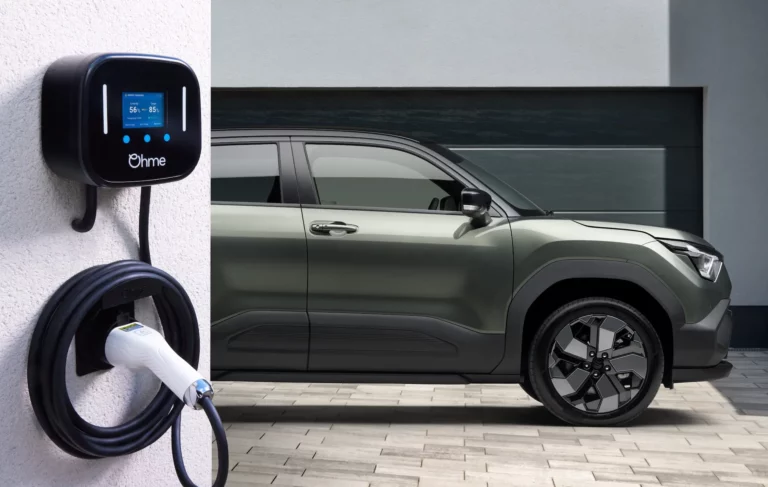
The program creates a decentralized network of connected chargers. The provided hardware is a smart Level 2 charger, capable of delivering up to 48 amps when hardwired (11.5 kW) or 40 amps via a NEMA 14-50 plug.
To qualify for the hardware and revenue stream, users must adhere to specific technical requirements:
- Connectivity: The charger must remain connected to the home Wi-Fi network to transmit usage data for credit verification.
- Installation: Homeowners are responsible for installation costs through a licensed electrician.
- App Integration: The unit must be paired with the SWTCH mobile application to track sessions and accumulate earnings.
The hardware remains eligible for provincial utility incentives, such as those offered by BC Hydro and Quebec’s Roulez Vert program, which can further subsidize installation expenses.
Market Context and Partnership
This initiative is launched in partnership with Plug’n Drive, a non-profit organization focused on EV education. For SWTCH, which has historically focused on networked charging for multi-tenant buildings (MURBs) and commercial properties, this represents a significant expansion of their asset footprint.
By distributing the infrastructure cost and utilizing the CFR market to recoup the hardware investment over time, the company creates a scalable model for residential infrastructure deployment that does not rely solely on direct consumer hardware sales.
Sign up for our popular weekly email to catch all the latest EV news!