
Altilium has secured follow-on investment from strategic shareholders SQM and Marubeni Corporation as part of its Series B2 round, backing the UK company’s plan to scale battery recycling to 150,000 EV batteries a year. Altilium announced the funding this week and said it will support commercial development of ACT 3, which the company describes as the UK’s first commercial refinery for recovering critical battery materials from end-of-life EV batteries. The financing follows an £18.5 million ($24.5 million) grant awarded through the UK Government’s DRIVE35 program.
Highlights
- Repeat investors: SQM led Altilium’s $12 million Series A, and Marubeni joined the subsequent Series B. Both returned for the Series B2 round.
- Government grant: £18.5 million ($24.5 million) in DRIVE35 funding, delivered by the Advanced Propulsion Centre (APC) and Innovate UK, supports ACT 3 development.
- ACT 3 capacity: The Plymouth plant is designed to process 24,000 EV batteries per year.
- Long-term target: The planned ACT 4 facility is designed to recycle 150,000 EV batteries annually and produce cathode active material (CAM).
Why Are SQM and Marubeni Reinvesting?
Both companies were early backers. SQM, the Chilean lithium producer, led Altilium’s $12 million Series A. Marubeni, the Japanese trading and investment group, came in as a key investor in the Series B round. Altilium did not disclose the size of the Series B2 investment.
The company says the funding reflects investor confidence in its patented technology and its plan to build a domestic circular supply chain for EV batteries in the UK.
Kamran Mahdavi, CEO of Altilium, said: “We are proud to have the continued support of SQM and Marubeni as we advance to the next phase of our growth. Their investment is a strong endorsement of our strategy to scale a UK-based circular economy for battery materials. With the backing of our strategic partners and the UK Government, we are accelerating the development of ACT 3 and laying the foundation for a globally competitive battery recycling industry in the UK.”
What Will the ACT 3 Plant Produce?
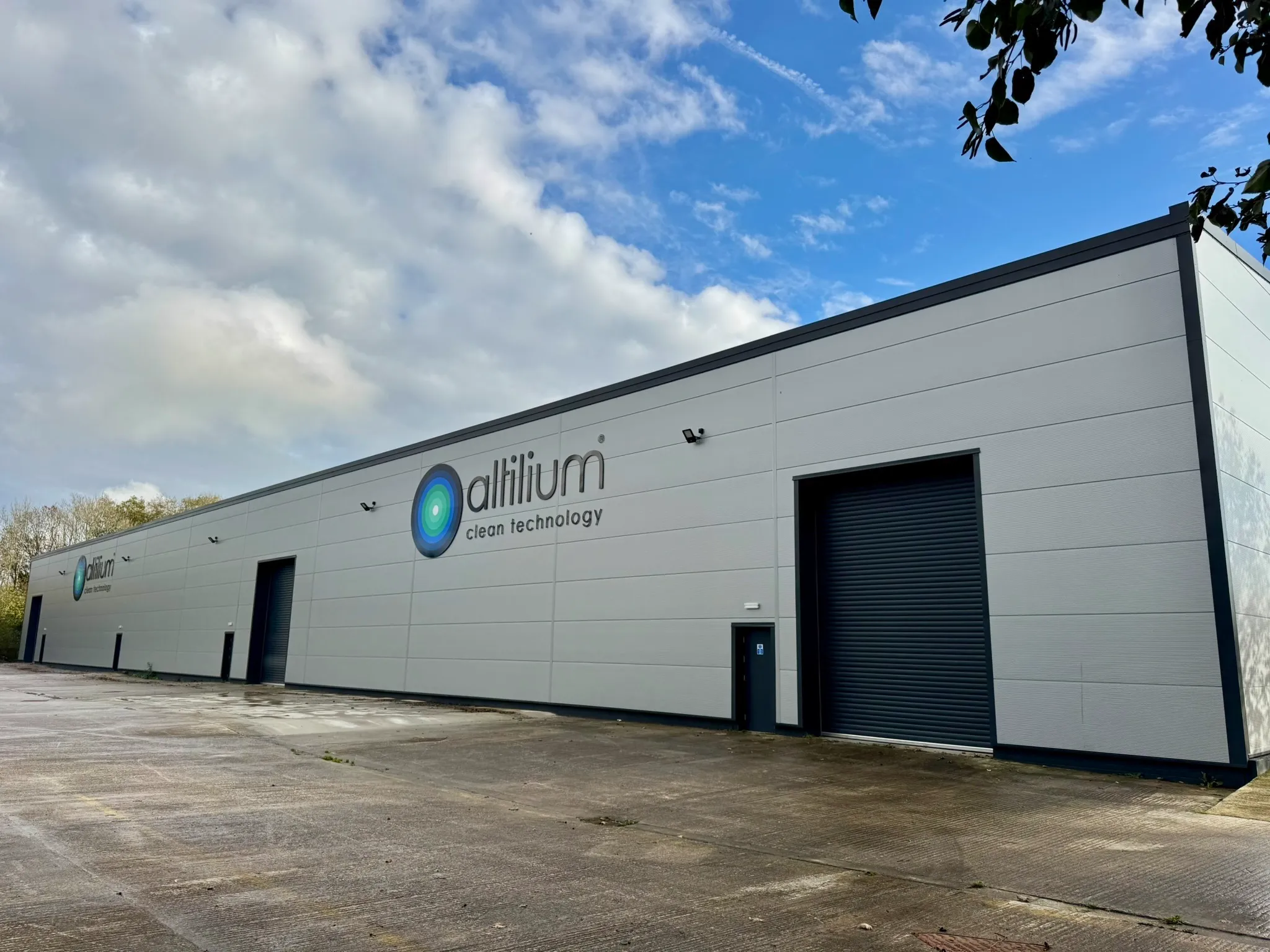
Located in Plymouth, Devon, Altilium’s ACT 3 plant will process 24,000 EV batteries per year. Its output covers three battery intermediates:
- Nickel mixed hydroxide precipitate (MHP)
- Lithium sulfate
- Graphite
According to the company, recovering these materials from end-of-life batteries will reduce reliance on imported raw materials, lower carbon emissions, and improve supply chain resilience.
Altilium’s Scale-Up Pathway
Altilium is moving through four stages of development:
- ACT 1: Bench-scale facility
- ACT 2: Pilot plant, which began operations in Plymouth in 2025
- ACT 3: Commercial-scale refinery, now in development
- ACT 4: Planned recycling and CAM production facility
The company says ACT 4 will process scrap from more than 150,000 EVs per year and produce about 33,000 tons (30,000 metric tons) of CAM. Altilium states that output would meet more than 20% of the UK’s expected CAM needs by 2030.
The company’s proprietary EcoCathode and EcoAnode processes convert end-of-life EV batteries and manufacturing scrap into battery precursors, CAM, cathode precursor (pCAM), and anode active material (AAM) for reuse in new batteries.
UK Battery Demand Outlook
The Advanced Propulsion Centre UK forecasts battery demand from the UK automotive sector alone will grow from 13 GWh per year in 2027 to 75 GWh per year by 2035.
In addition to SQM and Marubeni, Altilium is backed by Mizuho Bank.