
The U.S. Department of Transportation has finalized a reset of the National Highway Traffic Safety Administration’s corporate average fuel economy (CAFE) standards, a rule the department says will lower the average cost of a new vehicle by $1,300. Transportation Secretary Sean P. Duffy released the Safer Affordable Fuel Efficient (SAFE) Vehicles Rule III last week. The rule eliminates CAFE credit trading and changes how vehicles are classified as passenger cars or light trucks. The department calls the effort, branded “Freedom Means Affordable Cars,” one of the largest deregulatory actions of the second Trump administration.
Highlights
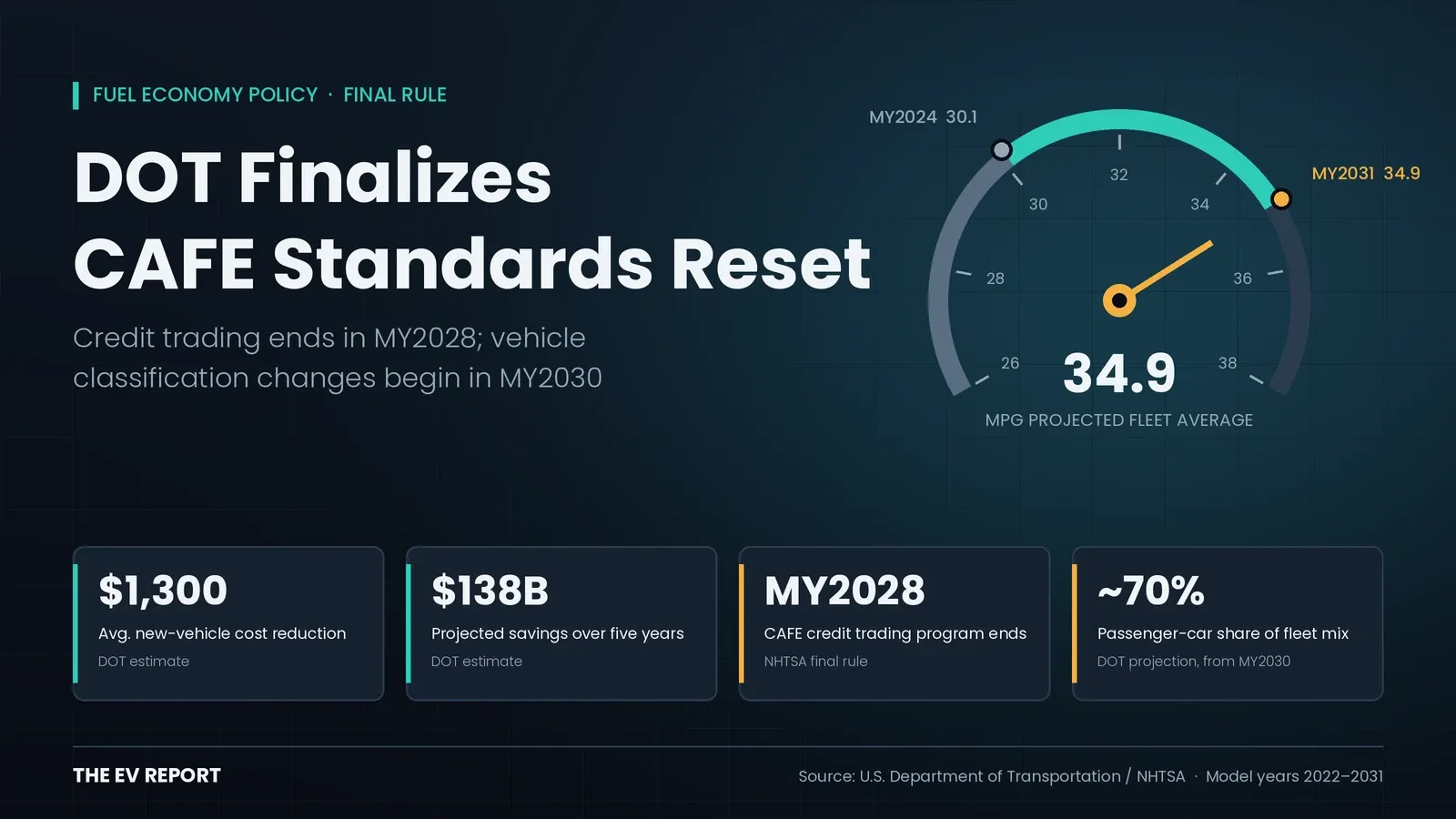
- $1,300 reduction in the average cost of a new vehicle and $138 billion in savings over the next five years, according to DOT estimates
- 34.9 mpg projected fleet average by model year 2031, up from 30.1 mpg for model year 2024, NHTSA estimates
- Model year 2028: the CAFE credit trading program ends
- Model year 2030: new classification criteria take effect, which DOT expects to shift the fleet mix from roughly 70% light trucks to about 70% passenger cars
What the Final Rule Covers
The final rule completes the department’s earlier proposal to reset CAFE standards. It sets standards for passenger cars and light trucks for model years 2022 to 2031.
DOT argues that the previous administration set standards that exceeded what Congress required. The department says those standards amounted to a “backdoor” electric vehicle mandate. It contends that statute prohibits considering alternative fuel technologies such as EVs when setting standards, and that the earlier targets pushed automakers into large capital investments in EV production that drove up vehicle prices.
NHTSA projects the new standards will reduce yearly oil consumption in 2050 by about 1.3 billion barrels compared with 2024. The department also says the rule will prevent more than 300,000 serious injuries and save 1,900 lives by encouraging new-car sales.
What Happens to CAFE Credit Trading?
NHTSA will eliminate the CAFE credit trading program starting in model year 2028. DOT says the program propped up the EV industry at the expense of traditional automakers. It claims the previous framework funneled millions in compliance credits to EV manufacturers.
According to the department, ending trading puts all automakers on equal footing. It also requires each manufacturer to spread fuel-saving technologies across its own fleet.
Why Is NHTSA Reclassifying Crossovers?
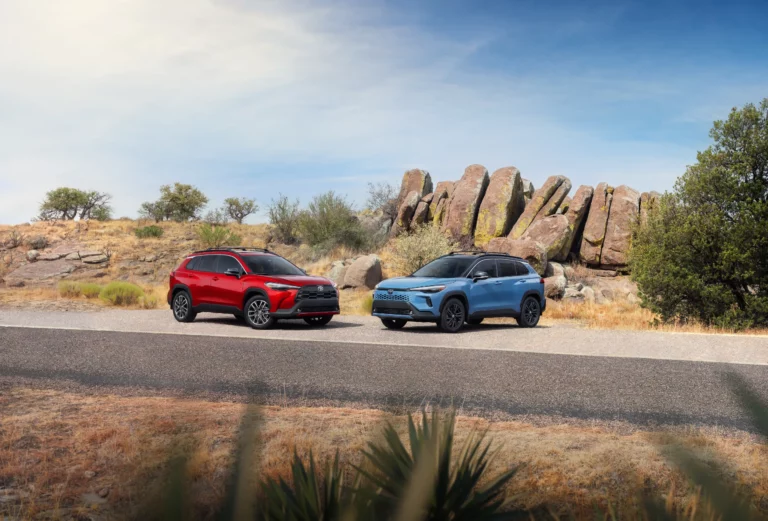
DOT says automakers have made design changes and added equipment so small crossovers qualify as light trucks, which face less stringent fuel economy requirements. The department notes these vehicles are not intended to haul cargo or operate off-road.
Starting in model year 2030, new criteria will classify vehicles by intended use. DOT expects the change to have these effects:
- Fleet mix: a shift from about 70% light trucks and 30% passenger vehicles to roughly 70% passenger cars and 30% light trucks
- Design incentives: no reason to add equipment or alter designs only to earn light-truck status, which the department says will widen the availability of lower-cost vehicles
- Vehicle segments: an end to the current disincentive against building hatchbacks, wagons, and smaller-footprint vehicles
- Exports: possible gains for U.S. automotive exports, since current classification rules are not compatible with foreign market needs
Officials’ Statements
“Thanks to President Trump’s leadership, we have finally ended the illegal mandate that forced automakers to produce more expensive electric vehicles that American families didn’t want. While Joe Biden and Pete Buttigieg pushed a green agenda that made our roads less safe and drove up costs for hardworking Americans, this administration is delivering relief to families and reviving the beating heart of American manufacturing,” said Duffy. “With our commonsense standards in place, we are making the American dream affordable again, putting safer cars on the road, and investing in the American autoworker.”
NHTSA Administrator Jonathan Morrison framed the rule around affordability and fleet turnover.
“This rule restores integrity to the national fuel economy program, balancing vehicle affordability and energy conservation goals while improving safety on our roadways,” Morrison said. “Newer cars are safer cars. By reducing vehicle prices, more American families will be able to afford newer vehicles, and sensible standards allow automakers more freedom to design and produce vehicles consumers actually want. I’m proud of our fantastic team of expert engineers, economists, and lawyers for the tremendous job they’ve done finalizing this rule.”
More information on the program is available through NHTSA’s corporate average fuel economy resource page, which outlines how fleet standards are set and enforced.