
Everyday Electric, the virtual power plant (VPP) operator formerly known as Renew Home, has acquired connected-vehicle platform Smartcar, bringing electric vehicles into a residential VPP the company says coordinates more than 6 gigawatts (GW) of flexible capacity. The Smartcar acquisition arrived this week alongside the company’s name change and moves it beyond its roots in smart thermostats and HVAC systems. According to the company, Smartcar’s platform and team will join Everyday Electric, and services for existing Smartcar customers will continue without interruption.
Highlights
- 6+ GW of flexible capacity: Everyday Electric says it coordinates more than 6 GW across smart thermostats, EVs, solar, and storage in millions of homes.
- $5 billion savings target: The company aims to help households save more than $5 billion over the next five years.
- No added hardware: Smartcar connects vehicles to energy and mobility companies without additional hardware, according to the release.
- 2024 founding: Renew Home was founded in 2024 by leaders from the Google Nest energy and Google AI Labs teams, in partnership with Sidewalk Infrastructure Partners.
Why Is Everyday Electric Buying Smartcar?
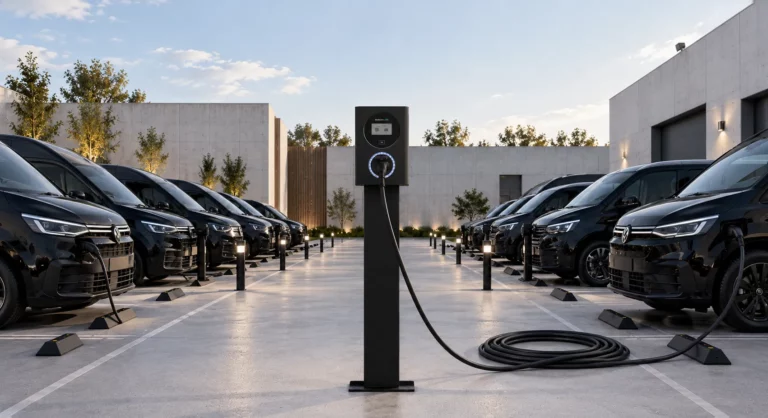
Everyday Electric says Smartcar’s vehicle connectivity supports simplified customer savings and managed charging within the utility programs it operates. The deal brings vehicle connectivity and automotive integrations in-house.
“For most households, the car in the driveway represents one of the biggest decisions impacting their energy expenses. For years, Smartcar has partnered with OEMs to make it easy for drivers to save with smart charging that fits their routines. We’re excited to grow those partnerships to bring more savings to more customers and work with our utility partners to reward those customers for their smart charging decisions,” said Ben Brown, CEO of Everyday Electric. “It’s the same approach that built 6 gigawatts of flexible capacity across millions of homes, and a critical step to helping us reach over $5 billion in savings for households over the next five years.”
Smartcar’s OEM Partnerships
Smartcar already holds direct partnerships with several automakers worldwide. Everyday Electric plans to expand those relationships and add new OEM partners, with the stated goal of widening customer savings options while scaling VPP capacity.
“Smartcar was built to make it simple for drivers to connect their cars and unlock savings and rewards as part of their driving experience. The team at Everyday Electric has spent years proving that household energy management can deliver value to customers and the grid at scale, reaching millions of homes,” said Sahas Katta, CEO and Co-Founder of Smartcar. “Joining Everyday Electric means smart charging can become a seamless part of how households save, and I’m excited to bring the growing list of direct EV partnerships we’ve built into that future together.”
Renew Home Rebrands as Everyday Electric
The acquisition accompanies the company’s rebrand and the launch of Everyday VPP, which it describes as a personalized, whole-home virtual power plant that builds on traditional demand response programs. In a letter titled Renew Home is now Everyday Electric, Brown argues that rising electricity demand, driven by electrification, onshoring, and AI data centers, should be met first by better coordinating existing resources rather than relying only on new gas peaker plants and transmission upgrades.
“We’re at a pivotal moment in energy, similar to what we’ve seen before with major infrastructure decisions, and the choices we make now will shape the grid for decades,” Brown said. “We believe the best path forward starts with better utilizing what we already have, so households can save money and the grid gets the flexible capacity it needs.”
The founding team ran energy programs for Nest thermostat customers, which the company says showed that flexibility centered on comfort and convenience is what scales. Everyday Electric now aims to apply that model beyond HVAC to the rest of the connected home.
Commissioned research cited by the company found that 58% of multi-device owners say their energy bill is getting harder to manage, and 81% of customers want to know how their energy products are saving them money.
“Saving money and energy at home should be easier,” said Jeff Gleeson, Chief Product Officer at Everyday Electric. “We’ve already seen that when energy use flexes naturally with people’s lives, costs can go down and capacity can go up in meaningful ways. Now, we’re working toward helping households save over $5 billion in the next five years, and that includes every household our energy provider partners serve, not just homes with smart products.”
What Does Everyday VPP Offer Utilities?
Everyday Electric lists six features for existing and new energy provider partners:
- OEM-embedded activation: Savings and rewards features built into device experiences, which the company says reduces the marketing burden on energy partners.
- Personalized adjustments: Customers choose their level of participation.
- Connected insights: A new savings link capability lets utilities surface energy insights and savings recommendations where customers already manage home energy.
- Whole-home reach: Direct partnerships with HVAC, EV, EVSE, storage, and solar OEMs coordinate those devices into one system.
- Utility-grade operations: Hyper-local dispatch, AMI-based EM&V, real-time forecasting, and load shaping, included at no additional cost, according to the company.
- Performance-based pricing: Energy partners pay based on resource performance rather than platform or marketing fees.