
A 2026 BMW Group survey finds that 73% of Americans say 75 miles or less would cover their daily driving, yet 42% want at least 300 miles of range before they would consider an electric vehicle. Conducted by Big Village for BMW Group in the U.S., the nationally representative survey of 1,005 adults also found that 68% of Americans would now consider an EV. The company says the results show the EV conversation shifting from whether consumers would go electric toward the features, value, and ownership experience they expect.
Highlights
- 73% say 25, 50, or 75 miles would cover their daily routine, while 42% want 300+ miles of range, including 18% who want 400+ miles
- 53% would be more likely to consider an EV that adds about 150 miles in a 10-minute fast-charging stop, rising to 70% among Gen Z
- 51% cite purchase price as the leading barrier; 55% would consider a certified pre-owned or used EV with sufficient savings
- 56% now view EV buyers as “early adopters,” down from 62% in 2025
Why Do Consumers Want More Range Than They Need?
Range remains a deciding factor for 72% of respondents. BMW argues the gap between daily needs and desired range marks a shift in the range-anxiety conversation: consumers place significant value on total vehicle range even though their everyday driving falls well within the capability of current EVs.
Men and women diverged sharply on range and performance:
| Finding | Men | Women |
|---|---|---|
| Range would be a deciding factor | 80% | 64% |
| Prefer 300+ miles of range | 50% | 35% |
| Believe EVs accelerate faster than comparable gas vehicles | 52% | 25% |
Fast Charging Appeals Most to Younger Buyers
The company suggests faster charging could narrow the range gap. Interest in a 150-mile, 10-minute charging capability splits by generation:
- Gen Z: 70%
- Millennials: 65%
- Gen X: 52%
- Baby Boomers: 30%
Tolerance for charging time is also rising compared with last year’s survey:
| Metric | 2025 | 2026 |
|---|---|---|
| 30 minutes or less is acceptable | 48% | 55% |
| One hour or less is acceptable | 71% | 76% |
| Opinion of EVs changed over past year | 38% | 45% |
| Know where nearest public charger is | 47% | 47% |
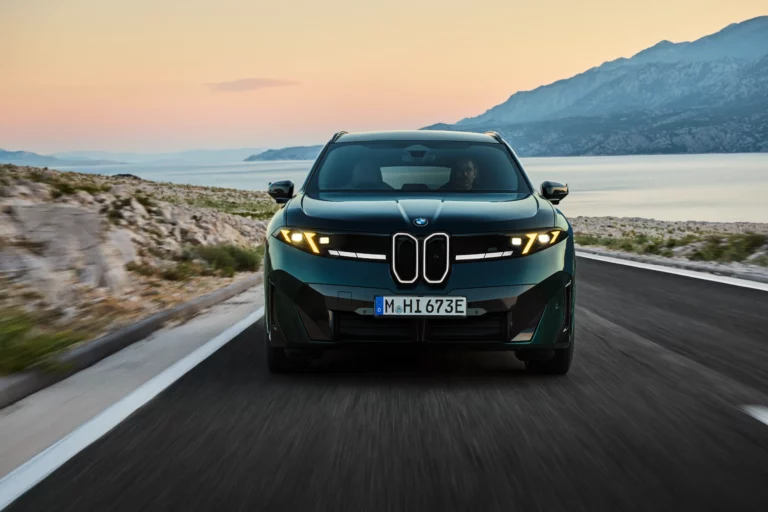
Of those whose opinion changed, 34% report a more positive view and 11% a more negative one. BMW says the new iX3 can add an estimated 185 miles of range in 10 minutes at an 800V DC fast-charging station.
Cost Remains the Largest Barrier
Lower ownership or operating costs are the most-cited EV-specific reason for consideration, at 27%. Other reasons include better performance or driving characteristics (19%), newer technology (19%), and environmental benefits (19%).
Purchase price leads the list of barriers at 51%, followed by battery longevity or replacement cost (31%), charging time (26%), driving range (24%), public charging availability (24%), and access to home charging (23%).
New Use Cases Shape Consideration
Fifty-seven percent say backup home power during an outage would make them more likely to consider an EV. BMW notes the iX3 offers bidirectional charging, including Vehicle-to-Home functionality, when paired with appropriate home-charging equipment.
During a hypothetical 20- to 30-minute charging stop, respondents most often said they would call or text friends and family (43%), grab coffee or food (41%), or relax and read (36%).
Perceptions of EV performance skew younger: 38% of Americans believe EVs accelerate faster than comparable gas vehicles, including 49% of Millennials and 47% of Gen Z, versus 33% of Gen X and 25% of Boomers.
BMW’s U.S. Electrification Plans
“As range and charging capability continue to advance, we’re seeing consumers evaluate EVs the same way they’d evaluate any other vehicle: on performance, features and value, not on outdated assumptions about range,” said Alexander Schleicher, Head of E-Mobility, BMW Group North America. “That’s true across our portfolio, from the sixth-generation battery technology and up to 435 EPA estimated miles of range in the all-electric BMW iX5 – the first fully electric BMW assembled in the United States – to the everyday practicality of electric MINI. This survey confirms what we’re hearing directly from customers: EVs are mainstream now, and the brands that win deliver real range, fast charging and the driving experience people expect.”
BMW says iX5 production at Plant Spartanburg in South Carolina is set to begin before the end of 2026, following completion of the company’s $1.7 billion South Carolina investment that expanded Spartanburg and built Plant Woodruff to supply high-voltage batteries. The company plans to assemble at least six fully electric models in the U.S. by 2030.
BMW’s U.S. electric lineup includes the i4, i5, i7, and newly arrived iX3, with the i3 sedan and iX4 coming. On charging, BMW and MINI participate in IONNA, a joint venture with seven other automakers that the company says has grown to more than 180 sites and 1,600 charging bays in two years of service.
Survey Methodology
Big Village conducted the online survey September 11–13, 2026, among 1,005 U.S. adults, weighted to represent the U.S. adult population. Year-over-year comparisons are to a May 7–9, 2025, survey of 1,007 adults.