

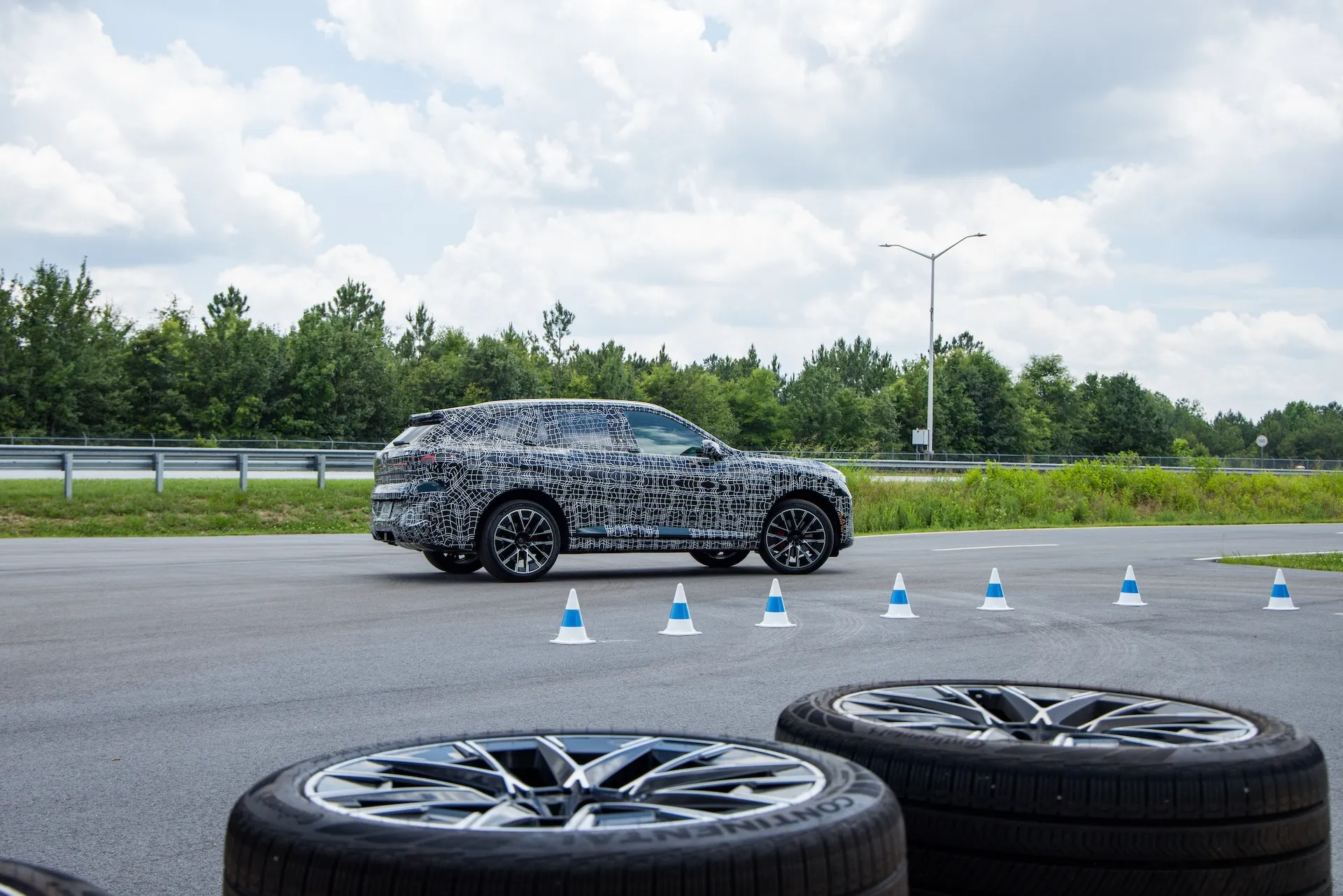
The new BMW X5 has entered its final phase of testing before production, debuting the all-electric BMW iX5 and becoming the first BMW production model offered with five separate drive system technologies. The fifth-generation Sports Activity Vehicle is completing concluding calibration drives around its production base at BMW Group Plant Spartanburg in the United States, the company said this week. During those drives, media representatives sampled the gasoline X5 40 xDrive, the X5 50e xDrive plug-in hybrid, and the fully electric BMW iX5 60 xDrive — the variant carrying the largest high-voltage battery yet fitted to an all-electric BMW.
Highlights
- The all-electric iX5 60 xDrive uses the sixth-generation BMW eDrive system, with a new high-voltage battery built on cylindrical cells and 800V architecture.
- BMW says the iX5 60 xDrive carries usable battery energy of 144 kWh in the US (141 kWh in the EU, net), the largest fitted to any all-electric BMW to date.
- The X5 is the first BMW production model offered with five drive systems: battery-electric, plug-in hybrid, gasoline and diesel mild hybrids, and — from 2028 — hydrogen fuel cell.
- Sampled variants ranged from 400 hp (294 kW) in the X5 40 xDrive to 578 hp (425 kW) in the iX5 60 xDrive.
The All-Electric iX5 and Gen6 eDrive
The fully electric iX5 is the model’s headline addition and the first X5 built on the sixth-generation BMW eDrive technology. The system pairs a new high-voltage battery concept — using cylindrical cells and 800V technology — with an electric motor on each axle and BMW xDrive electric all-wheel drive. BMW says the iX5 60 xDrive’s usable battery energy content of 144 kWh in the US and 141 kWh in the EU (net) is the largest high-voltage battery fitted to an all-electric BMW to date.
Five Drive Systems in One Model
The X5 becomes the first BMW production model available with five drive system technologies. Alongside the battery-electric iX5, the range includes a plug-in hybrid, gasoline and diesel variants with 48V mild hybrid technology, and — arriving in 2028 — the brand’s first series-produced hydrogen model. Media representatives sampled three of these during the final drives:
| Variant | Powertrain | Output |
|---|---|---|
| BMW X5 40 xDrive | Gasoline | 400 hp (294 kW) |
| BMW X5 50e xDrive | Plug-in hybrid | 490 hp (360 kW) |
| BMW iX5 60 xDrive | Battery-electric | 578 hp (425 kW) |
Hydrogen iX5 Due in 2028
The first series-produced hydrogen BMW, the BMW iX5 Hydrogen, is scheduled to reach the road in 2028. Its powertrain combines a third-generation fuel cell system with a high-voltage battery and BMW’s Hydrogen Flat Storage system — seven carbon-fiber high-pressure tanks linked in parallel within a metal frame. BMW says fuel cell models can be built on the same production line as the other X5 drive systems.
The Heart of Joy Control Unit
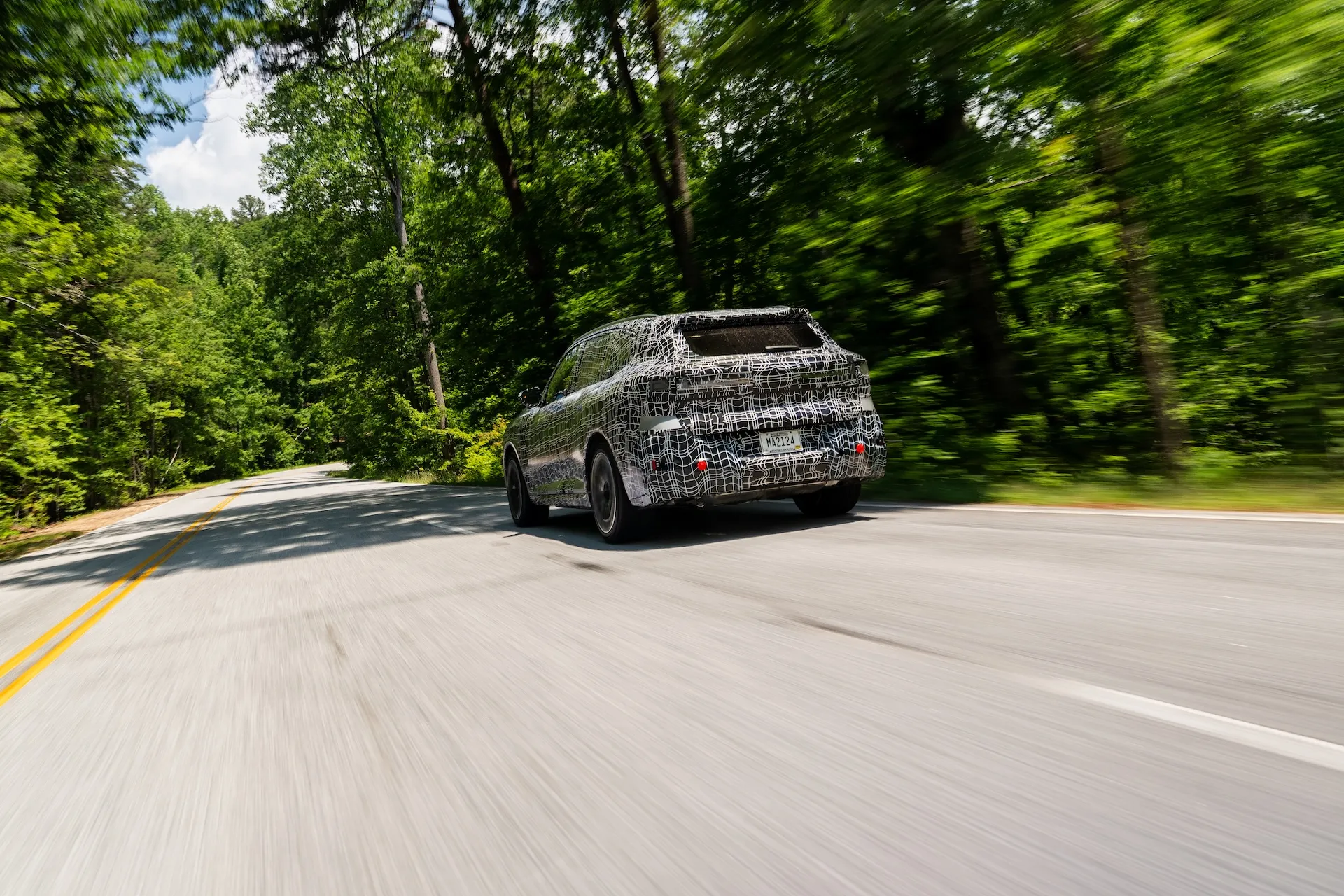
The X5 adopts the Heart of Joy, the central control unit from BMW’s Neue Klasse, running the in-house BMW Dynamic Performance Control driving stack. BMW says the unit reacts ten times faster than previous systems, adjusting the powertrain, brakes, steering subfunctions, charging and recuperation within milliseconds. In the iX5 and iX5 Hydrogen, the company says it also enables smoother stopping and recovers more energy under deceleration through regenerative braking. Combustion and plug-in hybrid models use the latest traction and dynamics systems, including a tenth-generation transverse dynamics management system and near-actuator wheel slip limitation.
Chassis and Wheels
The X5 comes standard with electronically controlled adaptive dampers tuned per wheel and near 50:50 weight distribution, and can be specified with rims up to 23 inches. Adaptive Chassis Control Professional — optional on the iX5 and plug-in hybrid models — adds two-axle air suspension, Integral Active Steering, and active roll stabilization.
SAE Level 2 Driver Assistance
The X5 carries SAE Level 2 driver assistance and active safety functions drawn from the Neue Klasse technology clusters, along with BMW Symbiotic Drive. An optional Motorway and City Assistant adds Entry-2-Exit assistance on highways and Address-2-Address assistance in urban areas. BMW says its Level 2 systems are designed to keep the driver engaged rather than maximize automation: with assistance active, the driver can accelerate, steer and brake without switching the system off. Active safety functions include a Lane Keeping Assistant that reads the driver’s steering inputs and gaze to distinguish intentional from unintentional lane drift, plus automated evasive maneuvering within the lane, Lane Change Warning, Side Collision Warning with steering intervention, and Crossing Traffic Warning with automatic braking.
Sign up for our popular weekly email to catch all the latest EV news!