
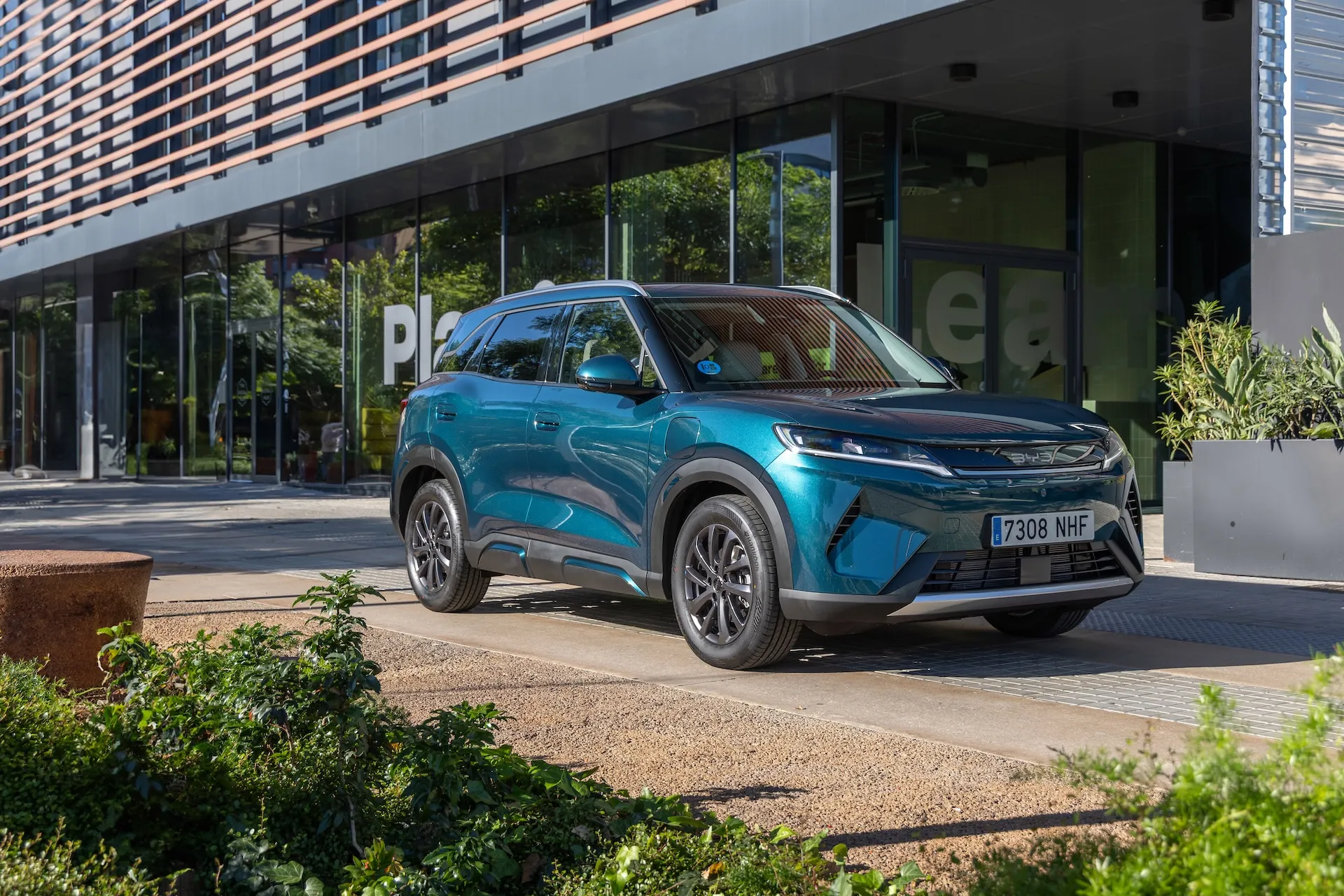
BYD has confirmed UK pricing for the ATTO 2 DM-i plug-in hybrid supermini SUV, with the entry Active trim opening at £26,995 (about $36,450) on-the-road and the Boost variant at £29,995 (about $40,490). Order books open 2 June and first UK deliveries are scheduled for August. The launch brings BYD’s Super Hybrid Dual Mode-intelligent powertrain to the supermini SUV segment for the first time, slotting beneath the brand’s previously most affordable PHEV, the SEALION 5 DM-i.
Highlights
- ATTO 2 DM-i Active opens at £26,995 OTR; Boost trim follows at £29,995, both undercutting the all-electric ATTO 2’s £30,850 entry price by roughly £850 to £3,855
- Boost variant offers 55 miles of WLTP combined electric-only range and 93 miles in city use from an 18 kWh BYD Blade Battery; Active uses a 7.8 kWh pack for 24 miles WLTP combined
- Combined petrol-plus-electric range reaches 577 miles for the Active and 621 miles for the Boost, with weighted fuel economy of 201.7 mpg and 470.8 mpg respectively
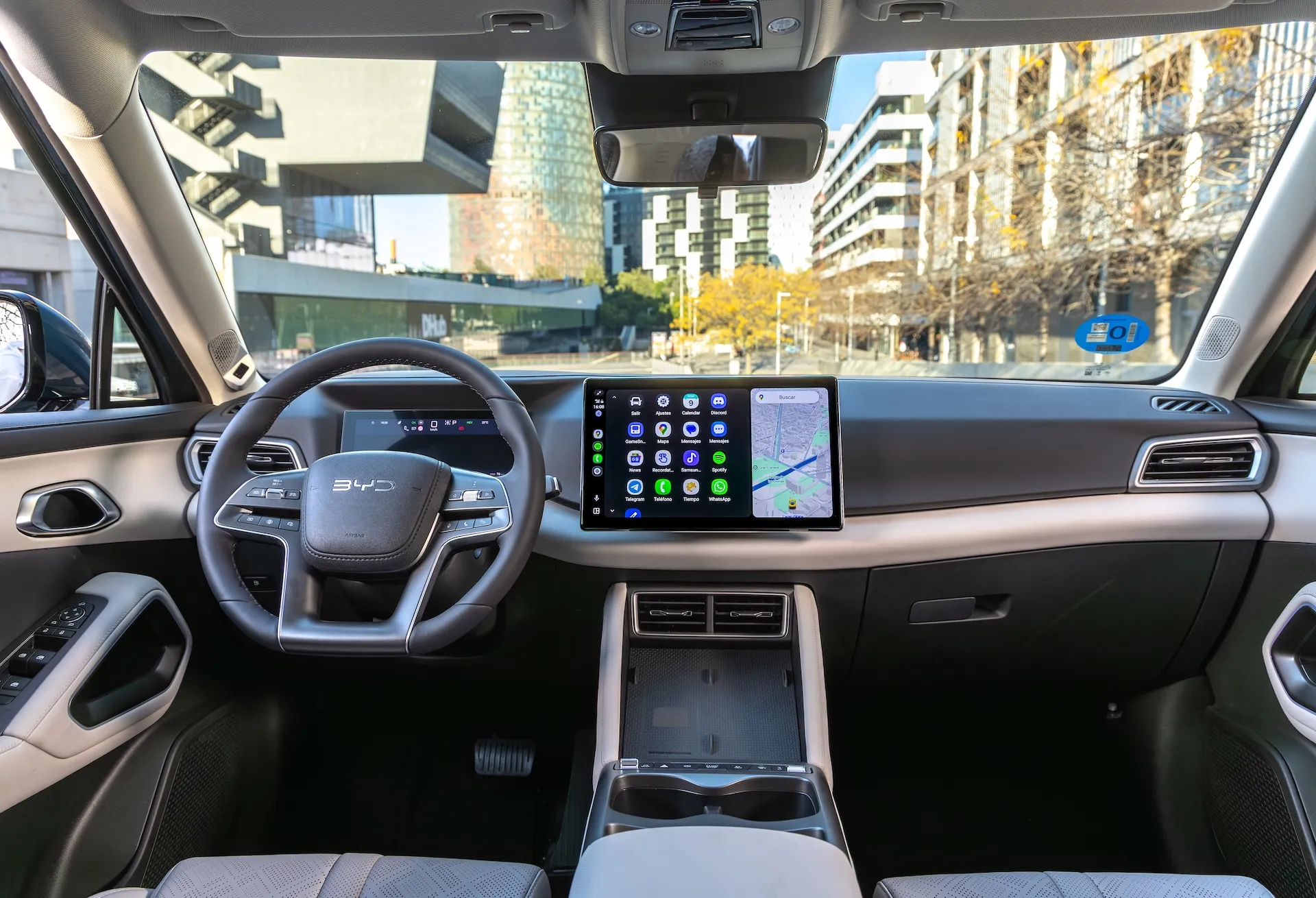
- 12.8-inch touchscreen with Google Automotive Services — including Google Maps, Assistant and Play Store — is standard across both trims, alongside Android Auto and Apple CarPlay
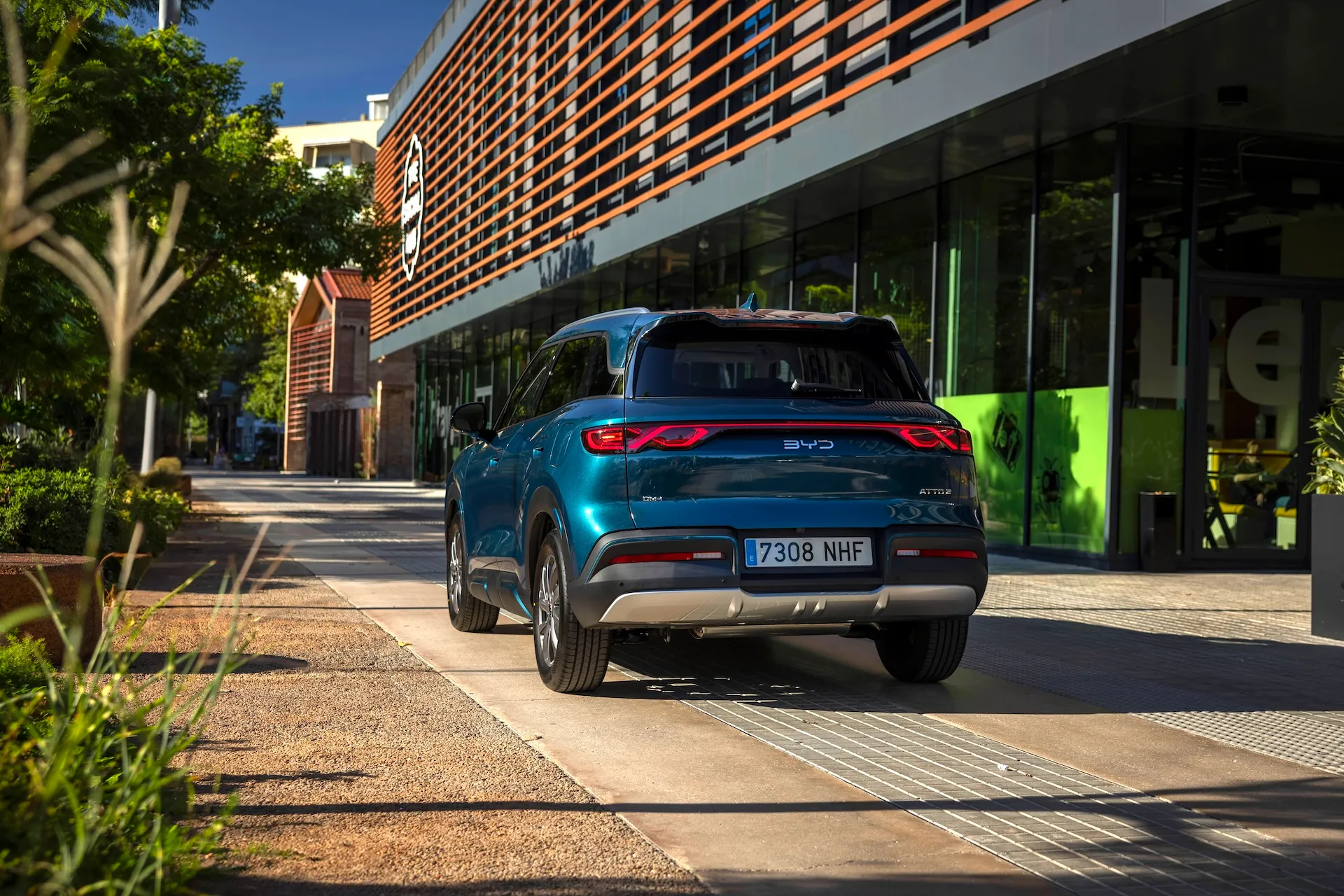
Pricing positions the supermini PHEV beneath the all-electric ATTO 2
The £26,995 Active opening price establishes the ATTO 2 DM-i as BYD’s most accessible plug-in hybrid in the UK and places it in direct competition with non-PHEV compact crossovers in the supermini SUV segment. The Boost trim at £29,995 matches the entry price of the SEALION 5 DM-i, which BYD positioned in the UK earlier this year as its first sub-£30,000 plug-in hybrid SUV.
For context, the all-electric BYD ATTO 2 opened in the UK last autumn at £30,850 for the Boost trim and £34,950 for the Comfort. The DM-i variant’s Active therefore undercuts the EV’s entry point by £3,855, while the DM-i Boost sits £855 below it. Both PHEV trims carry the 12.8-inch screen, the 8.8-inch digital instrument cluster, LED lighting, rear parking sensors and a reversing camera as standard.
Two powertrain options share a 1.5-litre Xiaoyun engine
Both trims pair BYD’s 1.5-litre Xiaoyun petrol four-cylinder with a permanent magnet synchronous electric motor driving the front wheels. The company reports the engine’s thermal efficiency at 43%, a figure cited consistently across BYD’s DM-i lineup. The petrol unit functions primarily as a generator for the electric powertrain and drives the wheels directly only under heavy load.
The Active produces a system total of 165 PS and 300 Nm, with 0-62 mph in 9.1 seconds. The Boost lifts system output to 212 PS while retaining the 300 Nm torque ceiling, dropping the 0-62 mph time to 7.5 seconds. Both versions are limited to 111 mph.
The Active’s 7.8 kWh BYD Blade Battery (LFP chemistry) supports 31 miles of city-mode electric driving, 24 miles on the WLTP combined cycle and a 577-mile total range with a full tank and full charge. The Boost’s 18 kWh pack — more than double the Active’s capacity — delivers 93 miles of city EV range, 55 miles WLTP combined and a 621-mile total range. AC charging speed steps up from 3.3 kW on the Active to 6.6 kW on the Boost. WLTP figures typically run higher than EPA equivalents and are not directly comparable to North American range standards.
Boost trim adds 360-degree camera, V2L and wireless charging
The Active comes standard with 16-inch alloy wheels, fabric upholstery, four USB ports, rain-sensing wipers and electrically heated mirrors. The Boost steps up to 17-inch alloys, aluminium roof rails, a panoramic sunroof, rear privacy glass, vegan leather seat and steering-wheel trim, heated front seats and steering wheel, a 360-degree camera, 50W wireless smartphone charging and Vehicle-to-Load (V2L) capability.
At 4,330 mm long, 1,830 mm wide and 1,675 mm tall on a 2,620 mm wheelbase, the ATTO 2 DM-i sits at the larger end of the supermini SUV class. Boot capacity measures 425 litres with the rear seats up and 1,335 litres with them folded.
Segment context: a thin field of supermini PHEVs
The ATTO 2 DM-i enters a sparsely populated category. Outside of the aging Jeep Renegade 4xe and the unconventional Mazda MX-30 R-EV range-extender, plug-in hybrid options at this size are rare; competitors at the £25,000 to £30,000 level are almost exclusively conventional or full hybrid models such as the Renault Captur, Toyota Yaris Cross, and Hyundai Kona Hybrid. BYD’s price point and the Boost’s 55-mile WLTP combined EV range — long enough to cover most UK commutes without engaging the petrol engine — mark the most aggressive supermini PHEV positioning to date.
Sign up for our popular weekly email to catch all the latest EV news!