
Sign up for our popular weekly email to catch all the latest EV news!
Daimler Truck has successfully concluded initial customer trials for its Mercedes-Benz GenH2 Trucks, demonstrating the viability of hydrogen-powered vehicles in real-world logistics. The prototypes covered extensive distances, showcasing performance comparable to diesel trucks while producing no local CO2 emissions.
Key Highlights
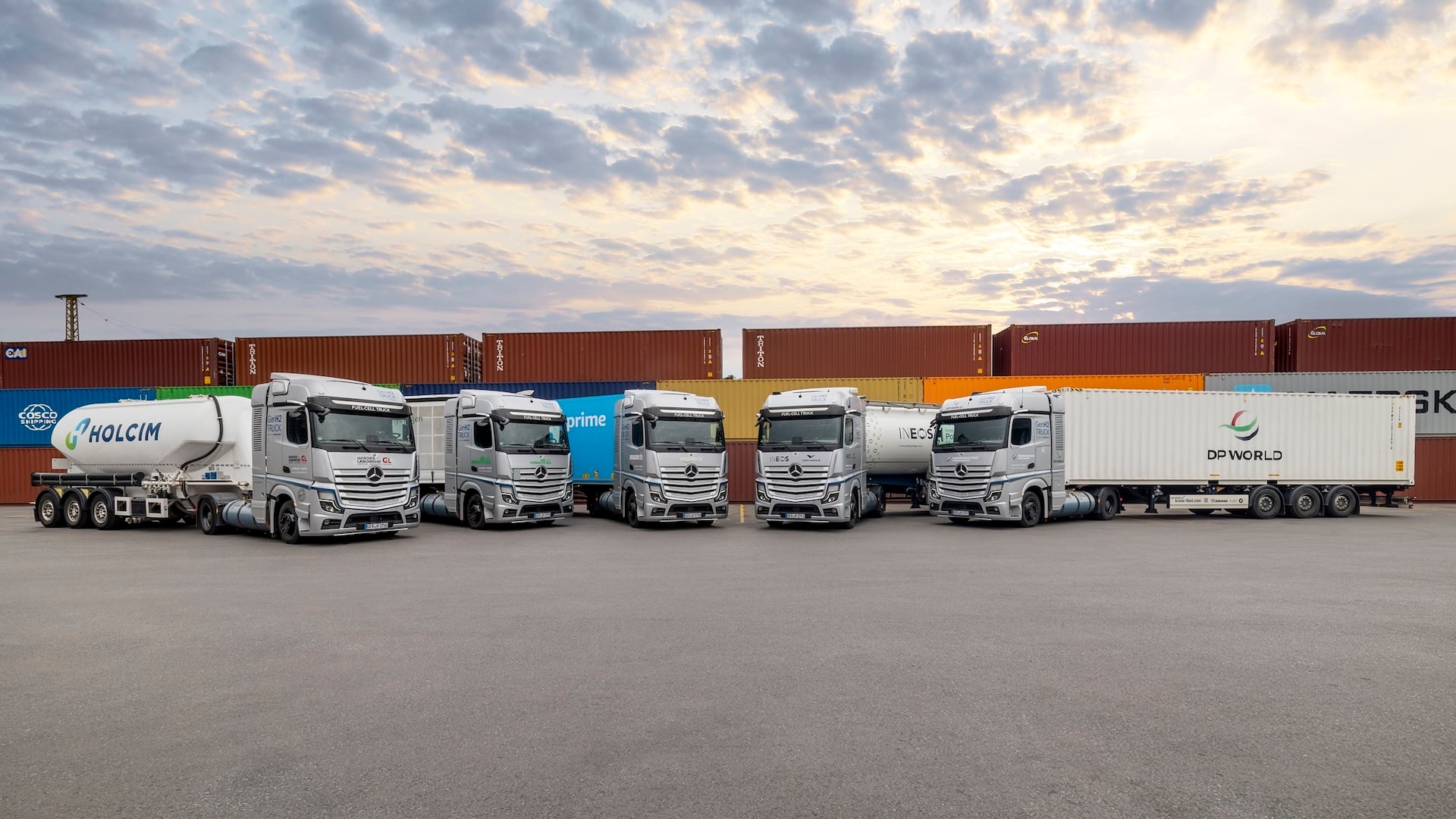
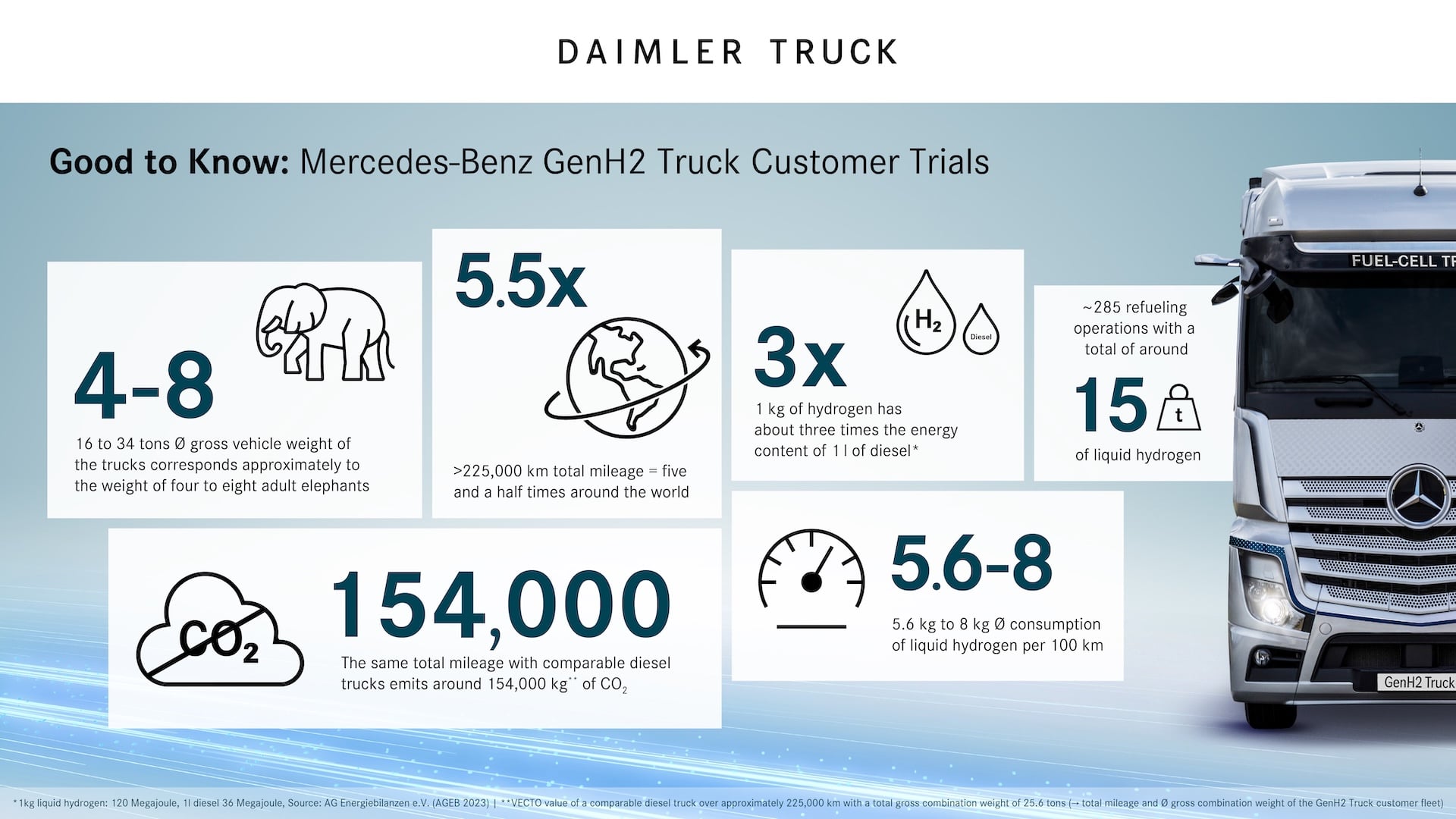
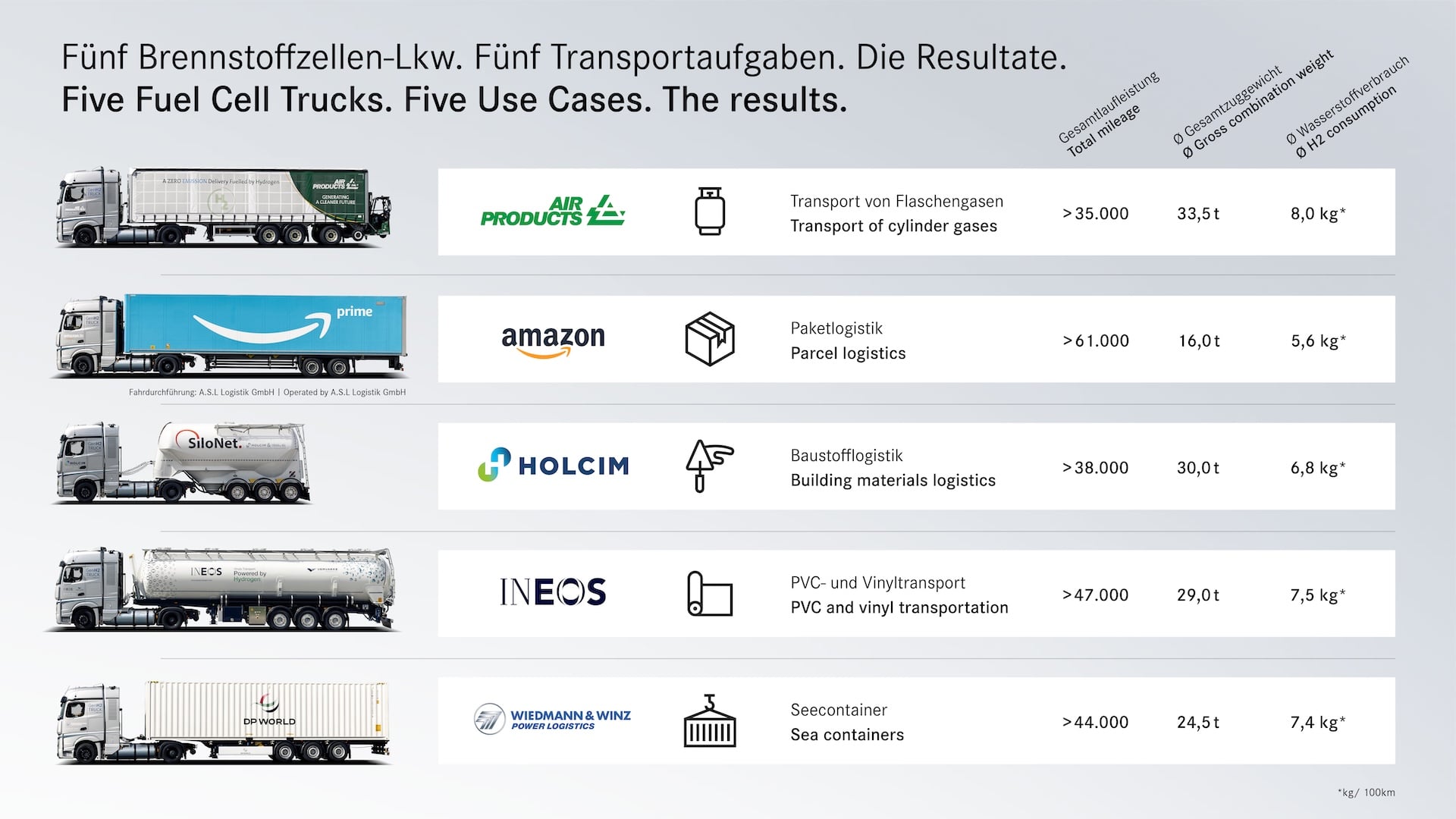
- Five prototypes completed over 225,000 kilometers in operations with partners including Air Products, Amazon, Holcim, INEOS Inovyn, and Wiedmann & Winz.
- Average hydrogen consumption ranged from 5.6 kg/100 km to 8 kg/100 km, with gross vehicle weights between 16 tons and 34 tons.
- Trucks achieved ranges of 1,000 kilometers or more per refueling, with refueling times of 10 to 15 minutes.
- Total refuelings: 285, using approximately 15 tons of liquid hydrogen at stations in Woerth am Rhein and Duisburg.
- Equivalent diesel truck would emit about 154 tons of CO2 over the same distance.
Performance and Efficiency Insights
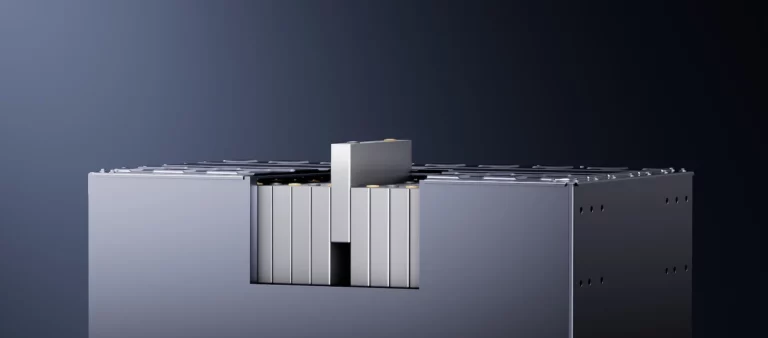
The Mercedes-Benz GenH2 Trucks, equipped with a 300 kW fuel cell from cellcentric—a joint venture between Daimler Truck and Volvo Group—and a 70 kWh battery for power peaks, impressed with their efficiency. Depending on applications, the vehicles maintained low hydrogen usage, enabling seamless integration into daily operations. This performance highlights the trucks’ suitability for long-distance haulage, flexible routes, and unplanned deployments.
Michael Scheib, Head of Entire Vehicle Development at Mercedes-Benz Trucks, emphasized the trials’ value in refining technology for series production. The data gathered allows Daimler Truck to optimize vehicles based on customer needs, improve refueling processes, and prepare sales and service support.
Customer Applications and Feedback
The trucks were deployed in diverse logistics tasks across Germany. For instance, Amazon’s partner used one for routes between Frankenthal and Sindelfingen. Air Products transported bottled gases from Hattingen, while Wiedmann & Winz handled sea containers in combined transport for DP World. Holcim moved cement from Ruhr area plants to customers in Western Germany and the Netherlands. VERVAEKE, partnering with INEOS Inovyn, transported PVC and vinyl.
Customer representatives provided positive feedback. Thomas Hollad from Air Products noted the trucks’ reliability and quick issue resolution. Fabian Duex from Amazon highlighted consistent ranges over 1,000 kilometers and smooth five-day schedules. Roger Haschka from Holcim praised the technology’s potential for decarbonization, though noting challenges in achieving favorable Total Cost of Ownership (TCO). Fritz Ehlers from Gerdes + Landwehr appreciated driving comfort and performance. Frédéric Derumeaux from VERVAEKE commended support and operational efficiency. Dr. Micha Lege from Wiedmann & Winz compared it favorably to diesel trucks, stressing the need for a mix of battery-electric and hydrogen vehicles. Jens Langer from DP World lauded its practicality and climate-friendly aspects.
Challenges and Refueling Details
A key hurdle remains the limited network of hydrogen refueling stations, especially for liquid hydrogen. By 2030, Europe needs 2,000 stations for widespread adoption. Current high hydrogen prices and vehicle insurance costs hinder positive TCO compared to diesel.
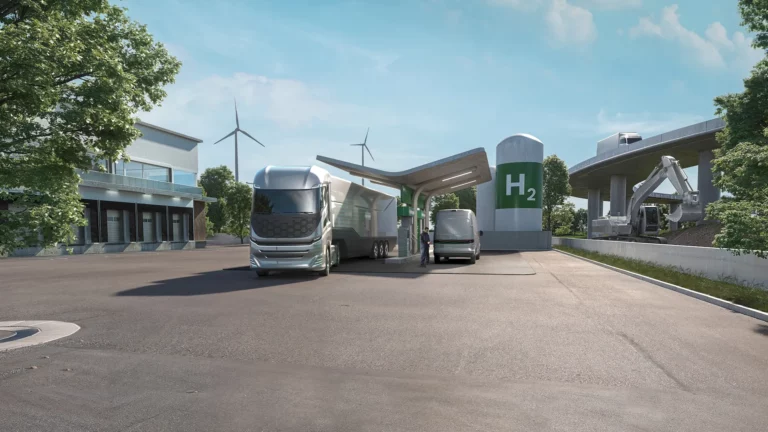
Daimler Truck favors liquid hydrogen for its higher energy density, allowing 40 kg per tank and greater payload. Refueling at public sLH2 stations in Southern and Western Germany proved efficient, with advantages over compressed gaseous hydrogen in cost, weight, and transport.

Service and Support During Trials
Daimler Truck offered comprehensive support, including Key Account Managers available around the clock. Branches in Haan and Stuttgart-Feuerbach were certified for GenH2 maintenance. Close collaboration between development, after-sales, and customers ensured optimal operations, with drivers, engineers, and service teams coordinating effectively.
Future Outlook
Daimler Truck plans a second trial phase in the fourth quarter of 2025 with five additional customers to explore more use cases. Development of the next-generation GenH2 Trucks has begun, with 100 small-series vehicles slated for assembly in Woerth from late 2026.
The company pursues a dual strategy of battery-electric and hydrogen-powered vehicles for decarbonization. However, slower-than-expected infrastructure progress delays large-scale hydrogen truck operations until the early 2030s.
For more details, visit www.daimlertruck.com.
Sign up for our popular weekly email to catch all the latest EV news!