
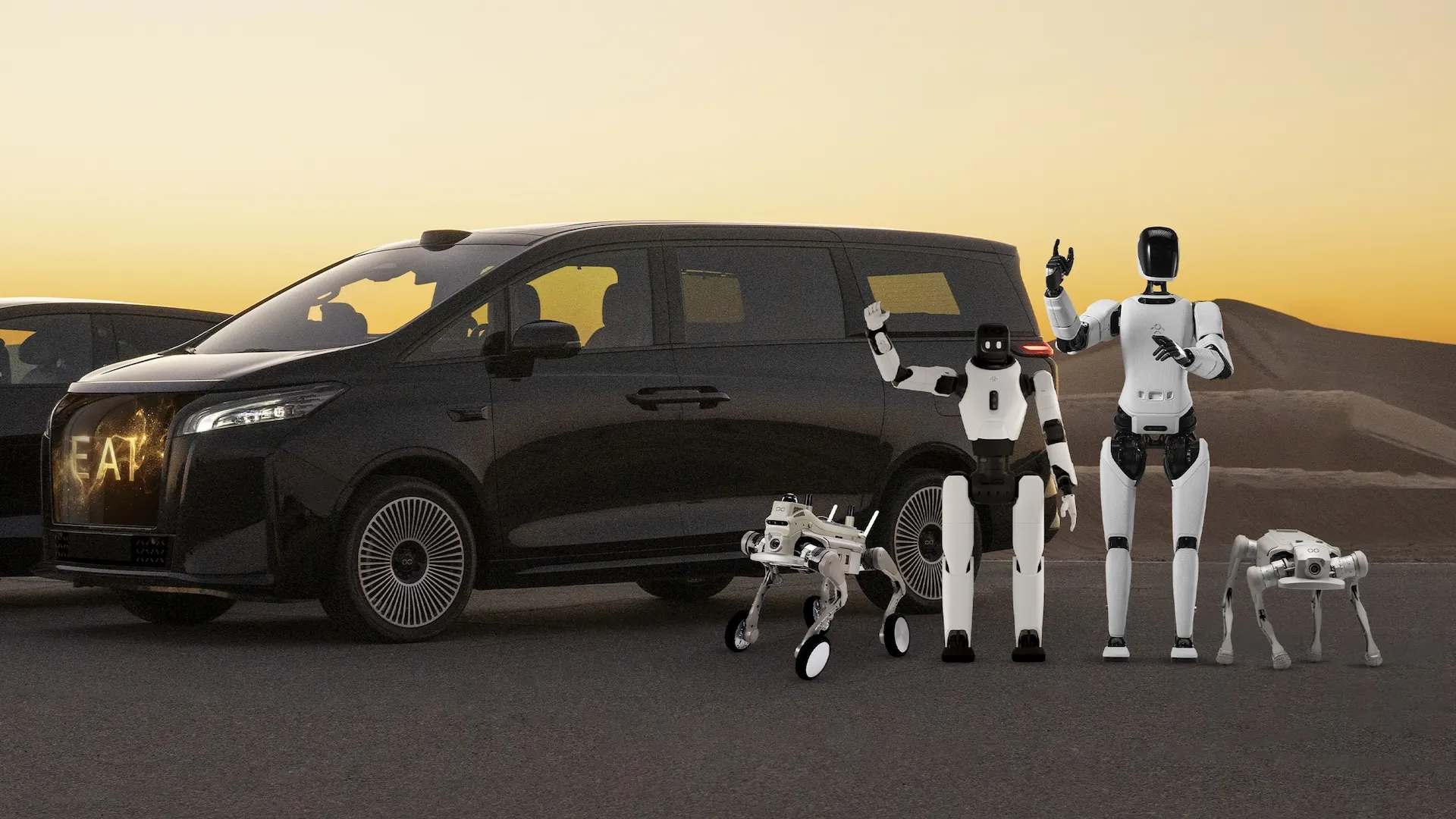
Faraday Future has paused its original 400V FX Super One program and will instead deliver the multi-purpose vehicle as either an 800V battery-electric model or an AI hybrid extended range (AIHER) variant, with a first-phase 800V launch targeted within six to nine months of securing financing. The Nasdaq-listed automaker (FFAI) announced the pivot on May 6 in coordination with its bridge strategy partner, framing the move as a way to redirect capital toward its embodied AI robotics business while it negotiates with strategic and longer-term investors. Full release details are available through the company’s investor relations page. The company said it will continue to operate prudently and minimize cash outflows until that funding closes.
Highlights
- Original 400V Super One project paused; first mass-production deliveries will be either an 800V BEV or an AIHER hybrid model.
- 800V BEV delivery phased over 6–9, 12–15, and 21–24 months from the date funding closes; AIHER timeline runs 9–12, 21–24, and 24–28 months.
- 68 EAI robots shipped cumulatively as of April 30, 2026, with positive product gross margin and a Q1 2026 delivery target of 200 units.
- $45 million in fresh financing recently secured from a U.S. mid-to-large institutional investor; company plans to move away from convertible-note dilution.
Why the 400V Project Is Being Paused
Faraday Future said the 800V architecture offers stronger product competitiveness than the originally planned 400V configuration. The company described its approach as “high-voltage, low-current,” intended to deliver longer range, faster charging, and improved powertrain efficiency.
The 400V cooperation project the company had been pursuing is now on hold. Faraday Future will resume full Super One mass-production deliveries only after securing financing from strategic or medium-to-long-term investors that is sufficient to support volume output. Until that closes, the automaker said it will prioritize cost discipline and stockholder value.
Updated Delivery Timeline
The revised schedule depends entirely on funding being in place. For the 800V BEV, Faraday Future is targeting first-phase deliveries within six to nine months, second-phase within 12 to 15 months, and third-phase within 21 to 24 months.
The AIHER hybrid model, unveiled at the company’s first FF Open AI Day in early 2025 as the world’s first AI-driven hybrid extended-range powertrain system, is on a longer track. Phase one is expected within nine to 12 months of funding, phase two within 21 to 24 months, and phase three within 24 to 28 months. The company has positioned AIHER as particularly suited to extreme-cold regions such as the U.S. East Coast.
Trade-Off: EV Capital Intensity vs. Robotics Ramp
Faraday Future framed the Super One reset as a way to free up capital for its embodied AI (EAI) robotics business, which the company describes as less capital-intensive than the EV program. The robotics unit had cumulatively shipped 68 units by April 30, 2026, at positive product gross margin, and is targeting 200 deliveries in its first delivery quarter and more than 1,000 cumulative units in 2026.
The company also said recent investor feedback has improved relative to earlier periods. It pointed to a recently closed $45 million financing from a U.S. mid-to-large institutional investor as evidence of growing market confidence in its dual-engine strategy, and indicated it intends to step away from the highly dilutive convertible-bond structure that has characterized previous capital raises.
Industry Context
The 800V pivot tracks a broader industry shift. Hyundai’s E-GMP platform, Kia’s EV6 and EV9, the Porsche Taycan, the Lucid Air, and several Chinese-market launches have all moved to 800V architectures over the past several years to enable DC fast-charging at peak rates above 250 kW and to reduce the copper content of high-current cabling. Reaching mass production at 800V, however, requires silicon carbide power electronics, validated high-voltage thermal systems, and component-level revalidation — work Faraday Future has not yet detailed for the Super One.
For context on FX’s prior pace, the company began trial production of the original Super One configuration at its Hanford, California facility in mid-2025 and rolled the first pre-production vehicle off the line on December 21, 2025. The 400V program was originally scheduled to begin first-phase customer deliveries in Q2 2026.
Sign up for our popular weekly email to catch all the latest EV news!