
General Motors reports more than 250,000 bidirectional-capable EVs are on U.S. roads today, a fleet the automaker intends to turn into a distributed energy resource through vehicle-to-grid technology. Chief Product Officer Sterling Anderson outlined the strategy at GM Empower, pairing the V2G push with a sodium-ion battery program for grid-scale storage and an expanded second-life battery partnership with Redwood Materials. The company frames the effort as a response to rising electricity demand from AI data centers and growing strain on power grids.
Highlights
- GM reports more than 250,000 bidirectional-capable EVs currently on U.S. roads, engineered to support vehicle-to-grid power flow without additional hardware iterations.
- In Northern California, GM and Pacific Gas and Electric Company project a localized fleet of 130,000 GM EVs by 2030, with more than 52,000 participating in grid-balancing protocols.
- Redwood Materials plans to deploy roughly 100 repurposed GM battery packs at a GM plant in Michigan, providing 1.5 MW / 7.2 MWh of dispatchable energy.
- The Michigan installation is expected to save more than $3 million in local electricity costs over its lifetime, according to the companies.
EVs as a Distributed Energy Resource
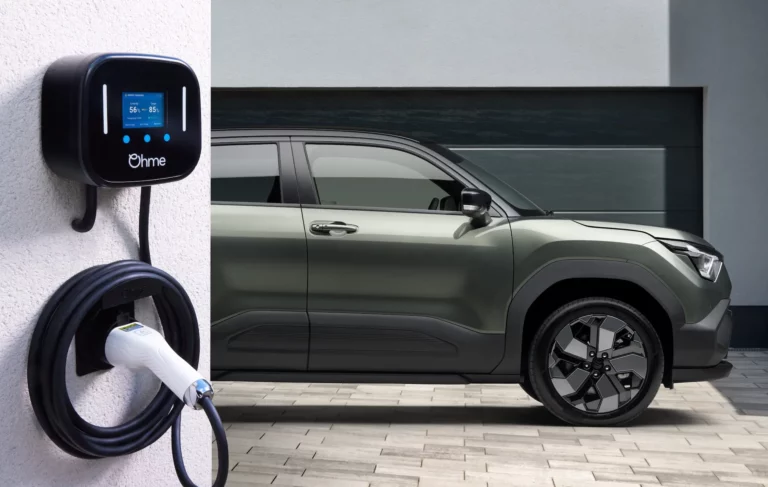
GM is making bidirectional capability a standard across its EV portfolio, from the Chevrolet Equinox EV to the Cadillac Escalade IQ. According to the company, these vehicles, when paired with GM’s home energy systems, can sustain a home for days during localized grid failures. GM notes that weather conditions, battery life, vehicle usage, and other external factors may affect the capability and duration of power supply.
The company says its current V2G work centers on the software layer — finalizing utility partnerships and grid protocols — rather than new hardware. Two utility pilots anchor the effort:
- Northern California: Working with PG&E, GM projects a localized fleet of 130,000 of its EVs by 2030, with more than 52,000 systematically participating in grid-balancing protocols.
- Michigan: GM is testing with DTE Energy under real-world conditions to refine the user experience.
GM is also developing its mobile app into a single interface for managing vehicle charging, home energy use, and, eventually, grid interaction.
Sodium-Ion for Grid-Scale Storage
Beyond vehicles, GM is partnering with Peak Energy to develop sodium-ion battery chemistry purpose-built for stationary storage. The company’s battery labs are optimizing the chemistry for applications that prioritize long-term chemical endurance and thermal performance over the energy density and low weight that vehicle batteries demand. GM positions the work as part of a dual strategy: grid-scale storage for utilities and major power users alongside vehicle-to-grid integration at the residential level.
Second-Life Batteries With Redwood Materials
GM says its second-life battery packs already help power Redwood Materials’ installation in Sparks, Nevada, which the companies describe as the largest microgrid in North America. Building on that deployment, GM is now the first automaker working with Redwood across the full battery lifecycle, according to both companies — spanning manufacturing scrap recovery, end-of-life recycling, and repurposed energy storage.
Redwood plans to install roughly 100 repurposed GM battery packs at one of the automaker’s operating plants in Michigan, delivering 1.5 MW and 7.2 MWh of dispatchable energy to the site. The installation is expected to save more than $3 million on the plant’s local electricity bills over its lifetime.
Sign up for our popular weekly email to catch all the latest EV news!