
General Motors and SAIC Motor have extended their 50-50 Chinese joint venture by 20 years, carrying the partnership through 2047 and committing SAIC-GM to launching at least 30 new energy vehicles by 2030. The renewal, announced this week, gives the venture a two-decade runway to advance what the company describes as its technological transformation and growth opportunities in the world’s largest auto market. John Roth, GM senior vice president and president of GM China, said the agreement reflects confidence in the joint venture’s long-term growth potential.
Highlights
- 20-year extension to 2047, preserving the existing 50-50 ownership split between GM and SAIC Motor
- More than 20 million vehicles manufactured and delivered by SAIC-GM since its founding in 1997
- At least 30 new energy vehicles planned for launch by 2030, a category spanning battery-electric and hybrid models
- First premium NEV export in October, when the Buick Electra E7 begins shipping to overseas markets
What the Renewal Covers
The Shanghai-headquartered joint venture was founded in 1997 and has manufactured and delivered more than 20 million vehicles across nearly three decades. Under the extended agreement, SAIC-GM sharpens its brand focus in China on Buick and Cadillac, while China-built products — including Chevrolet models — are directed toward export markets outside the United States.
The structure of the partnership is unchanged. Both partners retain equal ownership, and the venture continues to draw on design and engineering operations inside China rather than importing product decisions from Detroit.
Thirty New Energy Vehicles by 2030
The electrification commitment is the most concrete element of the announcement. SAIC-GM plans to bring at least 30 new energy vehicles to market by 2030 — a Chinese market category that covers battery-electric vehicles as well as hybrids. General Motors said the venture will also deploy technology solutions developed in China specifically for Chinese customers, a departure from the practice of adapting vehicles engineered for other regions.
That local-development posture extends to the Electra sub-brand, which the joint venture launched last year and which GM credits to its Xiao Yao architecture. The company points to the platform as a factor in the sub-brand’s competitive position in China.
Which Markets Will Receive China-Built Vehicles?
The renewal opens SAIC-GM’s product to markets beyond China, and GM named them specifically.
“We are committed to strong performance in the China market, and we see meaningful opportunities to compete in select international markets: the Middle East, Africa, South America, Mexico and Asia-Pacific,” Roth said.
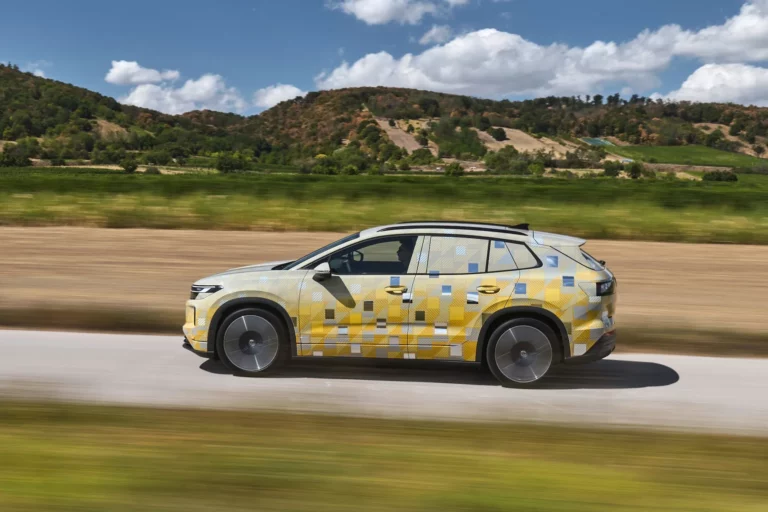
The Buick Electra E7 is set to become the joint venture’s first premium new energy vehicle model exported overseas, with shipments beginning in October 2026.
One market is explicitly excluded. GM said the joint venture has no plans to export vehicles to the United States, leaving the North American lineup unaffected by the China-built product program.
Why the Timing Matters for Electrification Watchers
For readers tracking automaker electrification commitments, the substance here is the 30-model NEV target rather than the contract term. It ties a specific product cadence to a specific date, developed and engineered locally, and — for the first time at the premium end — pointed at export markets. The October Electra E7 shipment is the first test of whether a China-developed GM new energy vehicle travels.
Sign up for our popular weekly email to catch all the latest EV news!