
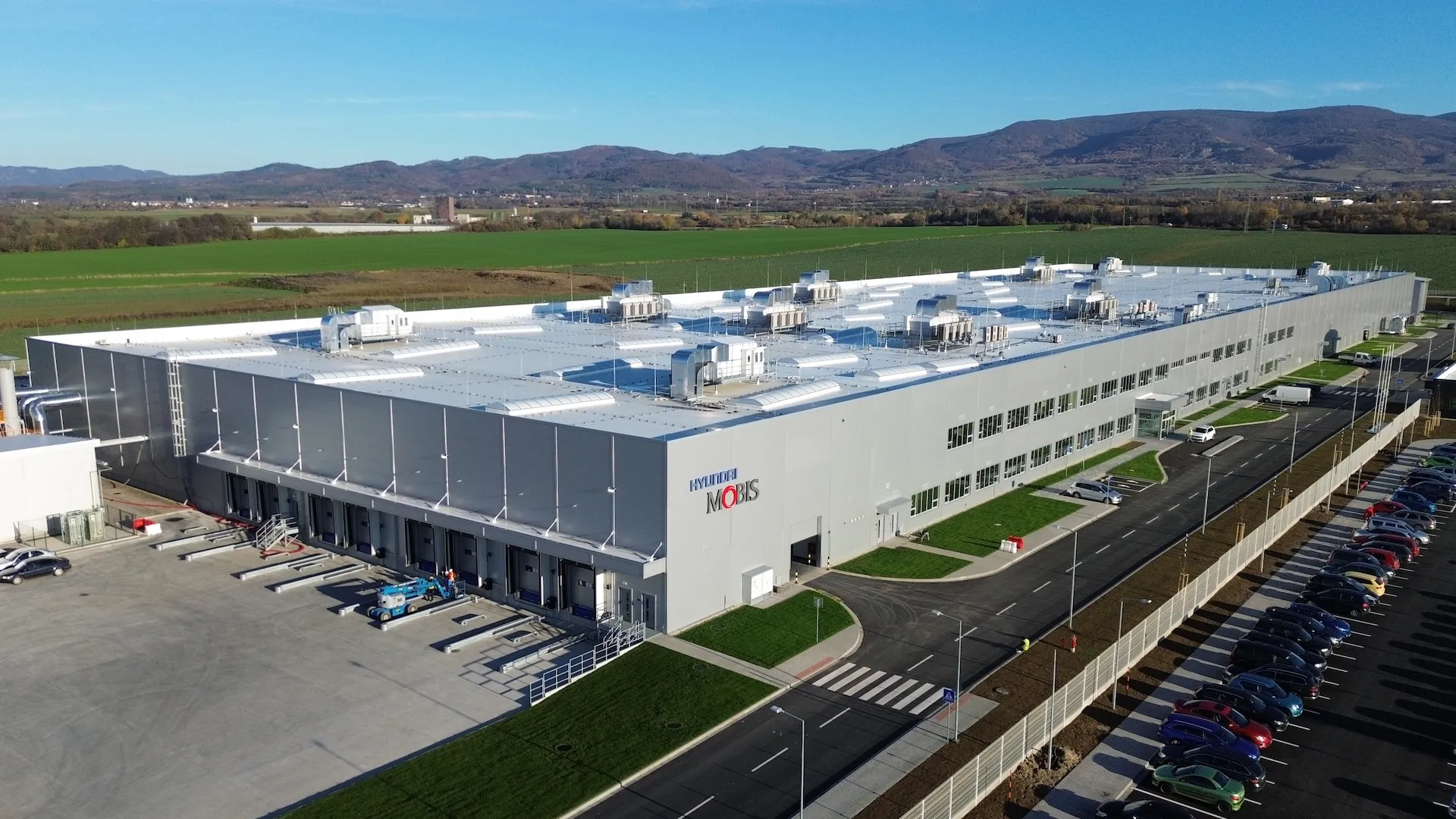
Hyundai Mobis has begun mass production of PE (Power Electric) systems at a new plant in Nováky, Slovakia, with annual capacity of up to 280,000 units. The facility is Hyundai Mobis‘ first PE system plant in Europe and its third electrification production base in the region, following battery system assembly (BSA) plants in the Czech Republic and Spain. The company says it invested approximately $184 million (KRW 250 billion) in the site, which will supply Hyundai Motor, Kia, and other global automakers.
Highlights
- Annual capacity of up to 280,000 PE systems, with production lines for stators, inverters, and other components
- $184 million (KRW 250 billion) investment in the Nováky facility, located in Slovakia’s Trenčín Region
- 26-acre (106,000-square-meter) site with 91,500 square feet (8,500 square meters) of floor area
- Third European electrification base after BSA plants in the Czech Republic and Spain
What Is a PE System?
A PE system is an integrated electric powertrain unit combining an electric motor, an inverter that converts electrical current, and a reduction gear. The Nováky plant’s stator lines produce a core component of the electric motor, alongside inverter production and other component lines.
Hyundai Mobis says it has developed in-house core technologies and mass production capability across the full range of EV components, including BSAs and PE systems. The Slovakia plant extends that portfolio into Europe for the first time on the powertrain side, following the company’s 2024 investment agreement with the Slovak government.
Grand Opening in Nováky
Hyundai Mobis President and CEO Lee Gyu Suk hosted the grand opening ceremony this week, which drew approximately 100 attendees. Slovak Prime Minister Robert Fico, Deputy Prime Minister and Minister of Economy Denisa Saková, and Trenčín Region Governor Jaroslav Baška attended, along with representatives from the European Commission, customers, major suppliers, and local media.
“To realize Hyundai Mobis’ future vision, we will continue to invest and devote our efforts to establishing the Nováky PE system plant as a key electrification hub in Europe. Looking ahead, strategic models from global automakers equipped with Hyundai Mobis PE systems will lead the European electrification market,” Lee said.
Plant Footprint and Supply Role
The site covers approximately 26 acres (106,000 square meters), which the company likens to roughly 15 football fields, with a total floor area of 91,500 square feet (8,500 square meters). Hyundai Mobis expects the plant to operate as an integrated hub supplying key electrification components to Hyundai Motor and Kia as well as global customers.
The Nováky facility joins the company’s other electrification production bases in Ulsan, Daegu, Chungju, and Pyeongtaek in Korea, plus sites in the United States, the Czech Republic, Spain, and Indonesia.
Why Slovakia?
Hyundai Mobis describes Europe as the world’s second-largest EV market after China and says the region is a priority for establishing strategic manufacturing footholds. Slovakia hosts production operations for Kia, Volkswagen, Stellantis, and Volvo, and the company frames the new plant as a move to strengthen its position in winning electrification business from global customers.
Through its CEO Investor Day and other channels, Hyundai Mobis has stated a goal of raising the share of revenue from customers outside the Hyundai Motor Group to 40% by 2033. The Nováky plant follows the company’s $9.17 billion in global orders reported earlier this year as part of that push.