
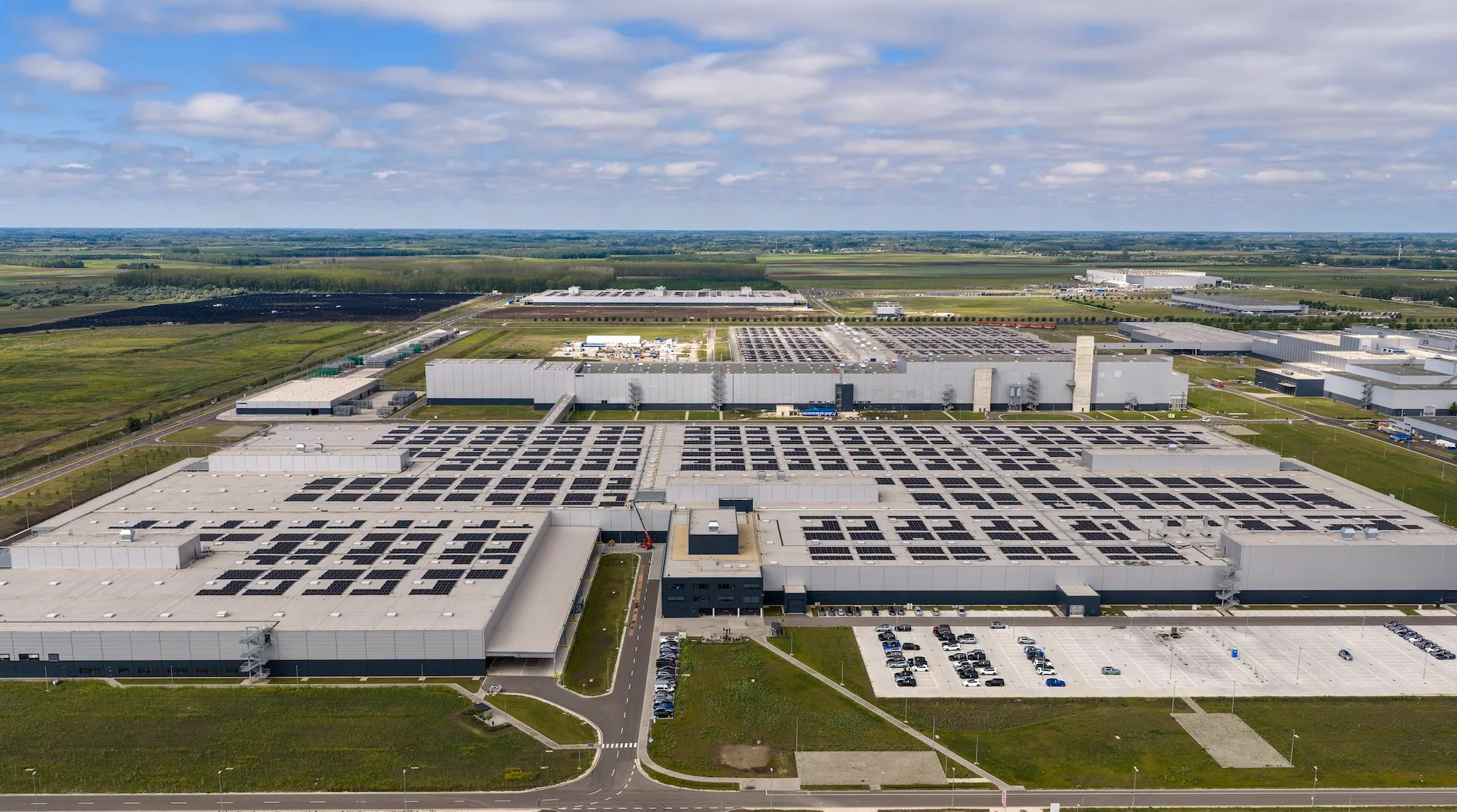
Mercedes-Benz has doubled the footprint of its Kecskemét, Hungary, plant from 200 to 440 hectares (494 to 1,087 acres) and started production of the new all-electric C-Class, the site’s first battery-electric core model. The expansion, detailed in a statement from Mercedes-Benz Group, is part of the automaker’s Business Plan 2022–2026 and represents an investment of around $1.14 billion (one billion euros) focused on digitalization, flexibility and efficiency. More than 5,000 employees currently work at the site, which the company says is the largest employer in the region. The newly opened section includes two production halls for bodywork and assembly, a second press shop, a new paint shop and a battery assembly facility.
Highlights
- Plant footprint grows from 200 to 440 hectares (494 to 1,087 acres), positioning Kecskemét as one of the largest sites in Mercedes-Benz’s global production network
- Mercedes-Benz invested around $1.14 billion (one billion euros) under its Business Plan 2022–2026
- The new all-electric C-Class becomes the site’s first battery-electric core model, joining the battery-electric GLB and combustion-engine A-Class already built there
- On-site photovoltaic capacity reaches 42.3 MWp, covering about 25% of the plant’s annual energy requirement
Electric C-Class Production Begins in Kecskemét
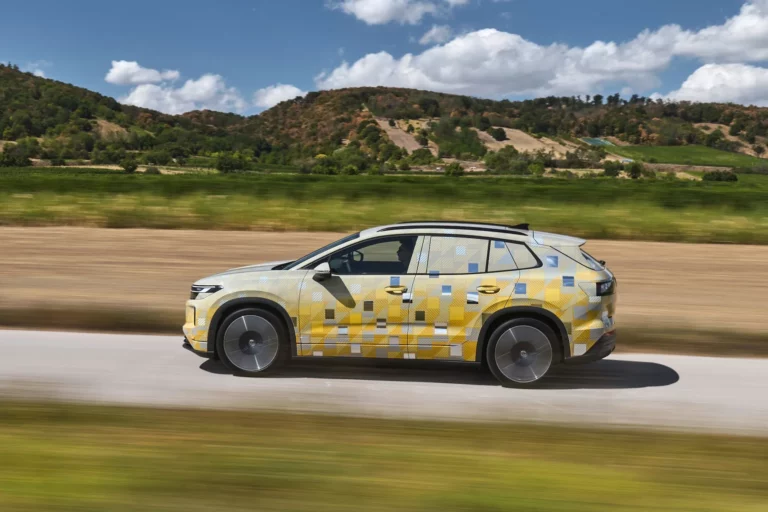
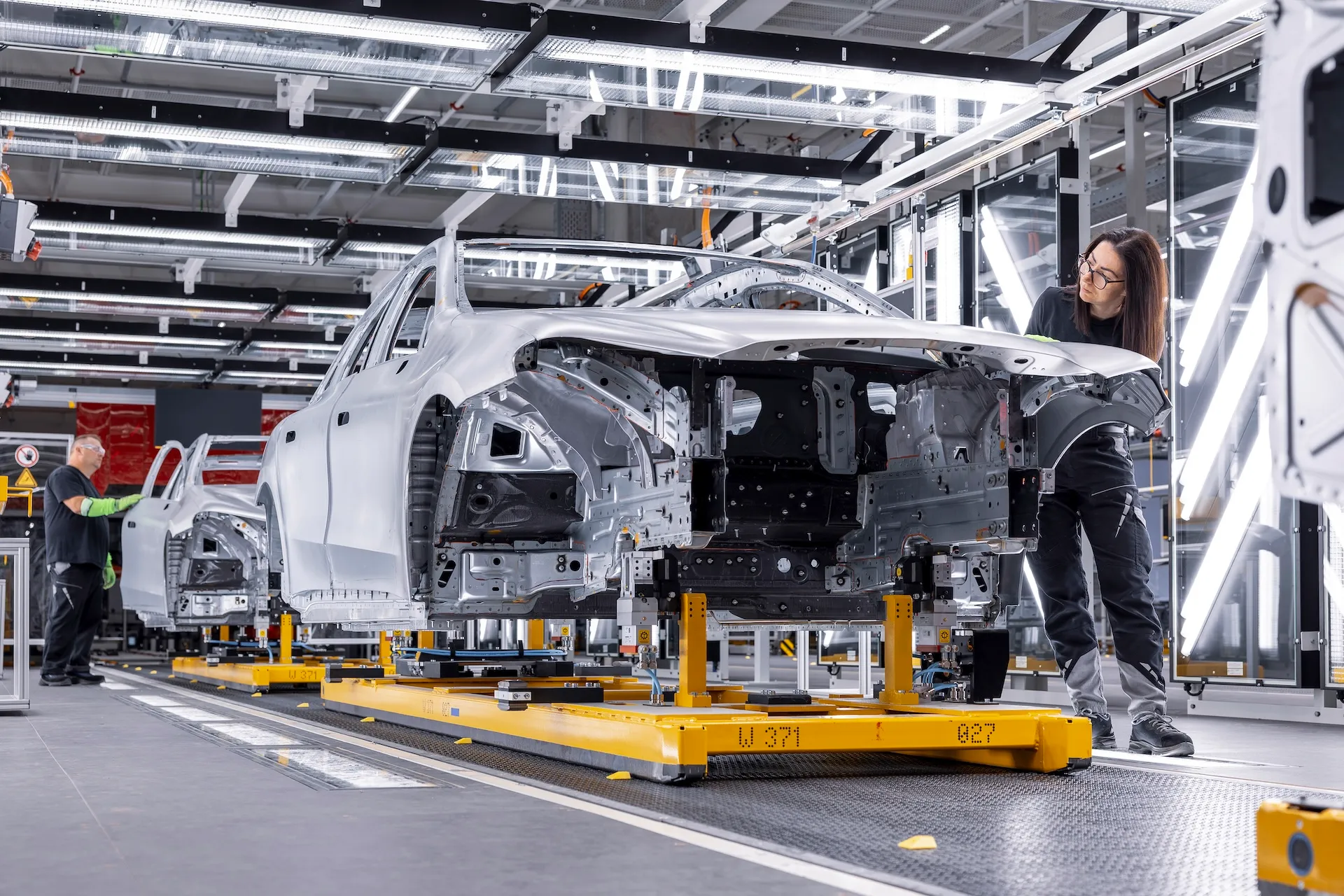
With the ramp-up of the new all-electric C-Class, Kecskemét is manufacturing a battery-electric core model for the first time, a step the company frames as part of its broader electrification strategy. Body parts and drive batteries for the battery-electric GLB and C-Class are produced on-site, under what Mercedes-Benz describes as a “local-for-local” approach intended to shorten supply chains and add flexibility.
Production at the site follows a dual approach: combustion-engine and battery-electric models run flexibly on a shared line in the existing hall, while the newly built hall is dedicated to fully electric vehicle production.
“With the plant extension in Kecskemét, we are increasing the resilience and flexibility of our global production network. This site defines the future of our manufacturing: intelligent, connected, digital and consistently focused on efficiency, quality and sustainability. This enables us to competitively produce models such as the GLB and the new electric C-Class while at the same time strengthening the entire production network. I would like to express my sincere thanks to the team on site for their exceptional and passionate commitment,” said Michael Schiebe, Member of the Board of Management of Mercedes-Benz Group AG, Production, Quality and Supply Chain Management.
Flexible Production Ties to German Plants
Kecskemét operates alongside the Rastatt plant in southern Germany within a European MMA production network, and Mercedes-Benz plans to implement flexible production links between Hungary and additional German sites. The electric GLC, for example, will be built at both the Bremen and Kecskemét plants according to demand. A more compact version of the G-Class will be produced exclusively in Kecskemét going forward, reinforcing the site’s strategic role in the company’s production network.
“The extension of the plant and the start of production of the new electric C-Class are the result of a strong team effort. Our staff have prepared for and implemented the ramp-up with great dedication. Kecskemét is impressively demonstrating how modern production, high quality and a commitment to social responsibility go hand in hand in the region,” said Christian Dickert, Site Manager at the Mercedes-Benz plant in Kecskemét.
Digital Production Technologies
The new halls run on the Mercedes-Benz Cars Operations 360 digital production ecosystem (MO360), which links production, quality and supply chain data across sites. At Kecskemét, Mercedes-Benz says it has for the first time created a complete digital replica of an entire assembly hall within the NVIDIA Omniverse platform, called the Digital Factory Twin. The company says the tool allows production processes to be virtually tested, simulated and optimized before implementation on the physical line, reducing risk during startup.
AI-supported functions also factor into quality control. The MO360 Vision System uses camera-based applications to detect vehicle defects in real time, while AI-based analysis tools help staff evaluate production data. Mercedes-Benz is separately using its MB.OS operating system to link production systems, vehicle software and digital applications.
Sustainability Investments at the Site
Mercedes-Benz has installed a 240,000-square-meter (59-acre) open-space solar park west of the plant with a capacity of 27.4 MWp. Combined with rooftop photovoltaic systems on the new battery assembly, body-in-white and final assembly halls, the site’s total solar capacity reaches 42.3 MWp, covering around 25% of the plant’s annual energy requirement, according to the company. In the new paint shop, Mercedes-Benz says optimized processes cut energy consumption by about 20% compared with the existing facility and reduce CO₂ emissions by around 80%. The company has also made additional investments in water efficiency and waste prevention across the production process.
Workforce Development and Community Investment
Mercedes-Benz Manufacturing Hungary Kft. says it is investing in training and local roots at the site through the Mercedes-Benz Academy Kecskemét, the Mercedes-Benz School, a collaboration with Neumann János University, and company-run childcare facilities intended to support employees’ work-life balance.
Sign up for our popular weekly email to catch all the latest EV news!