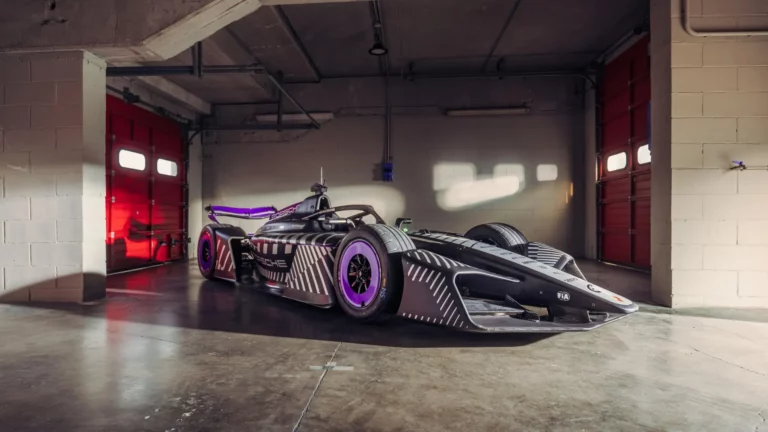


Porsche Motorsport has unveiled the 975 RSE, its fourth-generation Formula E race car, built to the ABB FIA Formula E World Championship’s GEN4 regulations. The all-electric single-seater replaces the championship-winning 99X Electric and is scheduled to make its race debut in December 2026. Porsche introduces the 975 RSE as the reigning Formula E Manufacturers’ World Champion.
Highlights
- 600 kW (816 PS) peak power in Attack Mode — a 71% increase over the GEN3 Evo predecessor
- Permanent all-wheel drive and up to 150% more downforce than the current Formula E car
- Up to 700 kW regenerative braking, supplying 40–50% of race energy
- Expected top speed of approximately 335 km/h (~208 mph); 0–100 km/h in roughly 1.8 seconds
Biggest Performance Leap in Electric Motorsport
The 975 RSE represents what Porsche describes as the largest performance gain in Formula E history. The car produces 450 kW (612 PS) in normal mode and 600 kW (816 PS) in Attack Mode, paired with permanent all-wheel drive and new Bridgestone tyres.
For the first time in the series, aerodynamic downforce plays a meaningful role in grip generation. Porsche has developed two bodywork packages: a low-downforce configuration for races and a high-downforce setup for qualifying, where energy consumption is less of a constraint.
“The GEN4 shows how far electric vehicles have evolved,” said Thomas Laudenbach, Vice President Porsche Motorsport. “When the championship started in 2014, every driver needed two cars per race. One battery alone was not enough to cover the full race distance. Those days are long gone. Since 2024, we have been developing a race car that puts us on the level of Formula 2 cars. EVs are not only catching up with the standards we are used to; their strengths are becoming increasingly evident – on the track and on the road.”
Efficiency and In-House Engineering
Drivetrain efficiency in the outgoing 99X Electric already exceeds 97%, leaving limited headroom for further gains. Porsche redirected GEN4 development toward weight, durability, and cost targets — priorities that also drive production EV engineering.
Olivier Champenois, Technical Project Leader Formula E at Porsche Motorsport, outlined the aerodynamic trade-offs: “Within roughly a decade, Formula E has become so fast that aerodynamic downforce is now a necessity. However, downforce always comes with drag and increases energy consumption. To maintain a strong focus on efficiency, we use two different aero packages with distinct bodywork components: a low-downforce package with reduced drag for the races, and a high-downforce package for qualifying, where energy consumption isn’t relevant. We are talking about up to 150 percent more downforce compared to the GEN3 Evo.”
On the hardware scope, Champenois added: “The 975 RSE produces 71 percent more peak power than its predecessor. At the same time, we were able to reduce the weight of many parts. Although we are developing more components in-house for GEN4 than for GEN3, the total weight of our parts package was only allowed to increase by 5 kilogrammes.”
Porsche’s in-house components include the pulse inverter, electric motor, gearbox, differentials, drive shafts, and rear-axle suspension. GEN4 expands that scope to include the DC/DC converter, the brake-by-wire system, additional electronics and wiring looms, and control units for the hydraulic differentials. The lithium-ion battery remains a standard-supplied component with 51.25 kWh of usable capacity.
Braking and Energy Recovery
Regenerative braking delivers up to 350 kW of electrical braking power on each axle, with friction brakes (controlled by the new brake-by-wire system) supplementing deceleration under higher pressure. Brake discs measure 275 mm at both ends. Porsche estimates that 40–50% of the drive energy used per race is recovered through braking.
The CCS fast-charging system is rated for up to 600 kW — higher than any current production EV charging implementation.
Program Context and Timeline
The 975 RSE first ran in November 2025 and had completed 1,860 test kilometres by early April. The name references the 75th anniversary of Porsche Motorsport in 2026. FIA homologation is scheduled for autumn, after which development shifts toward software optimization. Porsche will expand to four factory entries for the GEN4 era beginning in Season 13 (2026/27).
Florian Modlinger, Director Factory Motorsport Formula E, said: “The concept remains the same: the regulations force us to maximise the efficiency of our cars in every respect – because that makes us relevant for the road. The races should become even more attractive, as the new cars are considerably faster. The acceleration is impressive, and we expect top speeds of up to 335 km/h. I’m very curious to see how the fans will react.”
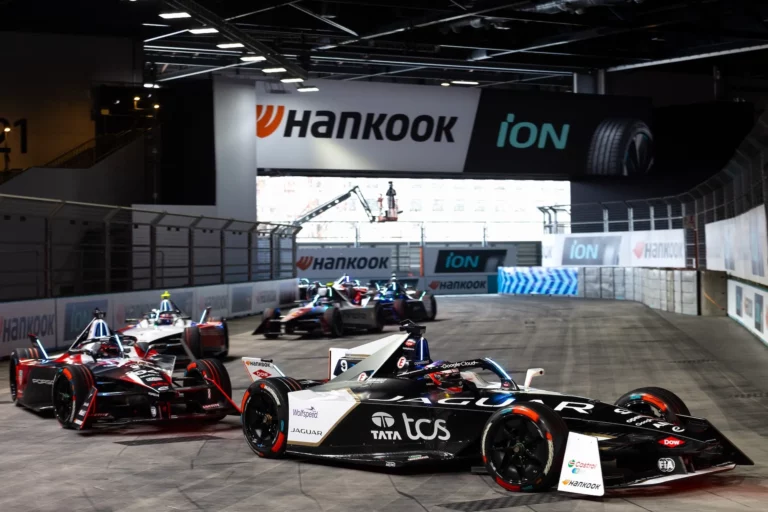
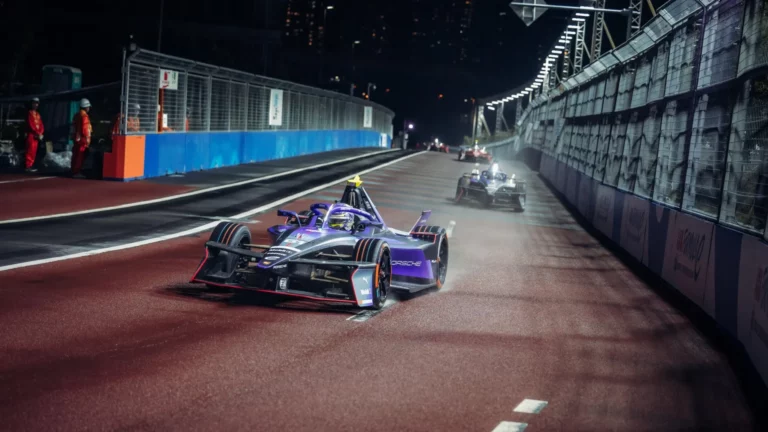
The 99X Electric will run its final race at the London season finale in August.
SEO Package
Primary keyword: Porsche 975 RSE
Secondary keywords: Formula E GEN4, Porsche Formula E race car, all-electric race car
Excerpt (~30 words): Porsche has unveiled the 975 RSE, its GEN4 Formula E race car. The single-seater delivers 600 kW in Attack Mode, permanent all-wheel drive, and up to 700 kW regenerative braking.
Meta description (154 chars): Porsche 975 RSE debuts as the brand’s GEN4 Formula E car, with 600 kW Attack Mode, permanent all-wheel drive, and up to 700 kW regenerative braking power.