
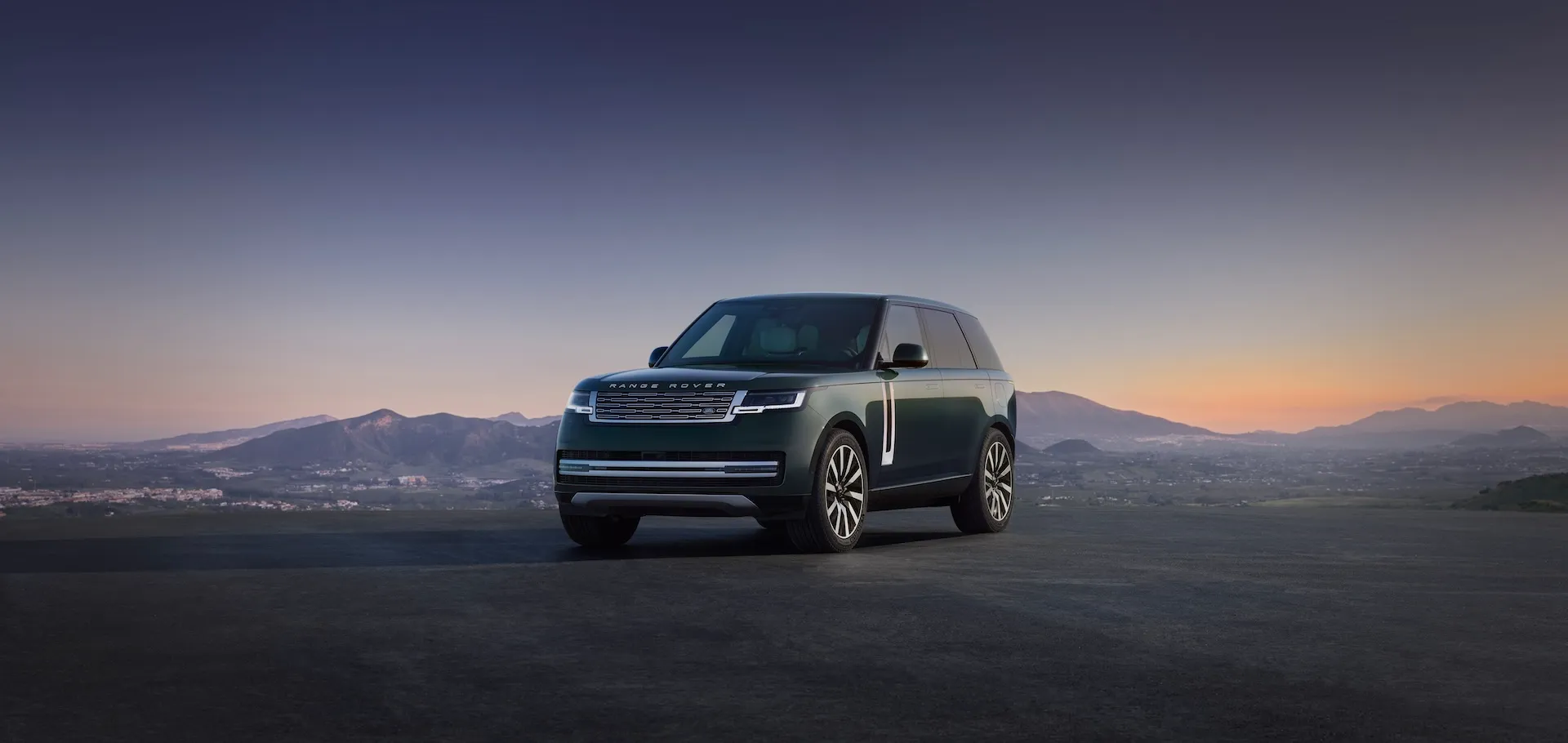
Range Rover Electric is now available to order in the UK from £154,070 (approximately $208,000) on the road, with a 118.5 kWh battery, up to 372 miles of WLTP range, and twin 260 kW motors producing up to 550 PS (542 hp). JLR says the first electric Range Rover is built at its Solihull plant in the UK, where the model has been manufactured since 1970, and joins mild-hybrid, plug-in hybrid, and combustion versions on the same architecture. The launch follows a curated preview tour earlier this year and comes as JLR pursues a multi-powertrain strategy across its Range Rover lineup.
Highlights
- Powertrain: Twin permanent-magnet 260 kW motors, up to 550 PS (542 hp) and 627 lb-ft (850 Nm) of torque; 0–60 mph in as little as 4.3 seconds, according to JLR
- Range: Up to 372 miles (WLTP); JLR reports a real-world figure of up to 333 miles (535 km) on its own standardized route
- Charging: 800-volt architecture with split charging; 10–80% in around 22 minutes on a 350 kW DC charger, or 137 miles (220 km) added in 10 minutes (WLTP) at peak rate
- Production: 9,000 Solihull manufacturing employees upskilled for electrification; over 300 patent applications filed, the most for any single Range Rover
Powertrain and Battery
The company reports that the usable 118.5 kWh lithium-ion battery is a double-stack design of 344 prismatic cells, paired with an 800-volt architecture. JLR states the twin motors produce 20% more torque than other motors of the same size and use silicon carbide semiconductors with switching speeds measured in microseconds.
According to JLR, the motors deliver overtaking acceleration from 50–75 mph in as little as 2.7 seconds. WLTP figures typically run higher than EPA-rated ranges, and no EPA figure has been published.
The battery and motors are Range Rover’s own designs, produced at JLR’s Electric Propulsion Manufacturing Centre in Wolverhampton. The company says a ThermAssist heat-management system adds up to 25 miles of range and reduces heating energy use by 40% in extreme temperatures.

How Does Range Rover Electric Handle Off-Road?
Two new control systems govern traction. Intelligent Driveline Dynamics distributes rear torque anywhere from 100% to zero to prevent loss of traction, while Integrated Traction Management controls motor speed within 50 milliseconds and manages slip up to 100 times faster than a combustion-engine equivalent, JLR says.
Integrated Traction Management works with a new Single Pedal mode, which the company says allows the vehicle to pull away on grades up to 33 degrees and complete rolling climbs on slopes up to 45 degrees. Wading depth is up to 35.4 inches (900 mm). A lower center of gravity and twin-chamber air suspension round out the chassis changes.
“The defining characteristic of Range Rover Electric is its ability to perform across every surface, with effortless comfort and refinement. We’ve worked tirelessly to ensure it retains those qualities. From challenging low-grip and rough terrain to smooth, high-speed roads, it remains incredibly composed and refined, with a real sense of control and confidence. The responsiveness and precision of the new driveline control systems, enabled by electric propulsion, perfectly support this. We’re very proud of the result,” said Matt Becker, Vehicle Engineering Director, JLR.
Testing and Serviceability
JLR reports that Range Rover Electric completed more than 932,000 miles (1.5 million km) of physical testing and over 250,000 hours of virtual testing, spanning -40°F (-40°C) conditions in Arjeplog, Sweden, the Dubai desert, and the company’s Eastnor Castle facility in the UK.
The company’s new battery testing laboratory subjects live batteries to multi-axis vibration and shock testing across a -40°F to 194°F (-40°C to +90°C) range. The pack sits in a high-strength aluminum enclosure.
Each vehicle ships with a Battery Digital Twin providing more than 900 diagnostic data points, which JLR pairs with software-over-the-air updates for proactive maintenance. The propulsion system carries an eight-year or 100,000-mile warranty, with coverage varying by market.
“Range Rover Electric is the result of a decade of considered engineering and technological development, setting a new benchmark for The Original Luxury SUV. Electric propulsion is perfectly suited to the exquisite refinement of Range Rover, elevating the sense of calm and secluded sanctuary for occupants,” said Martin Limpert, Managing Director, Range Rover. “At the same time, Range Rover breadth of capability is uncompromised thanks to the combination of a powerful, adaptable electric powertrain and advanced chassis technologies that make every Range Rover peerless, accomplished and desired. We took our testing and development programmes even further than originally intended to ensure Range Rover Electric is genuinely the most accomplished Range Rover ever.”
Charging and Connectivity
In the UK and Europe, owners have access to more than one million public chargers, JLR says. In North America, the vehicle includes built-in NACS compatibility for access to the Tesla Supercharger network. An optional Range Rover home charger is also available.
The new Range Rover App allows owners to check charge status and predicted range, schedule charging to take advantage of lower tariffs, initiate cabin purification or the heated steering wheel, and view vehicle location and lock status.
Solihull and Wolverhampton Production
JLR states that 9,000 manufacturing employees in Solihull have been upskilled for electrification, with a further 1,500 trained across its wider West Midlands operations.
“Range Rover Electric production at Solihull brings together more than five decades of Range Rover manufacturing expertise with the latest electrification and advanced manufacturing technology,” said Nigel Blenkinsop, Chief Operations Officer, JLR. “Range Rover creates significant value across the UK and Europe. Its production in Solihull supports thousands of businesses, with more than two-thirds of supplier spend directed to UK and European suppliers.”
The Wolverhampton site now produces battery packs and electric drive units alongside internal combustion engines. Its first redevelopment phase covers about 430,000 square feet (40,000 m²) and required more than two million hours of planning, engineering, construction, and commissioning over four years. The transformation added 13 battery and electric drive unit manufacturing lines, supported by 5.6 miles (9 km) of conveyors and 113 miles (182 km) of power and data cabling. AI-enabled scanning cameras check electric drive unit assembly, and every battery cell is performance-tested before pack assembly.
Trim Lineup and First Edition
Order books are open for short- and long-wheelbase body styles in SE, HSE, and Autobiography specifications, plus SV, SV Ultra, and SV Black. Long-wheelbase availability is market-specific, and SV models retain their exclusive grille and 22-inch wheels rather than the aerodynamically optimized grille fitted to standard models.
A First Edition is offered in Belgravia Green, Santorini Black, or Varesine Blue with a new Light Cloud Ultrafabrics PU and Kvadrat interior. The Range Rover Bespoke commissioning service extends paint, material, and personalization choices, including custom embroidery.