
River Mobility has raised $120 million in a Series C round, bringing the Bengaluru-based electric two-wheeler maker’s total capital raised to $144 million. Indian investors Elev8 Venture Partners and Claypond Capital led the round, which River says will fund a second manufacturing plant and two additional vehicle models. Founder and CEO Aravind Mani said venture debt accounted for less than 10% to 12% of the total, with the equity portion consisting entirely of primary capital and no secondary share sales.
Highlights
- The $120 million Series C brings River’s cumulative capital raised to $144 million since the company was founded in 2021.
- River sells roughly 6,000 vehicles a month through more than 75 stores and has sold over 50,000 units of its single model.
- Phase one of a new plant is slated for commissioning by mid-2027, with annual capacity of roughly 700,000 to 800,000 vehicles.
- Revenue rose 330% in the fiscal year ended March 2026, with monthly revenue reaching about ₹1 billion (roughly $11 million), according to Mani.
Who Backed the Round
Elev8 Venture Partners and Claypond Capital co-led, with participation from Singularity AMC, Anicut Capital, 360 ONE Asset, JIF Capital, and HDFC AMC. Existing backers Yamaha Motor, Al-Futtaim Group, and Mitsui also joined.
Mani said the round marks a shift in what investors are underwriting. Earlier financings supported product development and technology; the new investors are backing the company’s ability to scale now that it has demonstrated commercial traction. He added that Silicon Valley investors had long recognized India’s EV opportunity but underestimated adoption patterns among local consumers. “They understand macroeconomics. What they don’t understand is the customer behavior,” Mani said.
Scaling From 20 Vehicles a Day to 300
River has built its business around a single electric moped, the Indie, launched in 2023. Unlike most competitors in India’s electric two-wheeler market — including Ather Energy, Ola Electric, and legacy manufacturers Bajaj Auto and TVS Motor — the company has not spread across multiple consumer segments, instead positioning the Indie as a utility vehicle.
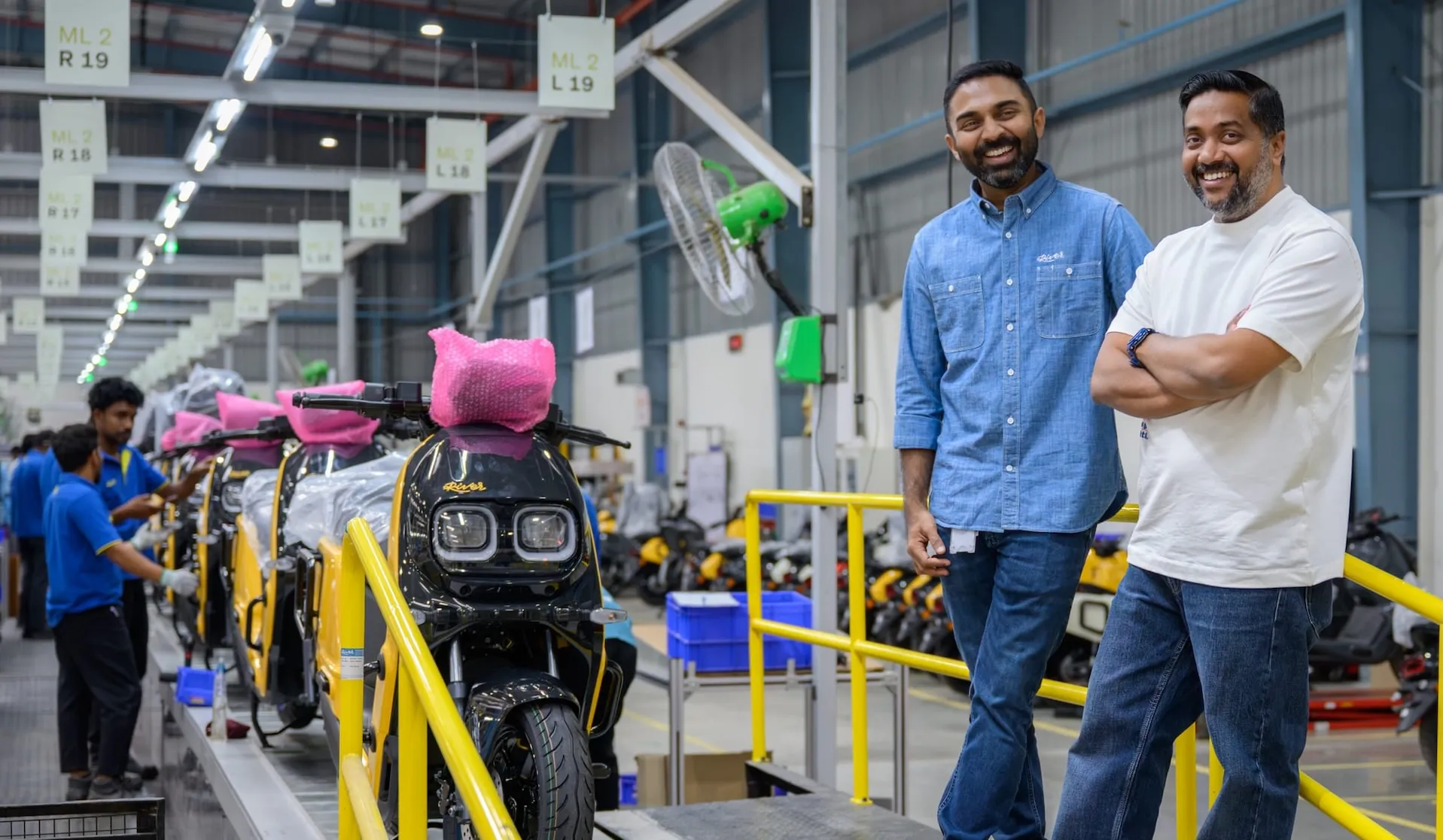
Mani said the company’s most significant achievement over the past year was learning to manufacture at volume. “There was a point in time when we were making 20 vehicles a day. Today we make 300 vehicles a day, and that scale-up has not been easy. This is the steepest learning curve for any company out there,” he said.
The Indie is priced at ₹155,000 (about $1,630) and carries a claimed range of roughly 99 miles. According to Mani, typical buyers are self-employed people between the ages of 28 and 35.
A Second Plant and a Second Model
River is approaching capacity at its first facility on the outskirts of Bengaluru, which can now produce about 10,000 vehicles a month following recent upgrades. Mani said the company expects to fully utilize that plant by early next year.
Construction on a new facility is expected to begin within two months, once a location is finalized. Capacity constraints are also gating the product roadmap. “The restriction is the capacity. I don’t have capacity to do one more model today in my current factory,” Mani said. The company plans to introduce two additional models beginning next year.
Growth Targets
| Milestone | Target | Timeline |
|---|---|---|
| New plant, phase one | 700,000–800,000 vehicles annually | Mid-2027 |
| Retail network | More than 200 stores | March 2027 |
| Retail network | About 400 outlets | March 2028 |
| Operational profitability | 20,000–25,000 vehicles per month | 2028–29 |
Mani said gross margins are currently approaching double digits and should improve as production scales.
Sign up for our popular weekly email to catch all the latest EV news!