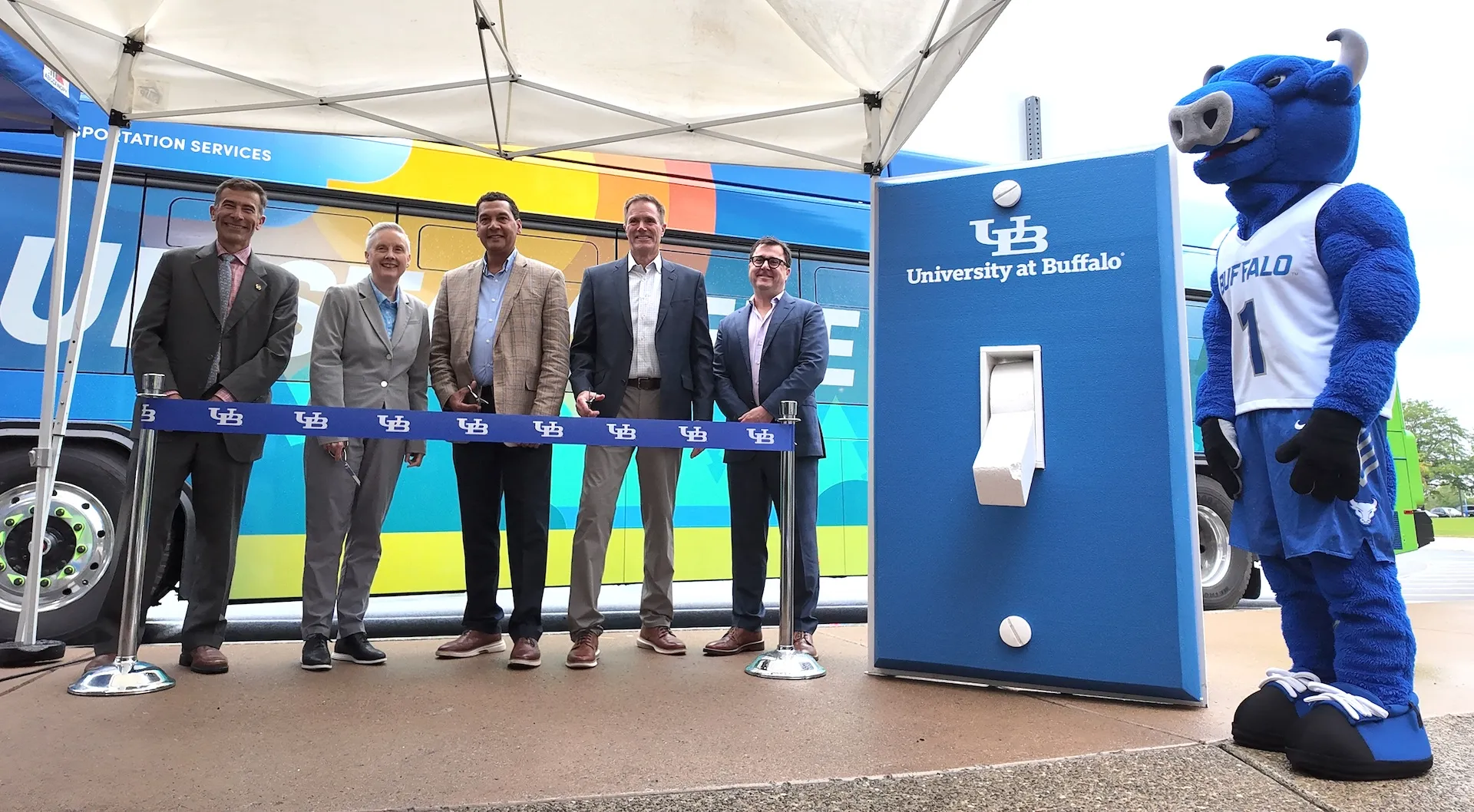

The University at Buffalo has placed eight 40-foot battery-electric transit buses into service on its Stampede campus shuttle system, the first vehicles in that fleet to move off diesel. Transportation provider WeDriveU operates the buses, with fleet electrification company Zenobē as the electrification partner on the project. Students, administrators and local officials marked the deployment on campus this week. The full Stampede fleet carries roughly 16,000 passengers a day.
Highlights
- Eight 40-foot battery-electric buses are the first UB Stampede vehicles to replace diesel units.
- The full fleet transition is expected to avoid 5,984 metric tons of carbon dioxide equivalent, a 55.6% reduction in greenhouse gas emissions against diesel service.
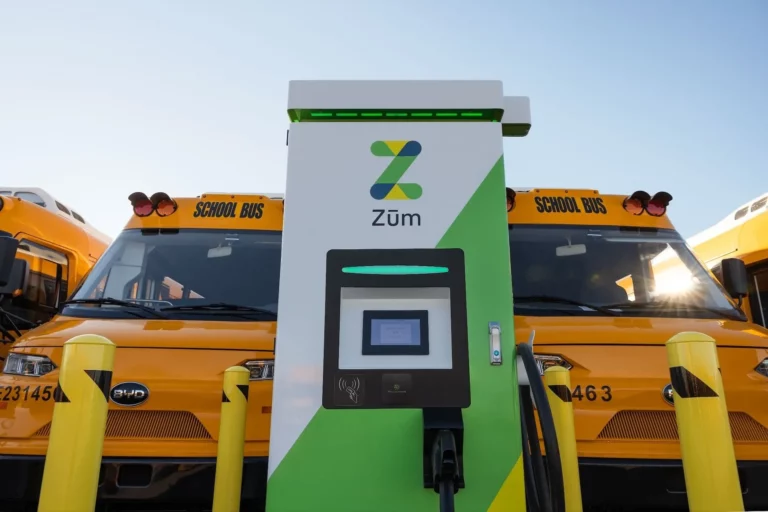
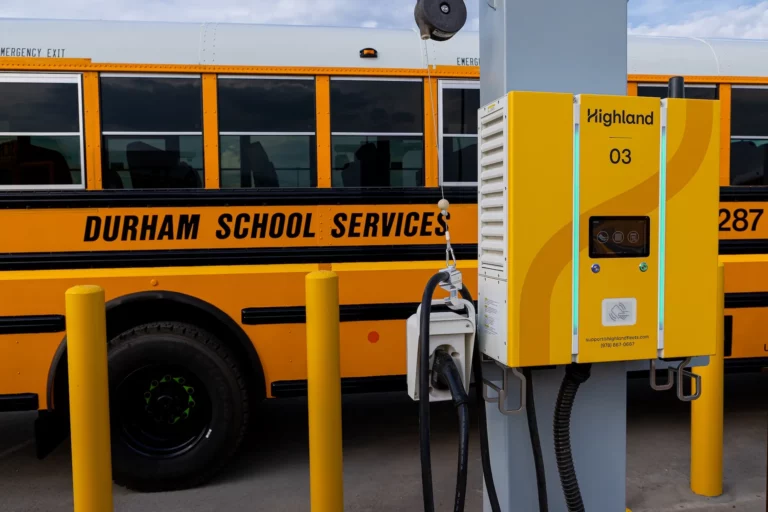
- Ten chargers have been installed at WeDriveU’s Buffalo customer service center supporting the fleet.
- Remaining diesel buses are scheduled to be phased out over the next four years.
First Vehicles in a Campus-Wide Diesel Phase-Out
The eight buses represent the opening stage of a broader conversion rather than a standalone purchase. UB’s 10 in 10 roadmap targets a zero-emissions campus by 2030, which the university positions ahead of the 2045 deadline that New York Executive Order 22 sets for state-operated heavy-duty vehicles.
“Our goal is to provide safe, reliable transportation while continuing to reduce our environmental impact,” said Christopher Austin, UB Director of Parking and Transportation. “These buses help us do both. They improve the rider experience today and represent another investment in the future of mobility at UB.”
What Emissions Reduction Does UB Project?
The university projects that the Stampede fleet transition will avoid 5,984 metric tons of carbon dioxide equivalent emissions, which it characterizes as a 55.6% reduction in greenhouse gas emissions compared with diesel-powered service. UB frames that figure as equivalent to taking approximately 1,395 cars off the road. The projection covers the full fleet conversion rather than the eight buses now operating.
Charging Infrastructure Supporting the Fleet
Ten chargers have been installed at WeDriveU’s Buffalo, New York customer service center supporting UB Stampede. Depot charging capacity is the gating factor in most transit electrification programs, and the installed count sets the near-term ceiling on how many electric buses the operation can support before further build-out. Diesel buses are scheduled to leave the fleet over the next four years.
Zenobē describes its contribution to the project in planning, charging and support terms. “Fleet operators and institutions need confidence that their electric buses will be ready to perform every day,” said Matt Curwood, Vice President, Business Development – Transit, Zenobē North America. “Zenobē’s giving that certainty through thoughtful planning, reliable charging infrastructure and long-term operational support. It’s gratifying to see UB’s fleet in service.”
Project Timeline and Partner Structure
UB selected WeDriveU to manage campus transportation in June 2024, and the companies say the electric bus deployment was delivered on schedule. Zenobē has an existing global relationship with Mobico Group, WeDriveU’s parent company, which the partners cite as the basis for the arrangement in Buffalo.
“We’re proud to provide the University at Buffalo community with safe, dependable and innovative transportation solutions and congratulate UB on this incredible achievement,” said Tim Wayland, Chief Commercial Officer, WeDriveU. “Together with UB, Zenobē and WeDriveU’s local operations team, we’re showing the impact on campuses and communities by transitioning to zero-emission fleets.”
The Buffalo project follows a pattern seen in other North American transit electrification programs, where the operator, the electrification specialist and the depot charging build proceed as a single package. Similar structures have appeared in transit agency depot upgrades and in procurement of 40-foot battery-electric transit buses by U.S. transit authorities.