
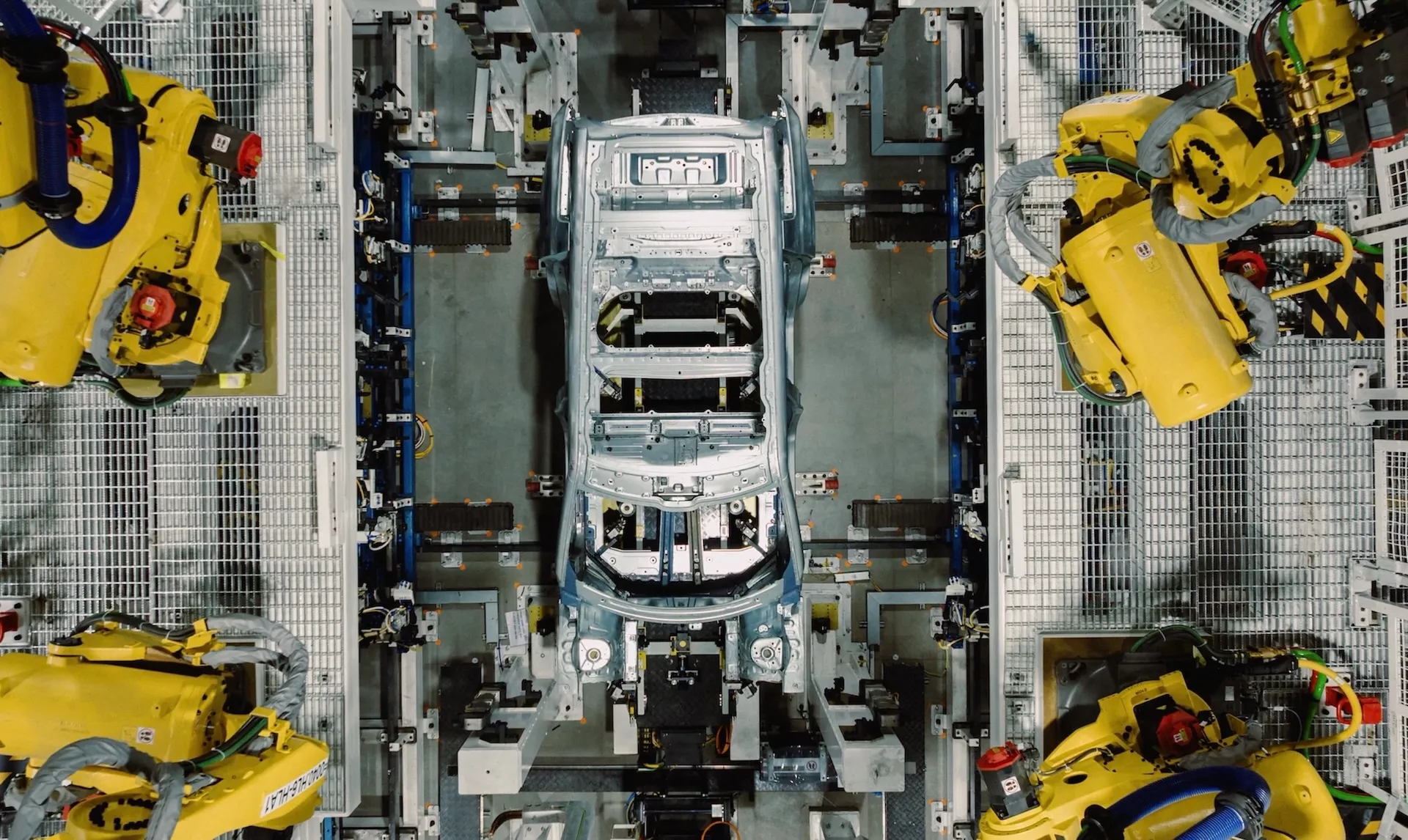
Rivian has detailed the manufacturing strategy behind its upcoming R2 electric SUV. The automaker says it co-developed the vehicle and its production line simultaneously. This approach aims to reduce complexity, improve build quality, and lower costs. Production is set to begin at Rivian’s Normal, Illinois, facility in 2026.
Highlights
- Rivian eliminated 2.3 miles of wiring in the R2 through simplified electronics, building on gains made with the Gen 2 R1.
- High-pressure die castings replace thousands of welds and fasteners, cutting roughly 2,000 lbs compared to R1.
- AI-powered robotics and real-time diagnostics drive quality control across the production line.
- The plant is designed to produce 155,000 R2 units per year, with a focus on long-term serviceability.
Co-Developed Vehicle and Production Line
Rivian took an integrated approach to the R2 program. Engineers designed the vehicle and manufacturing systems in parallel from the earliest stages. As a result, the R2 features fewer parts, cleaner surfaces, and simplified assembly steps.
The company also prioritized serviceability. Critical vehicle systems are positioned for easy access during both factory assembly and later maintenance. This strategy reflects Rivian’s goal of reducing total cost of ownership for R2 buyers.
Lighter, Simpler Architecture
The R2 platform represents a significant departure from Rivian’s R1 architecture. Key engineering changes include:
- Elimination of 2.3 miles of wiring through consolidated electronics
- Use of large, high-pressure die castings to reduce part count
- Removal of thousands of welds and fasteners from the assembly process
- Approximately 2,000 lbs of mass reduction compared to the R1
These changes improve manufacturing efficiency. However, they also benefit driving dynamics. A lighter vehicle is more agile and energy-efficient, both important traits for an EV in this price segment.
Advanced Manufacturing Technology
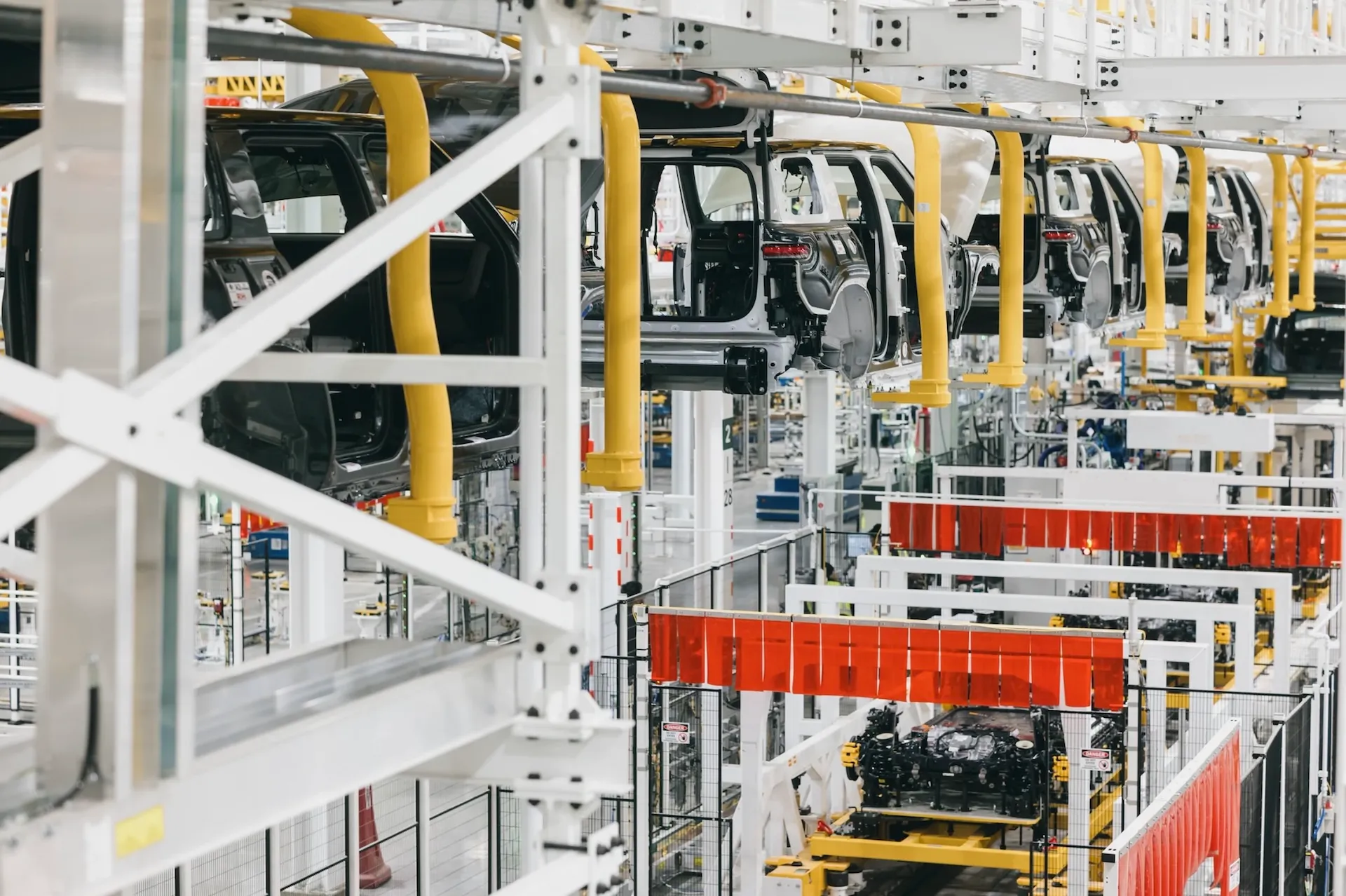
Rivian built the R2 production line around digital and AI-driven systems. The company started with a digital twin of the entire plant. This virtual model allowed engineers to test and refine the line before physical construction began.
Robotics and Automation
The body shop features a fully automated “hang-on” line. It handles precise gap and flush alignment without manual intervention. Additionally, an AI-powered robot system scans and places parts on the line autonomously.
Quality Assurance
Lineside wireless diagnostics catch build issues in real time. This prevents defective components from advancing down the line. Meanwhile, advanced vision robots perform precision quality checks at multiple stages. Together, these systems aim to ensure consistent output as production scales.
Workforce Optimization
Rivian uses AI algorithms to maximize equipment and floor plan utilization. The system helps deploy workers where demand is greatest. It also improves ergonomics across workstations, which supports both productivity and worker safety.
Production Capacity and Outlook
The Normal plant is configured to produce 155,000 R2 units annually. Rivian has emphasized that the R2 is designed to be reliable, affordable, and easy to build at scale. Reservations remain open through Rivian’s website.
For the automaker, the R2 represents a critical step toward profitability. A simpler design paired with a more efficient production line could help Rivian narrow its per-vehicle losses as it targets a broader market segment.
Sign up for our popular weekly email to catch all the latest EV news!