
Rivian’s 2026.31 software update moves every R1 on the road, across both Gen 1 and Gen 2 architectures, onto RivianOS 2, the platform that already runs the R2. The company describes RivianOS 2 as an AI-defined platform and says the update brings new graphics, a redesigned interface layout, and deeper compute integration to the R1 cabin. With R1 and R2 now on one software stack, Rivian says feature updates and interface changes land across the full lineup, tailored to each vehicle’s hardware.
Highlights
- The 2026.31 update rebuilds the entire R1 experience on RivianOS 2, reaching both Gen 1 and Gen 2 R1 vehicles.
- Gen 2 R1 and R2 vehicles run Unreal Engine 5 for real-time 3D visualizations; Gen 1 R1 vehicles keep Unreal Engine 4 to preserve display responsiveness.
- Google Maps police-presence and speed-camera data is integrated directly into in-vehicle navigation.
- Connect+ subscribers gain a dedicated weather app with a 10-day forecast and the ability to manage active trips from the Rivian mobile app.
What Changes in the R1 Interface?
Rivian says converging R1 onto RivianOS 2 establishes a shared software design language across its vehicle line. The R1 update introduces:
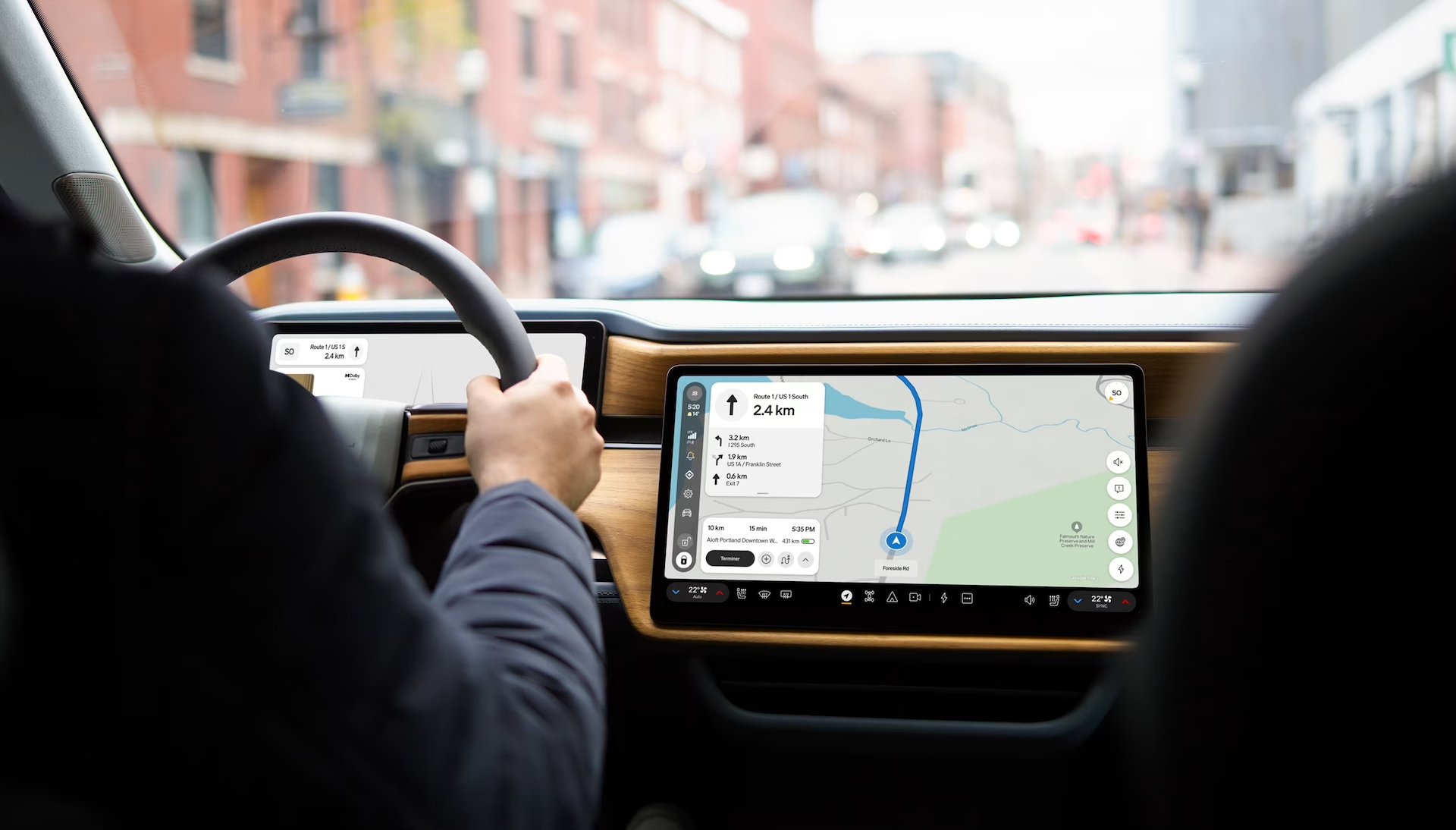
- Adaptive controls and layout: Essential controls adjust to the drive. Quick controls and the media player can be placed on either side of the display, and a new vertical status bar keeps key vehicle functions within reach.
- Settings 2: A rebuilt settings environment with context-aware controls and universal search, which the company says makes on-the-go adjustments faster.
- Graphics engine: Gen 2 R1 and R2 vehicles use Unreal Engine 5 to render real-time 3D visualizations of the vehicle and its surroundings on the central display. Gen 1 R1 vehicles retain Unreal Engine 4 to preserve screen responsiveness on their display hardware.
- Real-time route alerts: Information from Google Maps about police presence and speed cameras now appears in in-vehicle navigation. Rivian says the incident and alert data draws on local authorities, third-party sources, and real-time contributions from the Google Maps and Waze communities.
Two additional features are limited to Connect+ subscribers. A dedicated weather app shows real-time conditions, air quality metrics, and a 10-day forecast on the center display or along a navigation route. Mobile Live Trips allows subscribers to start, view, and update active trips in the vehicle directly from the Rivian mobile app. Connect+ requires a subscription, and streaming content accessed through it requires separate accounts with each streaming service.
Rivian Unified Intelligence Across Generations
Unifying the software platform lets R1 vehicles use Rivian Unified Intelligence, which the company describes as a common AI foundation connecting select vehicle, mobile, and service experiences.
Hardware determines how much of that capability each vehicle receives. R2 and Gen 2 R1 models carry more computing power, which Rivian says enables advanced, low-latency processing through hybrid edge compute and local AI processing. Both Gen 1 and Gen 2 R1 models receive expanded cloud-assisted voice capabilities and refreshed driver display hierarchies.
Data Controls and Rollout
RivianOS 2 lets owners toggle hotword wake-words, limit location sharing, and adjust driver profile data at any time, across all vehicle generations.
The 2026.31 over-the-air update is beginning its rollout to eligible R1 and R2 vehicles. Rivian directs owners to the Rivian App or the vehicle’s center display for full release notes and update availability for a specific vehicle.