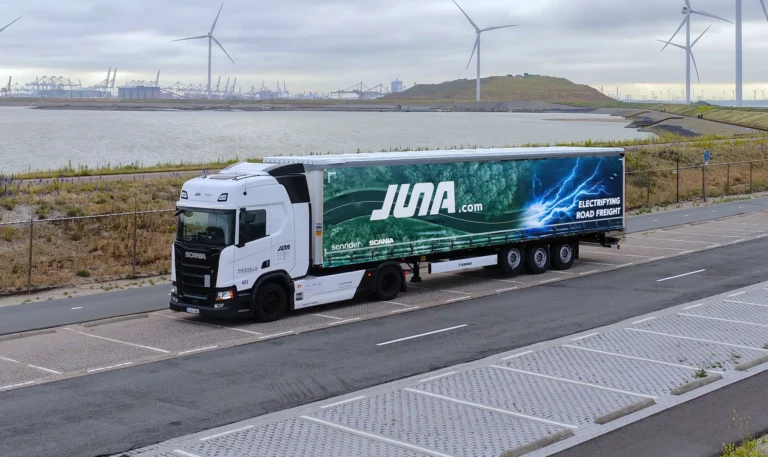


Scania will invest €70 million (about $81.5 million) to expand its production site in Angers, France, and adapt the plant’s assembly lines for electric truck production. The Swedish manufacturer said the project extends the existing facility and positions Angers to build both combustion-engine and electric trucks on the same lines. Scania framed the move as part of its effort to support electrified transport across Europe, where it offers a range of battery-electric transport solutions for heavy commercial fleets. The Angers site has been part of Scania’s industrial system for more than three decades, serving customers in France and across the continent.
Highlights
- Scania plans a €70 million (~$81.5 million) investment in its Angers, France production site.
- The project extends the existing facility and adapts assembly lines for electric truck production.
- The plant will be able to assemble both combustion-engine and electric trucks on the same lines.
- Angers has been part of Scania’s industrial network for more than three decades.
What the Investment Covers
The investment, announced earlier this week, funds an extension of the existing Angers plant and the reconfiguration of its assembly lines to handle electric trucks alongside combustion-engine models. According to the company, the site will retain the flexibility to shift output between powertrains as demand changes, rather than dedicating capacity to a single drivetrain.
Scania describes Angers as a long-standing part of its production network, with a role in supplying both the French market and customers elsewhere in Europe. The company said the new spending builds on the plant’s existing capabilities and supports its longer-term plans for electrified transport.
Flexible Production for Combustion and Electric Trucks
Petrus Sundvall, President of Scania Production Angers, tied the investment to the plant’s ability to adjust to shifting order volumes.
“This investment reflects our ambition to secure the long-term future of the Angers site while increasing its flexibility. We are preparing for the future, but we must remain able to adapt to changing volumes and market dynamics. The site will be capable of assembling both combustion engine and electric trucks, ensuring we can respond to evolving customer demand,” Sundvall said.
The dual-line approach mirrors a wider industry move toward flexible manufacturing, seen recently when MAN launched series production of electric trucks on lines shared with diesel models. The strategy lets manufacturers match production to uneven demand without committing full plants to either powertrain.
Scania’s Wider Electrification Push
Christian Levin, President and CEO of Scania, placed the Angers spending within the company’s broader case for electrified heavy transport and the supporting infrastructure it requires.
“The transition to electrified transport is not only about vehicles. It is about creating the conditions that enable transport operators to invest with confidence. Access to charging infrastructure, renewable electricity and predictable policy frameworks will be critical to accelerating the shift. Scania is investing to support this transition, but lasting progress will depend on how quickly the entire transport ecosystem can move forward together,” Levin said.
The Angers commitment adds to Scania’s earlier moves to scale up electric truck production for the European market. The company said reducing emissions from road transport will require action across the value chain, from vehicle makers and operators to energy providers and policymakers.
Sign up for our popular weekly email to catch all the latest EV news!