
Altilium has been granted its first patent covering its EcoCathode battery recycling process, with the UK Intellectual Property Office issuing UK Patent No. GB2637908B, entitled “Material Recovery Method and Use.” The patent covers a hydrometallurgical process for recovering, purifying and regenerating cathode materials from end-of-life lithium-ion batteries. Altilium, which is building out commercial recycling capacity in Plymouth, says the grant forms the foundation of a broader international portfolio, with corresponding applications progressing in major global jurisdictions. The company announced the grant this week.
Highlights
- The UK Intellectual Property Office has granted UK Patent No. GB2637908B, “Material Recovery Method and Use,” covering the EcoCathode process.
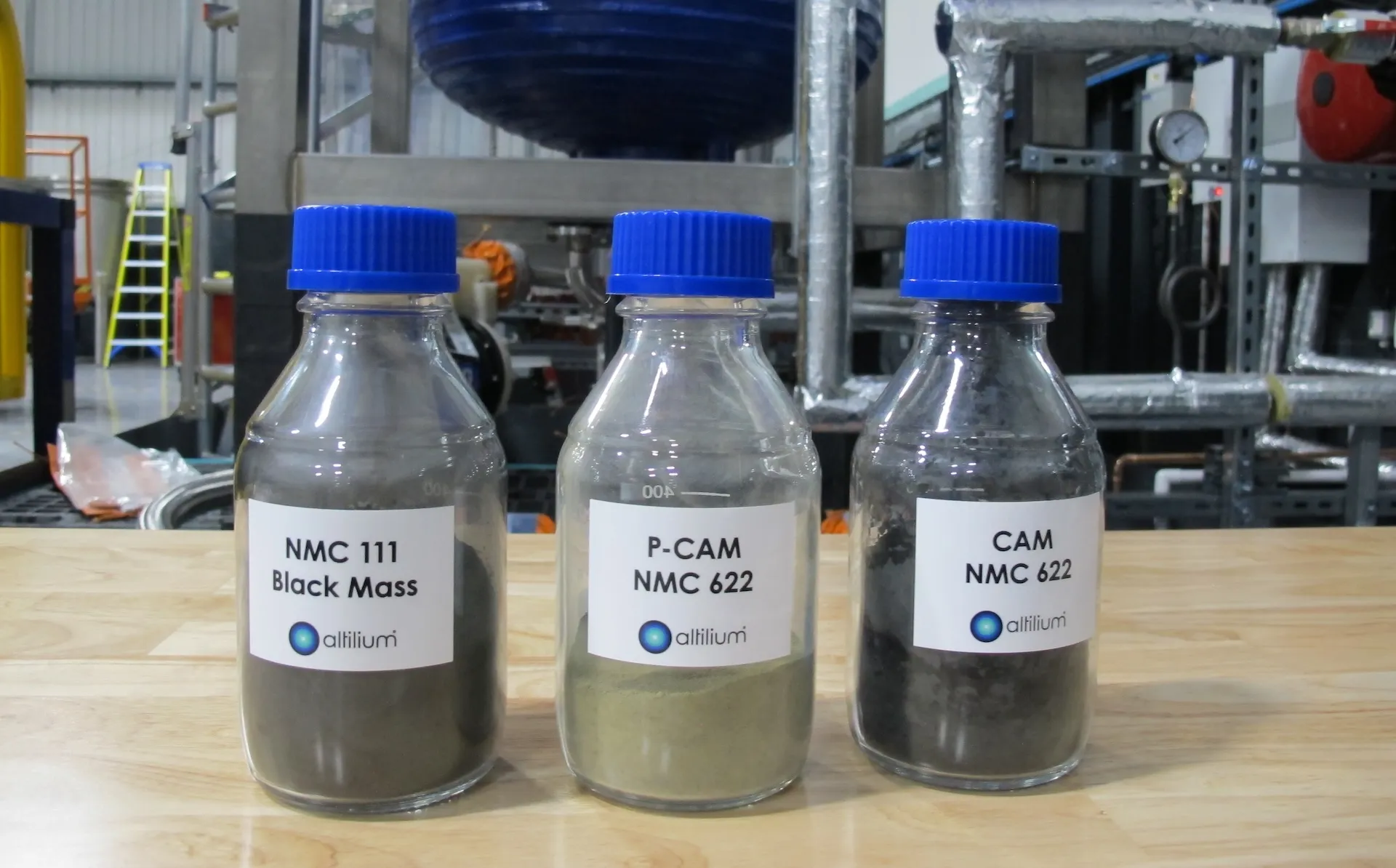
- The patented process converts black mass into battery-grade cathode materials within a closed-loop system, according to Altilium.
- Imperial College London validation found the company’s recycled materials perform comparably with virgin mined materials.
- Altilium’s planned Teesside facility is designed to process scrap from more than 150,000 EVs annually and produce 30,000 metric tons of CAM.
What the Patent Covers
The granted patent protects the hydrometallurgical route at the center of Altilium’s business: converting “black mass” — the shredded, processed residue of spent lithium-ion cells — into high-purity, battery-grade materials suitable for manufacturing new EV batteries. The company says the process keeps critical minerals inside the UK’s battery supply chain rather than exporting them for downstream refining.
Altilium frames the grant as an intellectual property milestone rather than a technical one. The company says the patent strengthens its IP position as it expands commercial operations in the UK and explores international licensing opportunities, with further applications moving through other jurisdictions.
How Does the Process Differ From Conventional Recycling?
Conventional recycling routes frequently produce intermediate products that require additional refining overseas. Altilium says its patented process instead recovers and regenerates battery-grade cathode materials directly within a closed-loop system, which the company says reduces energy consumption, greenhouse gas emissions and dependence on imported critical minerals.
That closed-loop positioning is the commercial argument behind the patent. Direct regeneration removes refining steps that currently sit outside the UK, which is the gap Altilium is targeting with its domestic plants.
Validation and Scale-Up
The company says the process has been proven at industrially representative scale through collaborative R&D projects with automotive OEMs, supported by the Advanced Propulsion Centre. Separately, independent validation by Imperial College London confirmed that Altilium’s recycled materials deliver performance comparable with virgin mined materials, which the company says demonstrates their suitability for next-generation battery production.
Dr. Christian Marston, co-founder and COO of Altilium, commented: “This patent represents a significant milestone for Altilium and validates years of research and development into creating a truly circular supply chain for battery materials. Intellectual property is fundamental to our strategy as we scale our technology from pilot operations to commercial production.
Our process enables critical battery metals to be recovered and regenerated into battery-grade materials with dramatically lower carbon emissions than traditional mining and refining. This is exactly the type of innovation needed to build a resilient and sustainable battery supply chain for the UK.”
Where the Patent Fits in the Portfolio
The grant sits within a portfolio spanning recovery and regeneration of cathode active materials (CAM), anode active materials (AAM) and other critical materials. Those technologies underpin the ACT3 commercial plant in Plymouth and planned large-scale production at ACT 4, and the company positions them as the basis for future licensing, strategic partnerships and international expansion.
Altilium’s first pilot plant began operating in Plymouth in 2025. The planned Teesside facility is designed to process scrap from more than 150,000 EVs per year and produce 30,000 metric tons of CAM — enough, the company says, to cover roughly 20% of the UK’s expected demand by 2030.
Why the Timing Matters
Altilium expects demand for recycled battery materials to accelerate as EV adoption grows and new EU regulations requiring rising levels of recycled content in battery manufacturing take effect. The company says its patented technology keeps those minerals in circulation, supporting supply chain security and UK manufacturing.
Altilium is backed by SQM Lithium Ventures, the corporate venture arm of Sociedad Química y Minera de Chile, alongside Marubeni Corporation and Mizuho Bank.
Sign up for our popular weekly email to catch all the latest EV news!