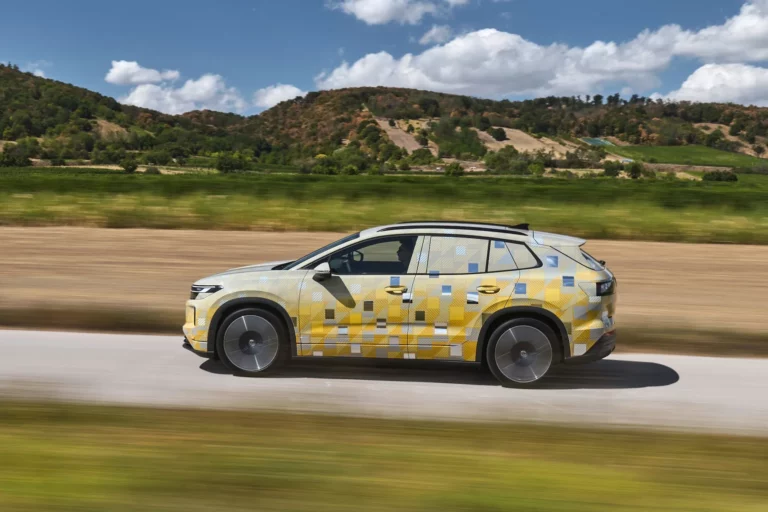

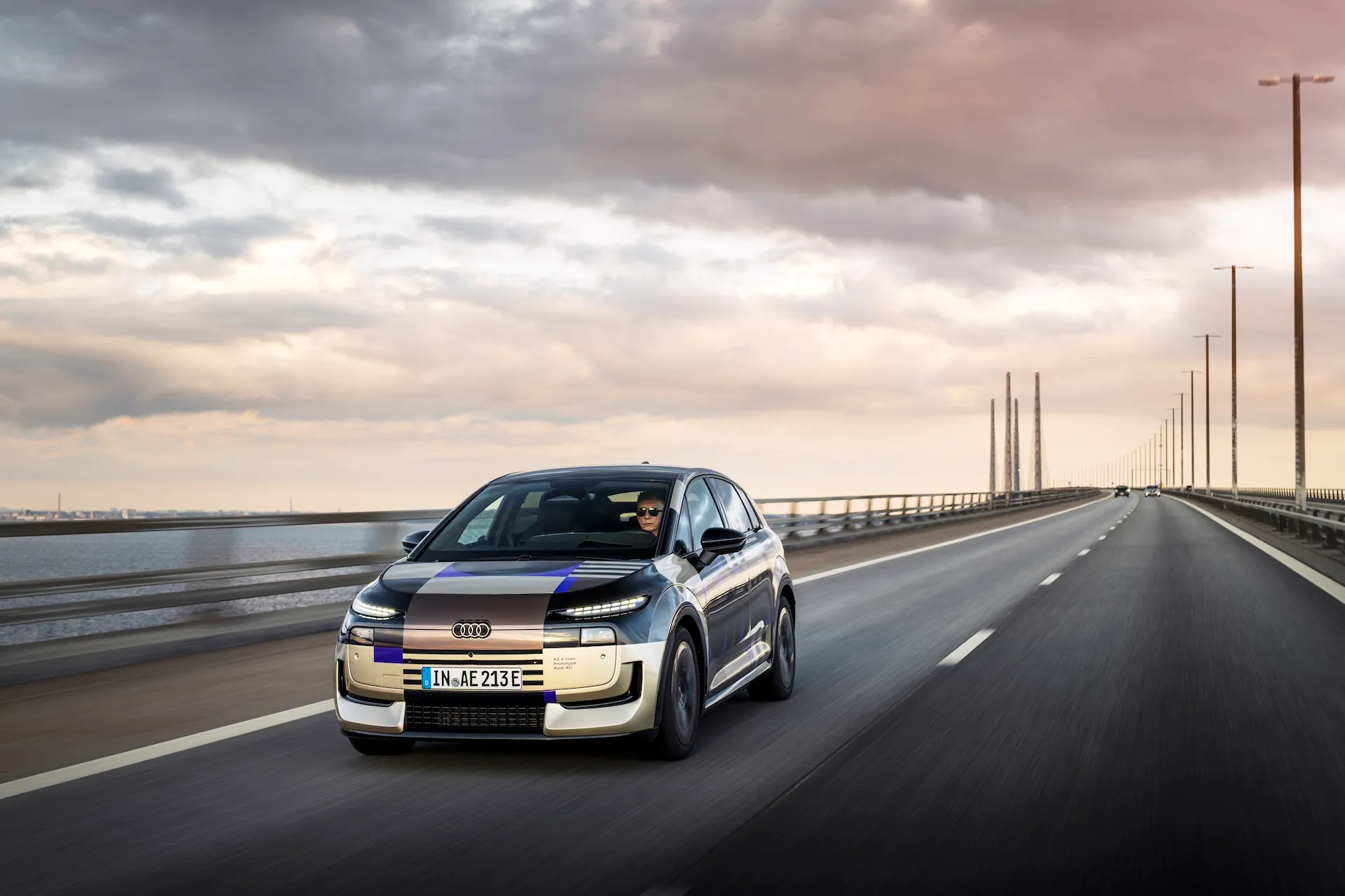
Audi says the A2 e-tron in its 140-kW form with the optional efficiency package draws a preliminary 20.6 kWh per 100 miles (12.8 kWh/100 km) under WLTP measurement, the lowest energy consumption the automaker has recorded for any of its vehicles. The compact electric model, due for its world premiere in fall 2026, reaches that figure through a combination of aerodynamic measures, reworked power electronics, and a 61-kWh lithium iron phosphate battery. The aerodynamic work alone accounts for up to 1.4 kWh per 100 miles (0.9 kWh/100 km) of the reduction, according to the company.
Highlights
- Preliminary WLTP consumption of 20.6 kWh/100 miles (12.8 kWh/100 km) for the 140-kW model with the efficiency package; the combined preliminary figure spans 25.1–20.6 kWh/100 miles (15.6–12.8 kWh/100 km)
- Drag coefficient of 0.24, which Audi says is the best among its compact models
- 61-kWh LFP battery in a cell-to-pack layout, reaching 89.6 percent charging efficiency at the wallbox with an adapted cooling strategy
- Bidirectional charging via Vehicle-to-Load and Vehicle-to-Home, with the latter launching first in Germany, Austria, and Switzerland

How Do Aerodynamics Cut the A2 e-tron’s Energy Use?
At speeds around 62 mph (100 km/h) and above, drag accounts for more than half of a vehicle’s total energy demand, so each reduction in the drag coefficient translates directly into lower consumption and longer range. The A2 e-tron 140 kW with the efficiency package carries a drag coefficient of 0.24.
The body uses a rounded front end, a flowing roofline, and a sharply defined rear, a shape Audi says reduces drag relative to a conventional fastback. Detail work at the front flanks adds air curtains, which redirect airflow to suppress turbulence, along with gap reducers and gap breathers that calm the air around the wheel arches. An active cool-air intake stays closed during normal driving and at higher speeds, opening only during charging, hard acceleration, or high ambient temperatures to protect the battery and electronics. Audi has been validating those measures in wind tunnel work alongside its cold-weather testing program.
Drive System Gains Up to 10 Percent
The A2 e-tron uses a permanently excited synchronous motor. Audi credits three changes for a drive system it describes as up to 10 percent more efficient:
- Power electronics: Silicon carbide semiconductors replace silicon, cutting switching losses particularly under partial load. Variable switching frequency reduces losses by up to 20 watts, while alternative modulation techniques cut switching losses by up to 33 percent against conventional methods.
- Electric motor: Thinner laminations, at 0.2 mm instead of 0.3 mm, reduce iron losses. The stator winding moves from a star to a delta configuration, shifting operation into more efficient motor speed ranges.
- Transmission: A low-friction oil reduces friction losses, and a tall 10.2:1 gear ratio lowers motor speed at higher road speeds.

LFP Battery Uses Cell-to-Pack Construction
The 140-kW model runs lithium iron phosphate cells bonded directly into the housing in a cell-to-pack design, which raises packing density and allows higher energy content and energy density in less space. The chemistry requires no rare earth elements and, per Audi, ages more slowly than many alternatives — durable enough that the pack can be routinely charged to 100 percent in daily use.
LFP’s flat voltage curve keeps system voltage high as the state of charge falls, which the company says delivers more consistent power output over the discharge cycle. Audi frames efficiency here as a function of the interplay between cell chemistry, thermal management, charging electronics, and software rather than hardware alone. An adapted cooling strategy lifts wallbox charging efficiency to 89.6 percent, and a control algorithm tuned to the LFP pack assesses both state of charge and state of health.
Bidirectional Charging Comes Standard on the Feature List
The A2 e-tron supports Vehicle-to-Load, which powers external devices directly from the car, and Vehicle-to-Home, which allows the vehicle to serve as home energy storage. Vehicle-to-Home will be available initially in Germany, Austria, and Switzerland and requires an Audi-recommended charging box. The A2 e-tron will be built at Audi’s Ingolstadt plant as the brand’s entry-level compact electric model.
Sign up for our popular weekly email to catch all the latest EV news!