

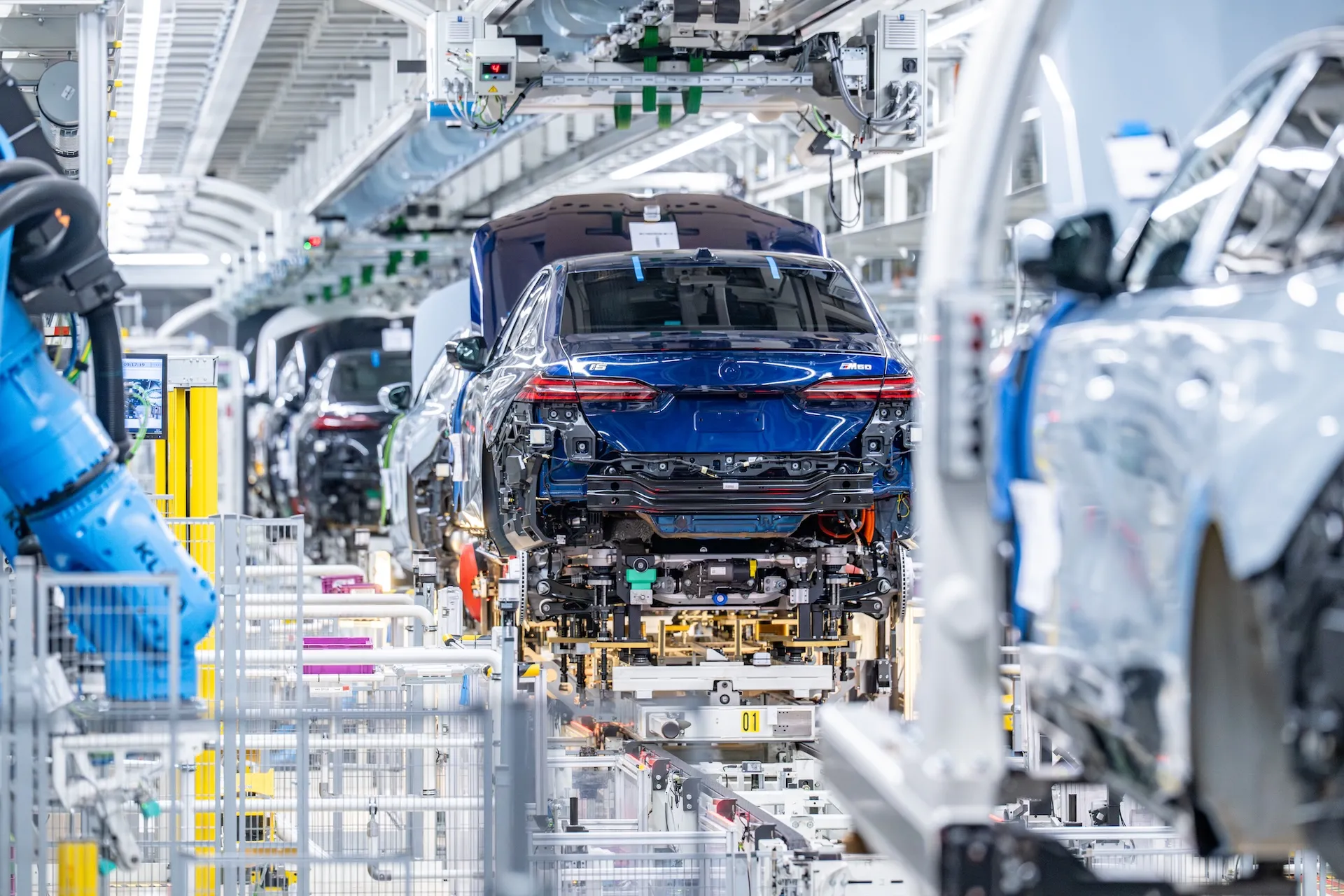
The BMW Group has built its two-millionth all-electric vehicle, with a BMW i5 M60 xDrive sedan in Tansanit Blue rolling off the line at Plant Dingolfing on May 5, 2026. The anniversary car is bound for a customer in Spain. The milestone arrives roughly two years after the company reported its one-millionth BEV delivery in early 2024, signaling a sharp acceleration in production volume. BMW continues to pursue what it calls a technology-open strategy, building electric, combustion, and hybrid vehicles on the same lines.
Highlights
- Two million BEVs produced since the BMW Group began series electric production, with the milestone vehicle assembled at Plant Dingolfing in Lower Bavaria.
- Roughly one in six of the company’s two million BEVs — more than 320,000 units — has come from Dingolfing since 2021.
- Over a quarter of all vehicles built at Dingolfing in 2025 were fully electric, up from a single i7 line at startup.
- Production doubled in roughly two years, with the BMW Group reporting its one-millionth BEV in April 2024.
Dingolfing Anchors the BMW BEV Network
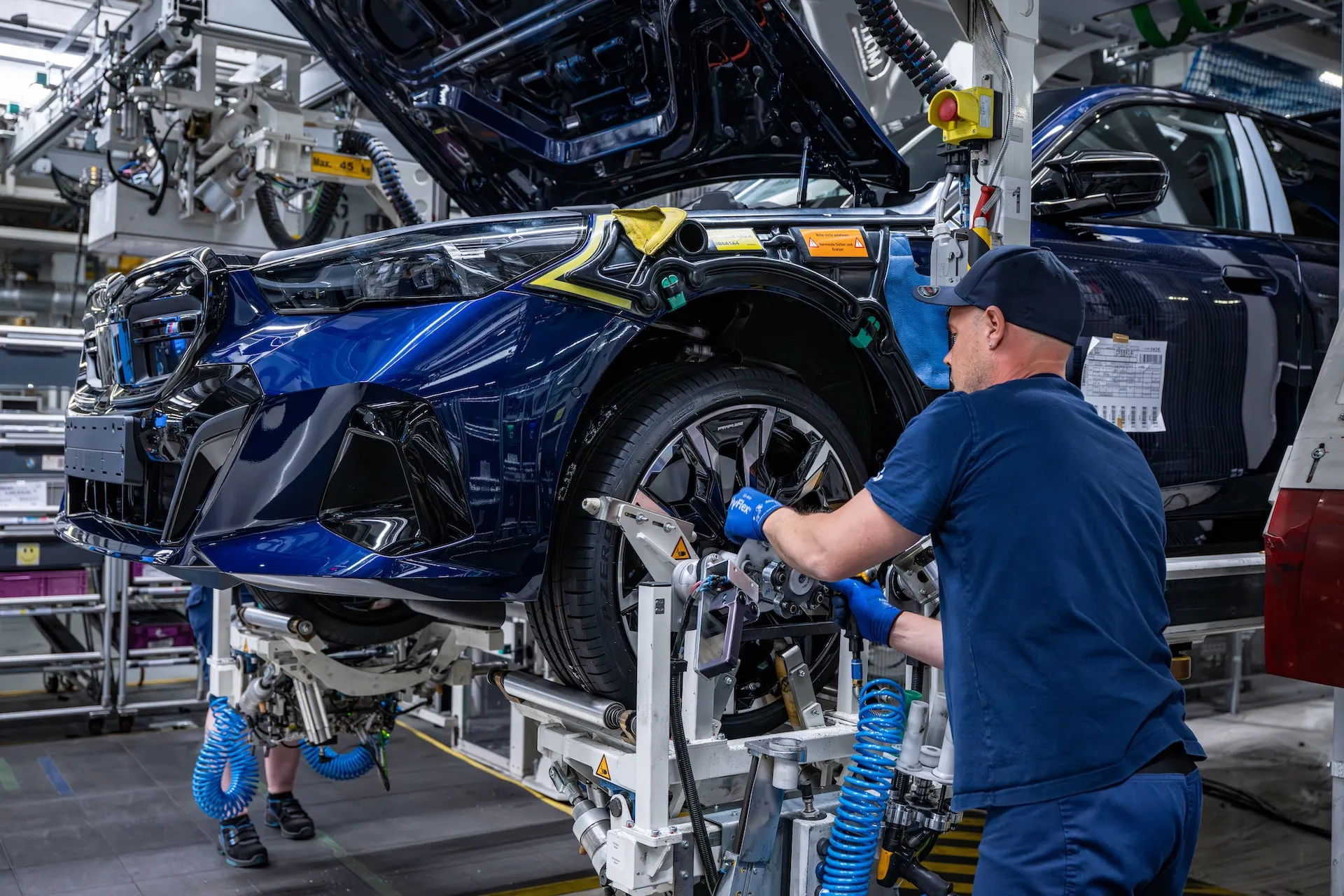
Plant Dingolfing began series BEV production in 2021 with the BMW iX and now builds the widest range of battery-electric models in the BMW Group network, including the iX, the i5 sedan and Touring, and the i7 luxury sedan. The site has produced more than 320,000 BEVs since 2021, accounting for nearly one-sixth of the company’s cumulative all-electric output.
In 2025, more than 25 percent of vehicles produced at Dingolfing were fully electric — a meaningful shift for a site that has historically anchored BMW’s combustion-powered luxury and large-sedan production. The plant’s e-drive components, including high-voltage batteries and integrated electric drive units, are produced at the nearby BMW Group Competence Centre for e-Drive Production.
Technology-Open Production Remains the Strategy
The BMW Group continues to build vehicles with different powertrains on the same line under its iFACTORY framework. Every German BMW Group plant has produced at least one all-electric model for several years, and the company describes electric production as “the new normal” across its network.
The approach contrasts with rivals that have committed to dedicated BEV-only plants. BMW’s Plant Munich is being converted to all-electric production by 2027, but the broader network retains mixed-line flexibility. The company says this flexibility lets it adjust to shifting regional demand — a useful hedge given the global slowdown in BEV demand reported through early 2026.
The BMW Group also positions the milestone as a contribution to Germany’s standing as the world’s second-largest production location for electric cars, after China.
Context: Production Pace Has Accelerated Sharply
The BMW Group launched its first modern series-production BEV, the i3, in 2013. It took roughly 11 years to reach the one-millionth fully electric vehicle, a milestone announced in April 2024. The leap from one million to two million has taken approximately two years — implying a production rate that has more than quintupled compared with the company’s first decade of BEV manufacturing. The BMW i5, the iX, and the i4 have driven much of the recent volume, with the Neue Klasse iX3 now adding incremental capacity from the Debrecen plant in Hungary.
What to Know
Where was the two-millionth BMW BEV produced?
The two-millionth all-electric BMW Group vehicle, a BMW i5 M60 xDrive sedan in Tansanit Blue, was assembled at Plant Dingolfing in Lower Bavaria. The car is destined for a customer in Spain. Dingolfing has been producing all-electric BMW models since 2021, when series production of the BMW iX began at the site.
How long did it take BMW to go from one million to two million BEVs?
Roughly two years. The BMW Group reported its one-millionth fully electric vehicle delivery in April 2024 and reached two million units produced in May 2026. By comparison, it took the company about 11 years to reach the first million, dating back to the launch of the BMW i3 in 2013.
What share of BMW Group BEVs are built at Dingolfing?
Plant Dingolfing has produced more than 320,000 BEVs since 2021, accounting for nearly one-sixth of the BMW Group’s two million cumulative all-electric vehicles. In 2025, more than 25 percent of total vehicles produced at the site were fully electric, up sharply from when BEV production began with the iX.
What does BMW’s technology-open production approach mean?
Under the iFACTORY framework, BMW Group plants build vehicles with different powertrains — combustion, plug-in hybrid, and fully electric — on the same production line in mixed sequence. The company says this provides flexibility to adjust output to regional demand without requiring dedicated BEV-only facilities, though Plant Munich is being converted to all-electric production by 2027.
Sign up for our popular weekly email to catch all the latest EV news!