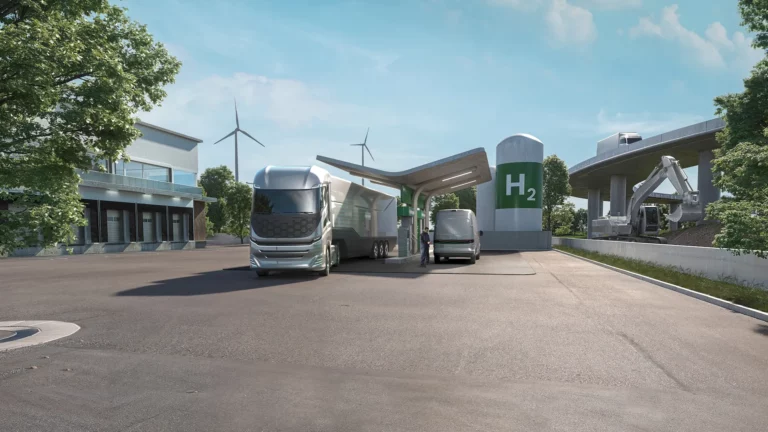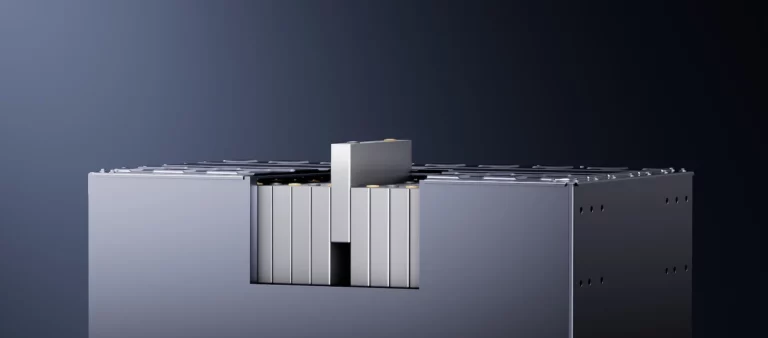


A Bosch development team has received the German Future Prize 2025 for creating a fuel-cell power module that enables zero-emission operation of heavy commercial vehicles. The German federal president’s award recognizes the technology as critical infrastructure for achieving climate-neutral freight transportation.
Highlights
- Bosch team led by Christoffer Uhr, Kai Weeber, and Pierre Andrieu wins German Future Prize 2025 for fuel-cell power module development
- System converts hydrogen and oxygen into electrical energy, producing only water vapor as emission when using green hydrogen
- Several thousand trucks equipped with Bosch fuel-cell power modules currently operate worldwide across multiple applications
- Technology enables up to 1,000 kilometers range on single 70-kilogram hydrogen tank with 15-minute refueling times
Award Recognition for Hydrogen Technology Development
The fuel-cell power module represents a key advancement in commercial vehicle electrification, addressing the significant carbon footprint of heavy-duty transportation. Heavy trucks account for more than one-quarter of road traffic CO2 emissions in the European Union while remaining essential for goods movement.
“This award is outstanding recognition for the entire team. It shows the innovative potential of hydrogen – and the decisive role that Bosch is playing in it,” said Dr. Stefan Hartung, chairman of the board of management of Robert Bosch GmbH. “The technology is ready. What’s needed now is the political will to systematically drive forward the development of an efficient hydrogen economy.”
System Technical Specifications
The Bosch fuel-cell power module delivers the following performance characteristics:
- Production status: Large-scale manufacturing since 2023 at Stuttgart-Feuerbach plant and Chongqing, China facility
- System complexity: More than 1,000 individual components integrated into single module
- Component integration: Stack, recirculation pump, and air compressor all developed and manufactured in-house
- Installation design: Direct replacement for conventional diesel engines in existing truck chassis
- Range capability: Up to 1,000 kilometers per tank under economical driving conditions
- Hydrogen capacity: Approximately 70 kilograms stored in pressurized tanks
- Refueling duration: Comparable to diesel at approximately 15 minutes
Commercial Deployment and Data Collection
Multiple thousand trucks equipped with Bosch fuel-cell power modules currently operate in commercial service worldwide. The deployed fleet generates critical development intelligence through digital twin technology, where physical systems exist both in vehicles and virtual simulation environments.
Continuous monitoring captures operational parameters including temperature, pressure, and component wear. This real-world data feeds directly into next-generation powertrain system development, enabling iterative improvements based on actual field performance rather than laboratory testing alone.
Application Diversity Beyond Trucks
The fuel-cell power module technology extends beyond heavy commercial vehicle applications:
- Bus powertrain systems for public transportation
- Maritime propulsion systems for zero-emission shipping
- Stationary power generation for data centers requiring decentralized electricity
- Reversible operation in PEM electrolysis stacks for hydrogen production from water and electricity
Bosch Hydrogen Infrastructure Integration
Bosch maintains involvement across the complete hydrogen value chain. Following market introduction of its electrolysis stacks in April 2025, the company commissioned its first electrolyzer featuring proprietary electrolysis technology at the Bamberg facility.
The proton exchange membrane technology operates bidirectionally, functioning both as fuel cell for electricity generation and as electrolyzer for hydrogen production. This dual capability positions Bosch as integrated supplier across hydrogen production, storage, and utilization infrastructure.
Historical Innovation Recognition
This marks Bosch’s fourth German Future Prize win since the award’s establishment. Previous recognition includes:
- 2005: Piezo injectors for diesel engines
- 2008: Smart sensor technology
- 2013: Ultrashort pulse laser systems
- 2025: Fuel-cell power module for commercial vehicles
The company received nominations for the award five times between 1998 and 2013 before the current recognition.
Policy Requirements for Market Expansion
Despite proven technical readiness, widespread adoption of fuel-cell commercial vehicles requires supportive regulatory frameworks and infrastructure development. Systematic policy initiatives remain necessary to establish efficient hydrogen production, distribution, and refueling networks at scale required for commercial transportation sector transformation.
Sign up for our popular weekly email to catch all the latest EV news!