
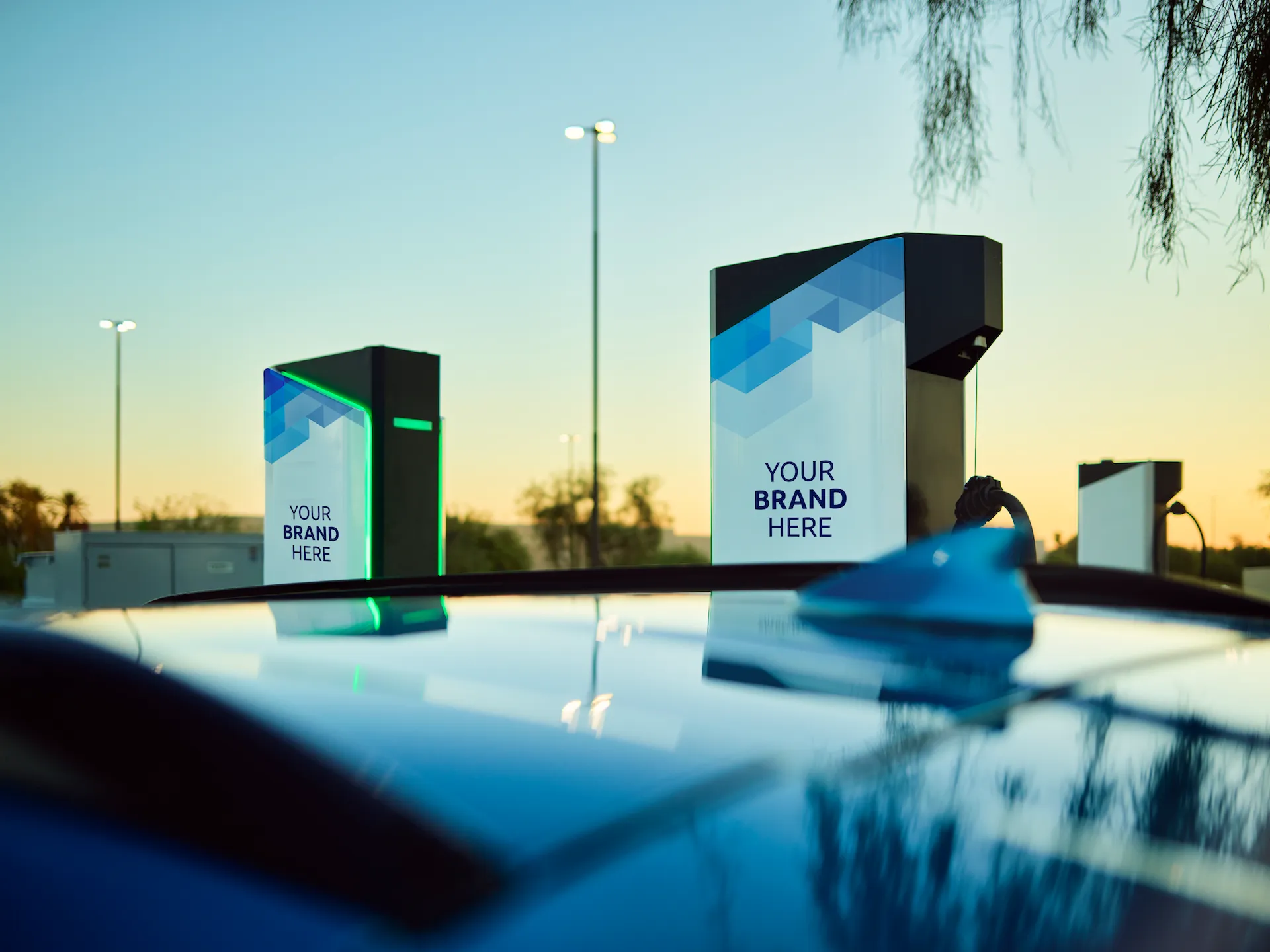
Electrify America’s white-label charging program now supports more than 100 stations and nearly 600 chargers for businesses running their own branded EV charging networks. Under the Powered by Electrify America model, retailers control branding, pricing, and loyalty programs, while Electrify America supplies technical expertise and operational support. Aaron Young, director of sales and business development at Electrify America, outlined the offering this week ahead of the company’s appearance at the NACS Show in Las Vegas.
Highlights
- More than 100 stations and nearly 600 chargers now run under the white-label program, according to the company.
- Launched in 2020, the offering counts deployments with convenience and retail brands including Wawa and Costco.
- White-label stations are accessible to drivers alongside Electrify America’s broader network of more than 5,600 chargers across 1,080 stations.
- An education session on Wednesday, October 7, 2026, at the NACS Show will review charging business models for retailers.
How Does White-Label EV Charging Work?
Electrify America describes Powered by Electrify America as a turnkey offering that lets businesses own and operate their own branded charging networks without building and managing the infrastructure themselves.
Retailers design the charging experience their customers see. That includes the brand on the station, the price per session, and how charging ties into loyalty programs.
Electrify America works behind the scenes. The company says it draws on its experience operating one of the largest DC fast charging networks in North America to provide technical and operational support.
Why Retailers Are Weighing Charging Ownership
The company positions ownership as part of a broader retail growth strategy rather than a standalone amenity. According to Electrify America, owning the charging experience can help retailers:
- Increase dwell time at their locations
- Drive incremental revenue
- Strengthen customer loyalty
- Position stores as destinations for EV drivers
Young framed the program’s growth as evidence of a wider change in retail thinking. “For many retailers, the decision has evolved beyond whether to simply add chargers at their stores,” he wrote. He added that retailers are now evaluating how charging supports their long-term strategy and whether owning the experience advances those goals.
White-Label Network Growth Since 2020
Electrify America reports significant growth in the model since its 2020 launch. Current deployments include stations with Wawa and Costco.
Drivers can use the white-label stations along with Electrify America’s coast-to-coast network, which the company puts at more than 5,600 chargers across 1,080 stations.
Electrify America at NACS Show 2026
The Electrify America team will exhibit at the NACS Show, the annual convenience and fuel retailing event, in Las Vegas next week. Young will participate in an education session on charging ownership versus hosting on Wednesday, October 7, 2026, reviewing charging business models to help retailers determine which fits their strategy.
Retailers can meet the company at Booth C6901 in Central Hall.