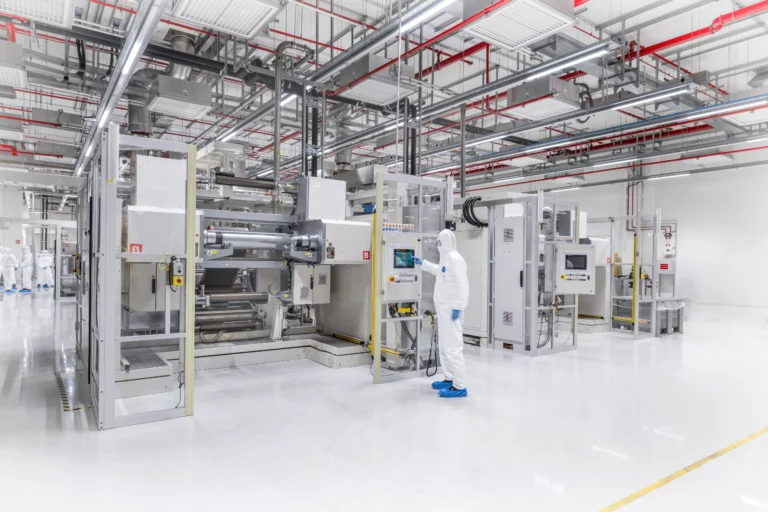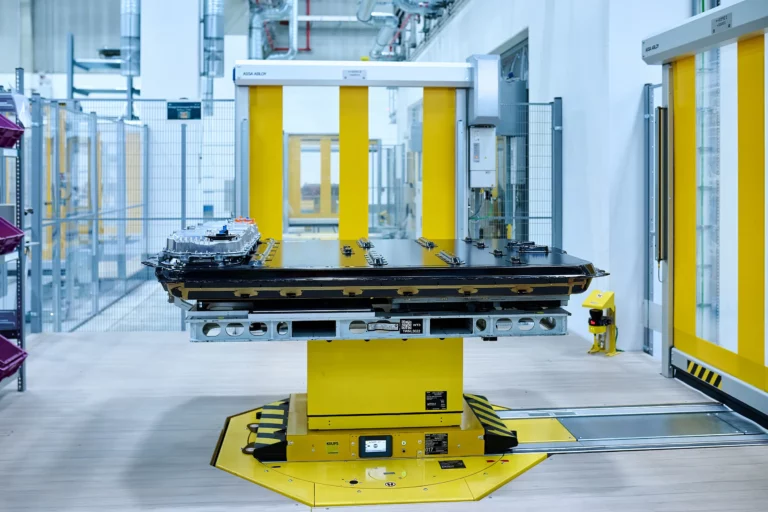


Octillion Power Systems has opened its third battery manufacturing plant in India, a Halol, Gujarat facility that will build more than 48,000 battery systems and over 3 GWh of energy storage capacity annually at full output. The plant covers more than 140,000 square feet (13,000 square meters) and was converted from an empty structure into a fully operational factory in less than eight months, according to the company. Richmond, California-based Octillion Power Systems supplies EV battery systems for the passenger vehicle, truck and light commercial vehicle, and bus segments in India.
Highlights
- Gujarat capacity: more than 48,000 battery systems and over 3 GWh of energy storage capacity per year at full output
- Build speed: more than 140,000 square feet (13,000 square meters) brought from empty structure to operation in under eight months
- India total: annual production across three plants expected to exceed 150,000 battery systems and approximately 9 GWh
- Market backdrop: India EV sales rose 43% year-over-year in the first half of 2026 to more than 1.54 million units, according to JMK Research
Halol Lifts Octillion’s India Output Toward 9 GWh
Combined with the company’s two existing India facilities, Octillion expects annual production in the country to exceed 150,000 battery systems and approximately 9 GWh of battery capacity. The output is directed at the passenger vehicle, truck and light commercial vehicle, and bus segments.
“India is one of the most important growth markets in the global transition to electric mobility, and this facility reflects our long-term commitment to building capacity where our customers need it most,” said Paul Beach, Global President of Octillion Power Systems. “Delivering a fully operational plant in under eight months is a testament to the discipline of our team and our ability to execute at speed without compromising the quality standards our customers depend on.”
The addition brings Octillion to nine battery manufacturing plants worldwide, according to the company.
How Fast Is India’s EV Market Growing?
The Halol plant comes online during a period of broad-based expansion in the Indian EV market. JMK Research reports that EV sales rose 43% year-over-year in the first half of 2026 to more than 1.54 million units, pushing overall EV penetration past 11%. Electric passenger cars led the increase at 83% year-over-year, while electric buses rose 42% on the strength of deployments under the government’s PM E-Bus Sewa and PM E-DRIVE programs, which allocated more than 4,200 e-buses in June 2026 — the highest monthly e-bus sales on record. Electric trucks, an early-stage segment, posted cumulative sales growth of more than 300% year-over-year.
National targets set the trajectory through the end of the decade. India aims for EVs to reach:
- 30% of private car sales
- 70% of commercial vehicle sales
- 40% of bus sales
- 80% of two- and three-wheeler sales
Those 2030 goals are supported by PM E-DRIVE and the Advanced Chemistry Cell (ACC) Production-Linked Incentive scheme.
Localization Remains the Constraint on India’s Battery Supply Chain
Capacity is only one part of the equation. India remains heavily dependent on imported lithium, cobalt, and nickel, and net localization for high-value components including cells, motors, and controllers sits below 20% for many manufacturers, according to research from the International Institute for Sustainable Development.
Policy is moving to close that gap. The government’s National Critical Minerals Mission is funding domestic exploration and processing capacity, customs duties have been eliminated on 25 critical minerals, and a dedicated battery mineral processing policy is expected to be finalized in the coming months.
Octillion says its approach at Halol is designed to go beyond assembly, integrating its standardized production process, thermal modeling, and integrated battery management systems into the local supply base to reduce lead times and build in-country redundancy for OEMs de-risking their sourcing.
“A resilient EV supply chain in India can’t just mean more square footage — it means depth: local sourcing, local quality control, and local engineering talent working side by side with our global standards,” said Nikhil Parchure, SVP at Octillion Power Systems. “That’s what we’ve built in Halol. As India moves toward its 2030 electrification targets across cars, trucks, and buses, our customers need a partner who can scale with them without exposing them to global supply chain volatility, and that is exactly the role we intend to play.”
Octillion describes itself as the leading supplier of EV battery packs in India across passenger vehicles, buses, and commercial trucks.